
The best day trips from Tokyo are Kamakura, Nikko, Mount Fuji's Lake Kawaguchiko, Yokohama and Hakone, all within about two hours of the city and all recommended consistently across Japanese travel media. Which one is right for you depends on whether you want temples, scenery, a port city or hot springs. This guide compares them honestly.
Search for the best day trips from Tokyo in English and you get the same handful of articles, each listing the same places with the same photos. The cheku approach is different: we read what Japanese travel sites recommend, because the audience they write for actually lives here and takes these trips.
What that reveals is reassuring. The big destinations, Kamakura, Nikko, Mount Fuji, Yokohama, Hakone, show up just as reliably in Japanese guides as in English ones. They are genuinely good. But Japanese sources also surface a wider, more seasonal set of options that English guides skip, and they are clearer about the practical trade-offs: travel time, crowds, and whether a place really fits in a day.
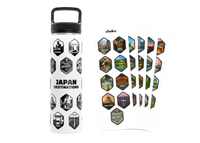
If you are mapping out a first trip and want a way to track the destinations you reach, the Traveler Bottle covers 27 of them across the country, Tokyo neighbourhoods and day trips included, designed for first-time visitors building a route that fits in two weeks.
This guide covers what Japanese travel sites actually recommend, profiles each major day trip, and ends with a comparison so you can choose the one that fits your trip.
What makes a good day trip from Tokyo?
A good day trip from Tokyo is reachable in roughly two hours or less one way, offers something Tokyo itself does not, and genuinely fits in a day without feeling rushed. The best ones also have a direct train or bus, so the travel is simple at both ends.
Before the destinations, it is worth being clear about what you are optimising for, because not every famous place makes a good day trip.
Travel time is the first filter. Japanese travel media generally treats about two hours one way as the limit for a comfortable Kanto day trip. Jalan's day-trip ranking is built explicitly around spots reachable within about two hours. Beyond that, you spend more of the day on trains than at the destination, and an overnight stay starts to make more sense.
Contrast is the second. The point of leaving Tokyo is to get something Tokyo does not have: mountains, a coastline, hot springs, a World Heritage shrine, an open harbour. The best day trips are the ones that feel like a genuine change, not just a smaller version of the city.
Fitting in a day is the third, and the one most guides fudge. Some destinations are technically reachable in two hours but are so large, or so spread out on arrival, that a day trip means rushing. We will flag that honestly for each place below.
What day trips do Japanese travel sites actually recommend?
Three Japanese sources anchor this guide: MATCHA, a tourism-media publisher; Jalan, one of Japan's largest travel-booking sites; and JR East's own travel site. Across all three, the same core destinations recur, Nikko, Mount Fuji, Yokohama, Kamakura, Kawagoe, Hakone, alongside seasonal and family spots English guides tend to miss.
The honest way to answer "what do Japanese people recommend" is to look at what Japan's own travel publishers tell their domestic readers. Three are worth naming.
MATCHA is a Japanese tourism-media site whose day-trip guide groups destinations into clear categories: nature, town-walking and food, outdoor activities, and entertainment facilities. Jalan, one of the country's biggest travel-booking platforms, publishes a ranking of Kanto day trips reachable within about two hours. And JR East's View Travel site, run by the railway company itself, organises day trips by area.
What stands out when you read all three together:
- The classics are classics for a reason. Nikko, Mount Fuji, Yokohama and Kamakura appear across every list. Japanese travellers are not avoiding the famous places; they are just clear-eyed about them.
- Japanese guides weight seasons heavily. MATCHA singles out Nikko's autumn foliage and winter snow specifically. Domestic travellers plan day trips around what is blooming or turning, more than English guides do.
- The deeper cuts are genuinely useful. Jalan's list includes flower parks, a space centre and preserved historic towns, the kind of destination that rarely reaches an English-language "best day trips" article.
The takeaway: the standard list is sound, but worth reading with a Japanese eye for season and for the less-obvious options.
Kamakura: the best all-round day trip
Kamakura is the strongest first pick. About an hour south of Tokyo by JR train, it packs the Great Buddha, a dense circuit of Zen temples, a coastline and a nostalgic tram into a compact, walkable area. It offers more variety per kilometre than any other day trip from Tokyo.
If someone asked for a single recommendation, it would be Kamakura. The reason is range. Most day trips do one thing; Kamakura does several, and they are different enough that the day never repeats itself.
The headline sight is the Great Buddha at Kotoku-in, an 11.4-metre bronze statue that has stood in the open since the late 15th century, per japan-guide.com. Around it, the temple cluster near Hase and the Zen monasteries of Kita-Kamakura give you a serious dose of religious architecture. Then there is the coast, reached on the Enoden tram, and the option of continuing to Enoshima island.
MATCHA's guide notes that you can leave Tokyo Station in the morning and still have a full day in Kamakura, and it pairs the town naturally with Enoshima for ocean scenery. That is the move: Kamakura plus the coast, in one direction, no backtracking.
For the full plan, our Kamakura day trip guide covers routing, timing and what Japanese visitors prioritise.
Nikko: the World Heritage day trip
Nikko, about two hours north of Tokyo, holds Toshogu, the most ornately decorated shrine in Japan and a UNESCO World Heritage site, plus a mountain zone of lakes and waterfalls. It is spectacular, but the shrine area and the lake area are an hour apart, so a day trip means choosing a focus.
Nikko is the day trip for travellers who want something genuinely grand. Toshogu, the lavishly carved mausoleum of Tokugawa Ieyasu, is unlike any other shrine in Japan, and seeing it recalibrates what you thought a shrine could be.
The honest complication, per japan-guide.com, is that Nikko is really two destinations under one name: the shrine complex near the stations, and the national park around Lake Chuzenji and Kegon Falls, about 50 minutes further by mountain bus. Both are worth the trip. Both in one day is a stretch.
MATCHA's guide leans into Nikko's seasonal side, highlighting the autumn foliage and the Lake Chuzenji area. The practical advice: decide before you go whether your day is shrine-focused or lake-focused, and take an early train either way.
Our Nikko day trip guide covers the access from Asakusa and how to make that shrine-versus-lake call.
Mount Fuji and Lake Kawaguchiko: the iconic view
A Mount Fuji day trip means viewing the mountain, not climbing it. From Lake Kawaguchiko, about two hours from Tokyo, you get the classic views, the Chureito Pagoda, the lakeshore, the 5th Station. The one honest caveat is cloud: Fuji is often hidden, and a clear view is never guaranteed.
Mount Fuji is the view that defines a first trip to Japan, and a day trip to the Lake Kawaguchiko area is the standard way to see it.
The key thing to understand is what the trip is. It is not a climb; Fuji is only climbable for a few weeks in summer, and summiting takes an overnight effort. A day trip is about finding the right vantage point. Japan-guide.com confirms Lake Kawaguchiko as the most accessible of the Fuji Five Lakes, with the most to see and do.
The honest caveat is weather. Fuji spends much of the year wrapped in cloud, and visibility is best in the colder months and in the morning. Go on the clearest forecast day you have, and treat a clear view as a bonus rather than a certainty.
Our Mount Fuji day trip guide covers the viewpoints, the direct train from Shinjuku, and how to give yourself the best odds.
Yokohama: the easiest day trip
Yokohama is the closest major day trip from Tokyo, under 30 minutes by train. It offers an open harbour, the Minato Mirai waterfront, Japan's largest Chinatown and historic districts. Because it is so close, it also works as a half-day or an evening out.
If Kamakura is the best all-rounder, Yokohama is the easiest call on the entire list. The journey is under 30 minutes, several lines run direct, and the day needs almost no planning.
What you get is a real change of scene: an open port city, wide promenades, a sense of horizon that central Tokyo does not have. The Minato Mirai waterfront, the Red Brick Warehouse, the giant ferris wheel and Japan's largest Chinatown anchor a full day, and Sankeien Garden adds a classical counterpoint for anyone who wants to slow down.
English guides under-rate Yokohama; Japanese ones do not. It appears across MATCHA and Jalan as a dependable, low-effort escape. And uniquely among these destinations, it works in the evening, when the illuminated waterfront is at its best.
Our Yokohama day trip guide covers what to do across Minato Mirai, Chinatown and the Yamate hill.
Hakone: hot springs and mountain art
Hakone, about two hours from Tokyo, is the hot-spring day trip: a mountain resort area known for onsen, lake and mountain scenery, views of Mount Fuji, and the Hakone Open-Air Museum. It has its own internal transport loop, which makes a day there full but rewarding.
Hakone is the day trip for travellers who want to soak, slow down and be among mountains. It is one of Japan's most established hot-spring regions, set in volcanic terrain south-west of Tokyo.
The cultural highlight is the Hakone Open-Air Museum, a sculpture park that sets large-scale art against the mountains; Jalan's ranking singles it out, noting its substantial Picasso collection. Beyond that, Hakone offers lake scenery, mountain views and, on clear days, Mount Fuji in the distance.
One practical note: Hakone is spread out, and getting around it involves a loop of mountain trains, cable cars, ropeways and a lake boat. That is part of the fun, but it means a Hakone day is a full one. Odawara, about 30 minutes from Tokyo by shinkansen, is the rail gateway. Of all the destinations here, Hakone is the one that most rewards an overnight stay if you can spare it.
Free for you: our Tokyo Google Maps list We keep a Google Maps list of the must-see spots around Tokyo - restaurants, cafes, shops, viewpoints, and streets worth the detour. Drop your email and we'll send it over.
What other day trips do Japanese guides recommend?
Beyond the big five, Japanese travel sites recommend Kawagoe for its preserved Edo streetscape, Mount Takao for easy hiking, and Enoshima for the coast, plus seasonal destinations like Ashikaga Flower Park and Hitachi Seaside Park that English guides rarely mention.
This is where reading Japanese sources pays off, because the list gets wider and more interesting.
Kawagoe (Saitama) is about 45 minutes from central Tokyo. Nicknamed 小江戸, "Little Edo," it preserves a street of Edo-period merchant warehouses and is known for matcha and sweet-potato sweets. MATCHA recommends it as an easy half-day of historic town-walking.
Mount Takao (Tokyo) is about 50 minutes from Shinjuku, a 599-metre mountain with cable-car and chairlift access and beginner-friendly trails. It is the closest real nature escape from the city.
Enoshima (Kanagawa) is a small island near Kamakura with a shrine, sea caves and a nostalgic shopping street. Japanese guides routinely pair it with a Kamakura day.
Then there are the seasonal destinations that English "best day trips" lists almost never include. Jalan's ranking points to Ashikaga Flower Park in Tochigi, famous for spring wisteria tunnels and a winter illumination repeatedly ranked among Japan's best, and Hitachi Seaside Park in Ibaraki, with hillsides of blue nemophila in spring and red kochia in autumn. There is even the JAXA Tsukuba Space Center for real rockets and satellites, and preserved canal towns like Sawara in Chiba.
You do not need to chase the obscure options. But if you have already done the classics, or you are visiting in a specific flower season, Japanese sources will take you somewhere most visitors never think to go.
How do you choose and plan a day trip from Tokyo?
Choose by travel time and by what you want. Yokohama is closest and easiest; Kamakura offers the best variety in an hour; Nikko, Mount Fuji and Hakone are the most spectacular but take about two hours each way. For all of them, take an early train, and check the weather for Fuji especially.
Here is the comparison promised at the top, the major day trips by travel time, purpose and how busy they get.
| Day trip | Travel time (one way) | Best for | Crowd level |
|---|---|---|---|
| Yokohama | Under 30 min | Easiest trip, harbour, Chinatown | Moderate |
| Kamakura | About 1 hour | Best all-round variety, temples and coast | High in cherry and hydrangea seasons |
| Kawagoe | About 45 min | Edo-era streetscape, sweets | Moderate |
| Mount Takao | About 50 min | Easy hiking, closest nature | High on autumn weekends |
| Hakone | About 2 hours | Hot springs, mountain art and scenery | High |
| Nikko | About 2 hours | UNESCO shrines, lakes and waterfalls | High in autumn |
| Mount Fuji (Kawaguchiko) | About 2 hours | The iconic Fuji view | High at the photo spots |
A few planning rules that apply across all of them:
Take the early train. Every destination here is better, quieter and more photogenic in the morning. The first train out buys you an hour of calm at the famous spots.
Match the trip to your day count. If you have a short trip and one day to spare, pick something close, Yokohama or Kamakura, so travel does not eat the day. Save Nikko, Hakone and Fuji for when you can give them a full, early start.
Watch the weather for Fuji. Of all these, Mount Fuji is the one most affected by conditions. If a clear Fuji view matters to you, keep that day flexible.
For sequencing day trips into a longer route, the 2-Week Japan Guide covers the order Japanese travel writers tend to recommend for a first itinerary, so a day trip slots in without backtracking.
The best day trips from Tokyo are the kind of destinations the Traveler Bottle was built around: places close enough for a day, good enough to plan a trip around. Pick the one that fits your trip, take the early train, and you have one of the best days Japan offers, an hour or two from the city.
FAQ
What is the best day trip from Tokyo?
It depends what you want. For first-timers, Kamakura offers the best variety in a single compact day, an hour from Tokyo. Nikko and Mount Fuji are the most spectacular but take about two hours each way. Yokohama is the easiest, under 30 minutes away. Japanese travel guides recommend all of these consistently.
How far can you go on a day trip from Tokyo?
Most of the standard day trips sit within about two hours one way, which is the working definition Japanese travel sites use for a Kanto day trip. Yokohama is under 30 minutes, Kamakura about an hour, and Nikko, Mount Fuji and Hakone about two hours. Beyond two hours, an overnight stay usually makes more sense.
Which day trip from Tokyo is best for first-time visitors?
Kamakura is the strongest first pick: an hour away, walkable, and varied, with the Great Buddha, Zen temples and a coastline. Yokohama is the easiest if you have limited time. Mount Fuji is the most iconic but carries weather risk, since the mountain is often hidden by cloud.
Do you need a tour for day trips from Tokyo?
No. Every major day trip from Tokyo, including Kamakura, Nikko, Yokohama and Mount Fuji's Lake Kawaguchiko, is reachable by direct train or bus and easy to do independently. Tours can simplify Nikko and Mount Fuji, where distances on arrival are larger, but they are a convenience, not a necessity.
What is the easiest day trip from Tokyo?
Yokohama. It is under 30 minutes from central Tokyo by train, several lines run direct, and it needs almost no planning. It also works as a half-day or evening trip, which none of the further destinations really do.
Sources
- MATCHA — day trips from Tokyo — Japanese tourism-media guide to 18 day-trip spots, grouped by category
- Jalan — Kanto day trips within two hours — Japanese ranking of 16 day-trip spots
- JR East — View Travel day-trip guide — the railway's own area-by-area day-trip guide
- japan-guide.com — Kamakura — Kamakura overview and access
- japan-guide.com — Nikko — Nikko overview and access
- japan-guide.com — Fuji Five Lakes — Lake Kawaguchiko overview and access
Activities and tours in Tokyo
cheku is a GetYourGuide partner. We link to tours that handle the parts of travel that eat your time, getting there, booking ahead, language, context you'd otherwise miss. If you book through our link, we earn a small commission at no extra cost to you.


