
The best Japan souvenirs share three qualities: they're made in Japan (or represent a genuinely Japanese craft tradition), they travel well, and they'd hold up to scrutiny from someone who knows Japan well. These 30 picks pass all three tests — covering food, beauty, homewares, stationery, and the genuinely unusual — plus the omiyage system Japanese people use to choose gifts, and the regional map of which souvenir belongs to which city.
Some links in this guide are affiliate links. If you buy through one, cheku may earn a small commission, at no extra cost to you. As an Amazon Associate I earn from qualifying purchases.
Japan souvenirs range from some of the world's most considered gift-giving objects to some of its most cynical tourist merchandise, often in the same block. We've spent years tracking down the ones worth the suitcase space.
The single best tip in this entire guide: skip the souvenir shops next to the temples. Department store basement food halls (depachika) are where Japanese people actually buy omiyage — the gifts you bring back for colleagues and family after a trip. Isetan, Daimaru, Mitsukoshi. Quality is superior, gift wrapping is complimentary and exquisite, and the selection reflects what locals actually give.
This is the ranked, curated list. For the broader shopping question beyond souvenirs (clothes, electronics, drugstore, tax-free rules), the what to buy in Japan guide is the companion.
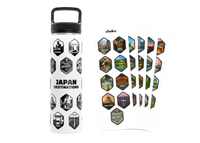
If you're building a Japan trip and want a way to plan which destinations you'll actually visit — including where to prioritize time for shopping — the Traveler Bottle covers 27 key Japan stops in one piece, designed for first-time visitors working out the full route.
Here are the 30 Japan souvenirs actually worth buying in 2026, by category.
How do Japanese people choose souvenirs? (The omiyage system)
Omiyage (お土産) is the Japanese custom of bringing back gifts after any trip, and it explains the entire Japanese souvenir market. The word means more than "souvenir": it describes a gift given to others after you travel, not a memento you keep for yourself. Returning from a trip without omiyage for your colleagues is a real social lapse in Japanese workplace culture. That obligation has shaped the market into something specific: individually wrapped, regionally identified, shelf-stable gifts optimised for distribution.
The rules Japanese sources on jalan.net and note.com describe consistently:
Individual wrapping is essential for office gifts. Every colleague gets one piece, wrapped separately. A shared cake that needs cutting fails the test.
The geographic story matters. The gift should be identifiable as coming from the place you visited. Shiroi Koibito says Hokkaido. Tokyo Banana says Tokyo. A nationally available product bought anywhere says nothing.
Shelf life matters. Office omiyage is distributed on the first day back. A two-week confection box removes the pressure a two-day wagashi creates.
The packaging signals the thought. This is why depachika dominate omiyage shopping despite higher prices: the wrapping from a Mitsukoshi counter signals the gift was considered.
The budget math Japanese travel writing applies without embarrassment: count the people you need to give to, divide your budget by that number, and buy the tier that fits. The typical office omiyage budget is ¥200–500 per piece.
| Omiyage type | Format | Example | Who it's for |
|---|---|---|---|
| Office distribution | Individually wrapped, 20–30+ pieces | Tokyo Banana, Shiroi Koibito, regional cookie boxes | Entire workplace |
| Close colleagues | Small gift box, 5–10 pieces, better quality | Toraya wagashi box | Team members |
| Family gift | Premium, personal | Quality sake, artisan ceramics, single craft object | Parents, siblings |
| Best for | First-time international visitor | Tokyo Banana + one depachika wagashi box | Covers both office and family |
You're under no obligation to follow this system as a visitor. But it's a better filter than any listicle: the souvenirs that pass omiyage logic are the ones Japanese people actually rate.
How do you tell an authentic Japan souvenir from tourist marketing?
By Japanese standards, authentic means tied to a specific region, a named maker, or a registered craft tradition. The Japanese framework has three layers:
- Meibutsu (名物), a regional specialty. A product culturally recognized as belonging to a specific city or prefecture. Tokyo Banana is a Tokyo meibutsu. Yatsuhashi is a Kyoto meibutsu.
- Dentōteki kōgeihin (伝統的工芸品), a registered traditional craft. A government designation for crafts with documented production traditions and regional ties. Kogei Japan maintains the official directory: 244 registered crafts, from Wajima lacquerware to Naruko kokeshi.
- A named maker. A kiln name, a brewery name, a shop dating back generations. The maker is findable.
The simple test: can you point to where this object comes from on a map of Japan, and can you name who makes it? If yes to both, it's authentic by domestic standards. If it just says "Japan," or leans on samurai and geisha imagery with no origin, it's marketing.
Every pick below passes that test.
What are the best food souvenirs from Japan?
The best food souvenirs from Japan are the ones Japanese people give each other: regional specialties, beautifully packaged and with a clear geographic story. Tokyo Banana, wagashi, matcha, sake, and regional cookie boxes are the categories we'd recommend every time. The depachika basement of any major department store carries all of them, at better quality and lower prices than tourist-zone shops.
1. Tokyo Banana
Tokyo Banana is the quintessential Tokyo omiyage. Banana-shaped sponge cakes with banana custard cream inside, sold in gift boxes of 8–10 pieces. The packaging alone signals "I thought about this gift." Shelf life of 5–7 days means it holds for the flight home. It has been the default Tokyo meibutsu since its 1991 launch.
Price: ¥1,200–2,000 for a gift box. Where: every major Tokyo train station, Narita and Haneda airports, department store basements.
2. Kit Kat regional flavors
Japan has released 300+ Kit Kat flavors since 2000. The regional exclusives are the ones worth buying — matcha from Kyoto, melon from Hokkaido, strawberry from Kyushu. Multi-packs make solid bulk gifts for colleagues, and a mixed Japanese snack box does the same job with more variety than a single flavor. The Kit Kat Chocolatory at Seibu Ikebukuro and Daimaru Tokyo Station carries the premium versions.
Price: ¥100–200 per bar at convenience stores; ¥300–1,000 for multi-packs; ¥324 per piece at the Chocolatory. Where: 7-Eleven, Lawson, FamilyMart, Don Quijote, Kit Kat Chocolatory.
3. Wagashi (traditional Japanese sweets)
Handcrafted, seasonal, edible art. Wagashi covers a spectrum from simple dango (¥200) to elaborate Toraya gift boxes (¥2,300–5,800). The premium gift boxes are the ones worth buying — they communicate craft and care in a way that mass-produced chocolate does not.
The Toraya name is the reference; the company has been making wagashi since the Muromachi period. If you're in a depachika and unsure which wagashi counter to choose, start there. Seasonal pieces, cherry blossom motifs in spring and maple in autumn, add a temporal specificity that makes the gift more considered.
Price: ¥200 (basic dango) to ¥5,800 (Toraya gift boxes). Where: Isetan, Daimaru, and Mitsukoshi basement food halls; Asakusa Nakamise.
4. Matcha powder (ceremonial grade)
The quality difference between ceremonial-grade Japanese matcha and the matcha available in most international markets is substantial. The best comes from Uji in Kyoto. A sealed tin of ceremonial-grade matcha is the gift that consistently impresses anyone who cooks or drinks tea seriously.
Price: ¥2,000–8,000 for quality ceremonial grade (20–100g). Where: Department store tea sections; Itoya (Ginza); specialty tea shops; Tokyu Hands.
5. Japanese green tea from a named shop
Beyond matcha, Japanese loose-leaf tea from a named merchant carries the same regional logic as everything else on this list. Uji (Kyoto) and Shizuoka are the two reference growing regions; Ippodo and Tsujiri are the shop names worth knowing, both with long Kyoto histories. A tin of sencha or hojicha from a named shop, wrapped at the counter, is the lighter-weight alternative to matcha for recipients who drink tea casually rather than ceremonially.
Price: ¥1,000–4,000 for quality tins. Where: Ippodo (Kyoto flagship and Tokyo); Tsujiri; depachika tea counters; Uji and Shizuoka at the source.
6. Sake (premium junmai daiginjo)
The most internationally requested Japanese spirit, and the one with the widest gap between what's available at home and what's available in Japan. Dassai is the brand most commonly requested by people abroad who know sake; Dewazakura and Hatsumago are strong value picks. Bubble-wrap or a wine carrier for the flight.
The authenticity test matters most in this category. A real bottle names the brewery, the prefecture, and the grade (junmai daiginjo, daiginjo, junmai, honjozo) on the label. Japan now has 23 GI (geographical indication) sake designations, per the National Tax Agency — a legal certification tying the bottle to its region, worth looking for on labels. The gold-bottle "samurai sake" at airport gift shops, with no brewery name anywhere, is the opposite of all this.
Price: ¥2,000–5,000 entry quality; ¥5,000–15,000 premium; ¥15,000+ ultra-premium. Where: BicCamera Ginza; department store basement food halls; specialist sake shops; airports.
7. Regional snack boxes (Shiroi Koibito / Hato Sablé)
Every Japanese prefecture has its signature omiyage confection. Two worth knowing: Shiroi Koibito (Hokkaido's iconic white chocolate sandwich cookie, by Ishiya) and Hato Sablé (Kamakura's dove-shaped butter cookies, in production since the 1940s). Both have shelf lives of 3–4 weeks and hold up for gifts on return.
Price: Shiroi Koibito ¥800–2,500; Hato Sablé ¥500–2,500. Where: Major department stores carry regional omiyage by prefecture.
8. Regional meibutsu sweets, city by city
The deeper cut of the same idea: each major destination has a named sweet that Japanese people treat as its signature, and buying it at the source is the point.
Yatsuhashi (Kyoto) → cinnamon-flavored rice flour wafers, the Kyoto omiyage since the Edo period. Hard version travels best. ¥600–1,500 at Kyoto Station and the Kiyomizu-dera approach roads. Momiji Manju (Hiroshima) → maple-leaf shaped cakes filled with red bean, custard, or chocolate, referencing Miyajima's autumn foliage. ¥800–1,800 at Hiroshima Station and the Miyajima ferry terminal. Akafuku (Ise, Mie) → mochi covered in red bean paste, sold near Ise Shrine. ¥800–1,500. Hakata Tōri Mon and mentaiko products (Fukuoka) → white-bean cakes and spicy cod roe everything, organized beautifully on Hakata Station's gift floor. ¥800–2,000.
If your itinerary includes any of these cities, the local meibutsu beats anything generic you could carry home instead.
9. Cup Noodle ramen collaborations
Tokyo ramen shops recreated as premium instant cup noodles. ¥278–400 per cup, available at 7-Eleven and train station kiosks. It's a novelty buy, not a serious one, but it's the right novelty — specific, cheap, and easy to pack in bulk for colleagues.
Price: ¥278–400 per cup. Where: 7-Eleven; train station kiosks; Don Quijote.
Which Japanese beauty products are worth buying?
Japanese drugstore beauty is significantly cheaper in Japan than when imported abroad, and the range available in Japan is far wider. The three worth buying every time: LuLuLun sheet masks, Biore UV Aqua Rich sunscreen, and Kose Clear Turn face masks. All available at Matsumoto Kiyoshi or Don Quijote with tax-free purchasing over the threshold.
10. Japanese sheet face masks (LuLuLun / Kose Clear Turn)
LuLuLun masks are the reference recommendation for anyone who uses sheet masks: well-formulated, competitively priced, and available in packs that make sensible gifts. The 32-pack at ¥1,650 is the most practical size for gifting. Kose Clear Turn Babyish masks at ¥300 for a 7-pack work as budget stocking-stuffers.
Price: LuLuLun ¥385 (7-pack) to ¥1,650 (32-pack); Kose Clear Turn ¥300 (7-pack). Where: Matsumoto Kiyoshi; Welcia; Don Quijote; convenience stores.
11. Japanese sunscreen (Biore UV Aqua Rich / Anessa)
Japanese sunscreen has an international following for one reason: the texture is incomparably lighter than equivalent SPF products sold abroad. Biore UV Aqua Rich is the most frequently referenced. Anessa is the prestige pick. Both are half the price in Japan compared to imported equivalents.
Price: ¥800–2,000 for standard sizes (50ml+). Where: Matsumoto Kiyoshi; department stores; Don Quijote.
12. Sake essence / fermented beauty serums
Sake kasu and koji-fermented skincare is a genuine Japanese beauty tradition, not a marketing angle. These serums work on the same fermentation logic that makes Japanese rice-wine production distinct. The gift is more interesting than "skincare from Japan" — it has a story.
Price: ¥2,500–6,000 per bottle. Where: Department store beauty counters; Matsumoto Kiyoshi; specialty skincare shops.
13. Facial tools from Japanese retailers
Jade rollers and gua sha tools exist everywhere, but the versions sold through Japanese department store beauty floors and Tokyu Hands come with the packaging and finish quality that elevate a generic category into a considered gift. A boxed set reads as deliberate in a way the online equivalent doesn't.
Price: ¥2,000–6,000 for quality sets. Where: Department store beauty sections; Tokyu Hands.
Free for you: our Google Maps list for shopping in Japan We've pinned every shop and area mentioned in this guide — depachika by department store, the best Matsumoto Kiyoshi branches, Itoya, Tokyu Hands, and Kappabashi. Drop your email and we'll send it so you can navigate without copying addresses.
What Japanese homewares and craft items travel well?
The best Japanese homewares are the ones that show craft and deliberate design — ceramics, lacquerware, tenugui, furoshiki, and kitchen knives. None of these are trinkets. All of them are functional objects made to last. Kappabashi Street in Tokyo is the best single destination for ceramics and knives; Tokyu Hands covers everything else.
14. Japanese ceramics (Arita / Bizen / Kiyomizu-ware)
Japan's major ceramic traditions — Arita (white porcelain, refined), Bizen (unglazed stoneware, earthy), Kiyomizu (Kyoto-style painted overglaze), plus Mino, Karatsu, Hagi, and Mashiko — each produce functional pieces that improve a table. A single well-chosen Arita teacup or Bizen sake cup carries more weight than almost any other Japan souvenir. The cool factor is in buying from a shop where the staff can name the kiln tradition; that conversation is available at Kappabashi and isn't at temple market stalls.
Price: ¥3,000–15,000 for quality pieces; everyday-tier pieces from ¥1,500. Where: Kappabashi Street (160+ shops); Cover Nippon (Tokyo Midtown); SML (Nakameguro); Maruokatoen in Kagurazaka (est. 1892).
15. Lacquerware (urushi) from a named region
Hand-applied tree resin layered over wood, finished to a deep, durable lustre. The named traditions are the ones to buy: Wajima-nuri (Ishikawa), Aizu-nuri (Fukushima), Kyo-nuri (Kyoto), Tsugaru-nuri (Aomori). A small urushi dish or bowl is one of the most genuinely Japanese craft objects available at a moderate price, and the regional name on the box is what separates it from the generic "lacquer-style" items in tourist districts.
Price: ¥2,000–8,000 for small daily-use pieces; serious work runs far higher. Where: Specialist lacquerware shops; depachika craft sections; the production regions themselves.
16. Lacquerware chopsticks (Wakasa-nuri)
Wakasa lacquerware from Obama City in Fukui Prefecture accounts for 80% of Japan's traditional chopstick production. Abalone and eggshell embedded in polished lacquer, finished to heirloom quality. A pair of Wakasa-nuri chopsticks with a lacquer case is the souvenir that rewards a recipient who uses chopsticks daily and knows the difference between a tool and an object.
Price: ¥3,000–8,000 (simple pairs); ¥8,000–15,000 (ornate sets with rests and boxes). Where: Kappabashi Street; department store gift sections.
17. Japanese kitchen knives (Kappabashi)
The most serious version of Japan souvenirs. A quality gyuto (chef's knife) from a Kappabashi shop like Kama-asa (established 1908) is an object that will be used for 20 years. The blade geometry, steel quality, and edge retention on Japanese kitchen knives have no equivalent at equivalent price points. Authentic pieces carry the maker's name engraved on the blade — Sakai (Osaka) and Seki (Gifu) are the historic blade towns worth knowing.
Buy for people who actually cook. The knife needs sharpening knowledge; don't give it to someone who runs everything through a pull-through sharpener.
Price: ¥3,000–8,000 entry; ¥10,000–50,000+ for serious gyuto. Where: Kappabashi Street (Ueno area); Kama-asa (est. 1908); Tsukiji Masamoto; Aritsugu at Kyoto's Nishiki Market.
18. Tenugui (Japanese hand towels)
Thin cotton rectangles (35×90cm) printed with seasonal or contemporary motifs. Technically a hand towel — functionally a scarf, a wall hanging, a kitchen cloth, a furoshiki substitute for small items. The design quality has improved significantly over the past decade and the best tenugui are genuine art objects at ¥800–2,500. Established makers like Kamawanu (Tokyo) and Eirakuya (Kyoto) are the names to look for.
Price: ¥800–2,500 per piece; handmade artisan pieces higher. Where: Tokyu Hands; specialty textile shops; artisan markets.
19. Furoshiki (wrapping cloths)
Square wrapping cloths (70–120cm) made for gift-wrapping, carrying, or decorating. One of the few Japan souvenirs that solves a problem: a furoshiki replaces gift bags, wrapping paper, and tote bags simultaneously. Reusable, beautiful, and increasingly recognisable to people who don't know Japan.
Price: ¥1,000–3,500 standard; artisan ¥4,000–8,000. Where: Tokyu Hands; artisan markets; department store gift sections.
20. Traditional kokeshi (named styles)
The wooden dolls from northern Honshu are a genuine craft tradition with over 200 years of continuous production and named regional styles: Naruko, Tsuchiyu, Yajiro, Sakunami, and others. Real traditional kokeshi name the style and often the maker, and they're bought from craft shops, not airport displays. The generic painted dolls labeled "kokeshi" in souvenir shops are a different object wearing the same word.
Price: ¥3,000–15,000 from craft shops and makers. Where: Craft shops in Tokyo and the Tohoku production towns; depachika craft sections.
What fashion and accessories should you buy in Japan?
Four picks with genuine Japanese design heritage: tabi socks, gamaguchi clasp purses, sensu folding fans, and vintage kimono or haori from secondhand specialists. All are functional, packable, and specific.
21. Tabi socks
Split-toe socks rooted in traditional Japanese footwear. Modern versions come in contemporary patterns and colors and work as statement socks for anyone who wears them. A good 3-pack makes a sensible gift for someone who appreciates design details. Sou Sou in Kyoto makes the contemporary reference versions.
Price: ¥1,000–3,500 per pair. Where: Tokyu Hands; kimono specialty shops; Sou Sou; Harajuku and Shibuya fashion retailers.
22. Gamaguchi (clasp purses/wallets)
Toad-mouth clasp purses: practical, well-made, and rooted in traditional Japanese craft. The better ones have polished metal clasps, quality lining, and hand-stitched construction. They function as coin purses, card wallets, or small bags. The right gift for someone who appreciates functional craft over decorative objects.
Price: ¥1,500–4,000 quality versions; ¥5,000–10,000 premium leather. Where: Tokyu Hands; artisan wallet makers; department stores.
23. Sensu (folding fans)
The folding fan is Japanese in origin, not Chinese. A quality sensu at ¥2,000–8,000 is practical for Japanese summer heat and works as wall art the rest of the year. Artisan versions at ¥8,000–20,000 involve hand-painted washi paper on bamboo frames and are legitimate art objects.
Price: ¥2,000–8,000 quality; ¥8,000–20,000 artisan. Where: Tokyu Hands; Asakusa Nakamise; traditional craft shops.
24. Vintage kimono and haori
Secondhand kimono shops sell authentic, beautifully made pieces at a fraction of new prices: quality vintage haori (the short kimono jacket, the most wearable entry point) start around ¥3,000–8,000. This is the opposite of the polyester "yukata sets" in tourist districts — real construction, real fabric, and a garment that works over jeans at home. For new pieces made with traditional techniques, Kyoto-based Sou Sou is the contemporary reference.
Price: ¥3,000–8,000 for quality vintage haori; cotton yukata from specialist shops ¥3,000–30,000 depending on quality. Where: Secondhand kimono shops in Tokyo and Kyoto; Chicago Vintage (Tokyo); Sou Sou.
What stationery and paper goods should you buy in Japan?
Japan has built a global reputation for stationery that earns it: engineering precision on mechanical pencils, archival-quality paper on notebooks, and design-forward washi tape that has its own collector community. Itoya in Ginza is the best single stationery stop.
25. Midori notebooks (MD or Traveler's Notebook)
Over 70 years of design heritage. The MD notebook uses fountain-pen-friendly paper that the best writing papers in Europe don't reliably match at the same price point. The Traveler's Notebook system (leather cover, modular refills) has its own international collector community — among Japanese writers, illustrators, and designers it occupies the same cultural space as a quality fountain pen. A starting kit — one leather cover and three refills — costs ¥5,000–9,500 and lasts years.
Price: ¥1,000–3,000 for A5/A6 notebooks; ¥4,000–8,000 for leather covers; ¥500–1,500 for refills. Where: Itoya (Ginza, 12 floors of stationery, open since 1904); Tokyu Hands; specialty stationery retailers.
26. Washi tape (MT brand or specialty)
MT brand produces design-forward washi tape patterns in limited seasonal and regional editions. A standard roll is ¥150–400; a curated selection of 10 rolls in a gift box costs ¥1,500–3,500. The collector community for MT tape is real and international — if you know someone in it, limited regional editions are the right gift, since they can't be restocked online.
Price: ¥150–400 per roll; multi-packs ¥1,500–3,500. Where: Any stationery store; Itoya; Tokyu Hands; convenience stores (basic varieties).
27. Japanese mechanical pencils (Uni Kuru Toga / Tombow Mono)
The Kuru Toga has a self-rotating lead mechanism that keeps the tip consistently sharp — an engineering solution that no other manufacturer has replicated at the price point. Architects, illustrators, and writers who try one don't go back. At ¥400–1,500, a 3-pack makes one of the most practical Japan souvenirs at any price point.
Price: ¥400–1,500 depending on model. Where: Any stationery store; Itoya; Tokyu Hands.
28. Washi paper goods from named regions
Japanese handmade paper comes from named production regions the same way ceramics come from named kilns: Mino-washi (Gifu), Echizen (Fukui), Tosa (Kochi). It shows up as letter paper, cards, small lamps, and decorative goods. Light, flat, unbreakable, and specific — the practical answer for the last open corner of a suitcase.
Price: ¥500–8,000 depending on the object. Where: Itoya Ginza; specialist washi shops in Kyoto; craft shops.
What novelty and unique souvenirs is Japan known for?
Japan's novelty souvenirs range from genuinely collectible to deliberately absurd, often in the same machine. Gachapon capsule toys are the most Japan-specific buying experience available for under ¥500. Licensed character goods from the official retail chains are the right buy for anyone who follows those properties.
29. Gachapon/Gashapon capsule toys
Insert ¥100–500, turn the dial, receive a mystery capsule. Japan invented the format in the 1960s and has never stopped iterating on it. Modern gachapon range from precise miniature furniture to character figures to objects whose purpose is entirely unclear. Akihabara Gachapon Hall (11:00–20:00, multiple floors) is the best single destination; the airport machines are convenient on departure. The better version of the experience is choosing a specific series or subject rather than pulling random capsules — the designs are often by serious illustrators, and limited series sell out.
Price: ¥100–500 per capsule. Where: Akihabara Gachapon Hall; supermarkets; game arcades; airports; Shibuya/Shinjuku.
For anyone visiting Akihabara, our Akihabara guide covers the full Gachapon Hall and everything else worth doing in the neighborhood.
30. Licensed anime and character merchandise
The authenticity test applies to pop culture too: officially licensed goods from named retail chains versus knockoff anime-aesthetic merchandise in tourist districts. The official chains are the ones worth your time — Pokémon Center (flagship at Sunshine City Ikebukuro, branches at Shibuya Parco and Tokyo Station), Donguri Kyowakoku for Studio Ghibli, Sanrio's own shops, plus Animate (the largest anime retail chain), Mandarake for vintage and rare finds, and Kotobukiya for figures. Japan-only editions and seasonal exclusives are genuinely collectible.
Price: ¥1,000–5,000 standard; ¥5,000–20,000 limited editions. Where: Pokémon Center; Donguri Kyowakoku; Sanrio shops; Animate; Mandarake; Kotobukiya.
Which souvenirs are famous in each region of Japan?
Inside Japan, "famous souvenir" means meibutsu: the named product every Japanese person associates with a specific place. If your trip covers more than Tokyo, this is the map:
| Destination | Classic omiyage | Why it works |
|---|---|---|
| Tokyo | Tokyo Banana, Yoku Moku | Clearly branded, individually wrapped, everywhere |
| Kyoto | Yatsuhashi, Kyoto wagashi, Uji matcha | Strongest regional identity; cultural capital legitimacy |
| Hokkaido | Shiroi Koibito, Royce chocolate | The strongest regional omiyage identity after Tokyo |
| Kamakura | Hato Sablé | One of Japan's most loved classic omiyage |
| Hiroshima | Momiji Manju | Regional specialty tied to Miyajima's maple season |
| Fukuoka | Mentaiko products, Hakata Tōri Mon | Hakata Station's gift floor organises the whole category |
| Ise (Mie) | Akafuku | Sold near Ise Shrine for generations |
| Okinawa | Chinsuko shortbread, shikuwasa products | Distinct from mainland Japan; the identity is the story |
| Best for | General first Japan trip | Tokyo + Kyoto covers the two strongest identities |
Buying any of these from anywhere other than the originating region misses the point. That regional tie is the entire reason they function as gifts.
Where is the best place to buy souvenirs in Japan?
The single best shopping tip: department store basement food halls (depachika) for food omiyage. Kappabashi Street for ceramics and kitchen knives. Itoya in Ginza for stationery. Tokyu Hands for everything practical and design-forward. Avoid souvenir shops directly adjacent to major temples — the quality drops and the prices don't.
Here's the full breakdown by category:
| Category | Best destination | What to expect |
|---|---|---|
| Food omiyage | Depachika at Isetan, Daimaru, Mitsukoshi | Superior quality, complimentary gift wrapping |
| Station shopping | Tokyo Gift Palette (Tokyo Station), Kyoto Station omiyage floor | Curated for travelers; genuinely good, not a compromise |
| Ceramics + knives | Kappabashi Street (Ueno area) | 160+ specialist shops, staff who know their products |
| Stationery | Itoya, Ginza (12 floors) | Every major Japanese stationery brand under one roof |
| Practical design | Tokyu Hands | Department store format for craft, tools, lifestyle |
| Beauty/drugstore | Matsumoto Kiyoshi, Welcia, Don Quijote | Tax-free purchasing over threshold, wide range |
| Novelty | Akihabara Gachapon Hall, official character stores | Gachapon, licensed goods, quirky household items |
| Airport | Narita/Haneda departures | All the above at 20–40% premium; fine in a pinch |
The station channel deserves more credit than it gets: every major shinkansen hub — Tokyo, Kyoto, Nagoya, Shin-Osaka, Hakata — has a dedicated omiyage area designed for travelers with limited time, stocked with the real regional brands. Japanese domestic travelers use them without embarrassment.
One airport caveat worth knowing: the airport branches of real meibutsu makers (Tokyo Banana at Haneda, Shiroi Koibito at New Chitose) sell the same product as in the city. Buying a genuine meibutsu at the airport is fine. Buying a generic "Japan" box at the airport is the thing to avoid.
The one worth repeating: the packaging at depachika counters is the difference between "I bought this at a gift shop" and "I thought about this." Department store gift wrapping is complimentary, considered, and makes the object better before it's even opened.
Which Japan souvenir is right for each person?
The more specific the story, the better the gift lands. The quick-pick version of this entire guide:
| Recipient | Pick | Why it works |
|---|---|---|
| Someone who writes or sketches | Traveler's Notebook leather cover (¥4,000–8,000) | A cult object they'll already know or will discover |
| Someone who cooks | Kitchen knife from Kama-asa (est. 1908) | Craft provenance + 20 years of daily use |
| Someone who drinks | Dassai or Dewazakura sake (¥3,000–15,000) | Named brewery, specific production story |
| Someone particular about stationery | Uni Kuru Toga + MD notebook (¥1,500–4,000 total) | Engineering precision + fountain-pen paper |
| Someone who eats well | Toraya wagashi box from a depachika (¥2,300–5,800) | Japan's oldest confectionery reference |
| Someone who collects | Gachapon from a specific Akihabara series (¥100–500) | Limited series, specific location, a story |
| A whole office | Tokyo Banana or a regional cookie box | Individually wrapped, distributes in 30 seconds |
| Best for | A recipient who already knows Japan | Specificity is what holds up to scrutiny |
What should you know before buying Japan souvenirs?
Three things: check shelf life before you buy food items (ask the counter staff), check voltage compatibility for any electronics, and understand tax-free rules. Tax-free purchasing is available at most major retailers on purchases over ¥5,000 (excluding consumables like food) with your passport. Don Quijote and Matsumoto Kiyoshi both support it.
Shelf life matters. Wagashi shelf life varies dramatically by type — some last two days, some two weeks. Ask at the counter. Tokyo Banana (5–7 days), Shiroi Koibito (3–4 weeks), and matcha powder (sealed tin, months) all travel well. Fresh wagashi is the exception.
The packaging is part of the gift. Japanese department stores wrap gifts with a level of care that is itself worth something. Buy from depachika and let them wrap it rather than doing it yourself.
What to avoid: mass-produced maneki-neko from temple gift shops (usually made in China), generic kokeshi with no named style, gold-bottle "samurai" sake with no brewery on the label, plastic katana and ninja merchandise, kimono-printed t-shirts, generic "Tokyo" merchandise, and high-wattage appliances (100V only, incompatible without a transformer). None of these belong to any Japanese tradition; they exist because visitors don't know the regional system. The test for any purchase: can you name where it comes from and who made it?
These 30 Japan souvenirs represent the range of what's worth buying: food that tells a regional story, beauty products Japan makes better than anywhere else, craft objects built to last, and a few genuine novelties that don't exist in the same form anywhere outside Japan.
If you're still planning which destinations to visit on the trip itself, the Traveler Bottle covers 27 key Japan stops in one piece — including where to prioritize for shopping, photography, and the experiences that don't translate to a souvenir.
FAQ
What are the best Japan souvenirs to buy?
The five categories that consistently deliver: food (wagashi, matcha, regional specialties), beauty (Japanese sheet masks, sunscreen), craft (ceramics, lacquerware chopsticks), stationery (Midori notebooks, washi tape), and textiles (tenugui, furoshiki). The best individual pick depends on who you're shopping for, but Tokyo Banana, LuLuLun sheet masks, and Midori notebooks are safe choices for almost anyone.
What is the most famous souvenir from Japan?
Inside Japan, the most famous souvenirs are the regional meibutsu sweets: Tokyo Banana from Tokyo, Shiroi Koibito from Hokkaido, Yatsuhashi from Kyoto, Momiji Manju from Hiroshima, and mentaiko products from Fukuoka. Each is tied to a specific city, and that tie is the point — the gift tells people exactly where you went. Regional Kit Kat flavors, Uji matcha, and traditional crafts like furoshiki and lacquerware round out the famous list.
What is omiyage in Japan?
Omiyage (お土産) is the Japanese custom of bringing back gifts after a trip, for colleagues, family, and neighbors. The format requirements are specific: individually wrapped pieces that distribute without favouritism, a clear geographic story, and a shelf life that survives the journey. The typical office omiyage budget in Japanese travel writing is ¥200–500 per piece. As a visitor you're under no obligation, but the omiyage logic is a reliable filter for what's actually worth buying.
Where is the best place to buy souvenirs in Japan?
Department store basement food halls (depachika at Isetan, Daimaru, Mitsukoshi) are where Japanese people shop for omiyage. Quality is superior to tourist-zone shops and gift wrapping is complimentary. Major station gift areas (Tokyo Gift Palette at Tokyo Station, Kyoto Station's omiyage floor) are the designed-for-travelers second option. For craft and kitchenware, Kappabashi Street. For stationery, Itoya in Ginza. Avoid souvenir shops directly adjacent to major temples.
What Japanese food souvenirs travel well?
Tokyo Banana (5–7 day shelf life), Kit Kat regional flavors, Shiroi Koibito (3–4 weeks), wagashi (varies — ask at the counter), and matcha powder in a sealed tin all travel well. Sake travels with bubble-wrap or a wine carrier. Fresh wagashi with a 1–2 day shelf life needs to be eaten first or given immediately on return.
Are Japanese beauty products cheaper in Japan?
Yes. LuLuLun sheet masks, Biore UV Aqua Rich sunscreen, and Kose Clear Turn face masks all cost substantially less in Japan than imported equivalents abroad. The range is also far wider. Matsumoto Kiyoshi and Don Quijote are the go-to pharmacies; both support tax-free purchasing over the threshold.
What should I avoid buying as a Japan souvenir?
Mass-produced maneki-neko (lucky cats) made in China, generic kokeshi with no named style, gold-bottle "samurai" sake with no brewery name, plastic samurai and ninja merchandise, generic "Tokyo" merchandise, and large appliances (100V only, incompatible abroad without a transformer). The test: authentic Japanese souvenirs name where they come from and who made them. If the label just says "Japan," it's marketing.
Sources
- Kogei Japan — official directory of Japan's 244 registered traditional crafts (dentōteki kōgeihin), verified July 2026
- National Tax Agency — GI designations — 23 GI sake designations as of March 2026
- Japan Sake and Shochu Makers Association — named-brewery directory
- jalan.net — Japanese domestic travel omiyage guides, regional meibutsu by city
- note.com — Japanese lifestyle writing on omiyage culture and workplace gift customs
- Tokyo Banana Official Site — brand history, wrapping format, shelf life
- Toraya Official Site — wagashi history, depachika presence
- Midori official site — Traveler's Notebook heritage, MD notebook paper
- Tokyo Cheapo — Kit Kat flavor guide — regional exclusives, Chocolatory
- Tokyo Cheapo — Kappabashi guide — ceramics, Kama-asa, 160+ shops
- Japan Wonder Travel — Chopstick guide — Wakasa-nuri production, Obama City
- Keiko Furoshiki — tenugui and furoshiki craft traditions
- ATT Japan — Gachapon guide — Akihabara Gachapon Hall, cultural context
Activities and tours in Tokyo
cheku is a GetYourGuide partner. We link to tours that handle the parts of travel that eat your time, getting there, booking ahead, language, context you'd otherwise miss. If you book through our link, we earn a small commission at no extra cost to you.


