
A Japan trip costs roughly $1,800 to $2,300 per person for ten days on a budget, $2,500 to $3,500 mid-range, and $4,000 or more for comfort, flights included. Accommodation and food drive most of the gap between tiers. Flights, $600 to $1,600 depending on where you start, are usually the single biggest line.
"How much does a Japan trip cost" is the question every first-timer asks, and the honest answer is that it depends almost entirely on how you sleep and how you eat. The same two weeks in Tokyo can cost one traveler $1,500 and another $9,000, in the same city, in the same week.
So instead of guessing, we did the homework. We analyzed over 100 recent Japan trip-cost videos, the ones where real travelers sit down and break down exactly what they spent, line by line. This guide is the result: real numbers for every category, what people consistently underestimate, and whether the JR Pass still earns its place.
If you want your own number rather than a range, the cheku Japan Trip Budget Calculator turns the same data into a live estimate. Set your trip length, travel style and party size, and it itemizes the lot. It is free and needs no sign-up.
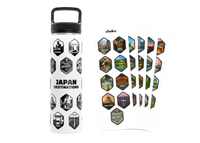
The Traveler Bottle maps 27 of Japan's most iconic destinations, a useful way to sketch the trip you are now pricing.
How much does a Japan trip cost per day?
On the ground, before flights, plan about $75 to $100 per person per day on a budget, $150 to $180 mid-range, and $300 or more for comfort. That daily figure covers your bed, three meals, local trains, attractions and a little incidental spending.
The tier you land in is mostly a function of two choices: where you sleep and where you eat. Everything else stays surprisingly stable across budgets.
| Per person, per day | Budget | Mid-range | Comfort |
|---|---|---|---|
| Accommodation | Hostel or business hotel | 3-star hotel | 4-5 star or ryokan |
| Food | Konbini, gyudon, ramen | Casual restaurants | Sit-down dining, some omakase |
| Daily total (land only) | ¥11,000–15,000 ($75–100) | ¥22,000–27,000 ($150–180) | ¥45,000+ ($300–485) |
| Best for | First trip, long stays, students | Most travelers, most trips | Honeymoons, special occasions |
A budget day in Japan still lands comfortably: a clean capsule or business hotel, a convenience-store breakfast, a ¥1,000 bowl of ramen for lunch, and a temple that costs nothing to enter. Travelers in the videos we studied describe these days warmly, as easy rather than punishing.
Comfort, on the other hand, has no ceiling. Once you add luxury ryokan, omakase dinners and guided tours, the daily figure climbs as far as you let it. Several travelers noted there is simply no upper limit, so the comfort range above is a floor, not a cap.
What does a 10-day or 2-week Japan trip cost in total?
A 10-day trip runs roughly $1,800 to $2,300 per person on a budget and $2,500 to $3,500 mid-range, flights included. Two weeks pushes those bands to about $2,400 to $3,200 and $3,800 to $5,200.
Here is how a typical trip stacks up, per person, with international flights folded in:
Budget, 10 days → around $1,800 to $2,300. Hostels or cheap business hotels, konbini and casual meals, point-to-point train tickets.
Mid-range, 10 days → around $2,500 to $3,500. The classic Tokyo, Kyoto and Osaka route lands here for most travelers.
Comfort, 10 days → $4,000 and up. Nicer hotels, restaurant dining, the occasional guided day.
Two weeks adds roughly another 35 to 45 percent to each band, because flights stay fixed while the daily costs keep running. The travelers who came in over budget almost all had the same story: they planned the trip carefully and then underestimated the small stuff, the airport transfers, the data SIM, the souvenirs, the "we may as well" extras.
The budget calculator handles exactly that, itemizing eight separate categories so nothing gets quietly left off the total.
How much are flights to Japan?
Flights are the single most variable cost and usually the biggest one. Budget roughly $700 to $1,600 per person round-trip, depending entirely on where you start.
Rough round-trip ranges from the budget videos and typical 2026 pricing:
From North America → $700 to $1,600. From Europe → $650 to $1,500. From Australia or New Zealand → $500 to $1,200. From elsewhere in Asia → $150 to $700, with budget carriers running genuine deals.
Because flights swing so widely, treat any "total Japan trip cost" you see online with care unless it says where the traveler flew from. One traveler in our research locked in a $299 round-trip; another paid four times that for the same route in cherry-blossom season. Book early, stay flexible on dates, and price the flight first, since it sets the tone for the whole budget.
How much should you budget for hotels in Japan?
Accommodation is where Japan earns its expensive reputation, and where your tier choice matters most. Plan about ¥6,800–14,000 a night ($45 to $95) for a budget room, ¥15,000–28,000 ($100 to $190) mid-range, and ¥38,000+ ($250 or more) for comfort.
The tiers, drawn from what travelers actually booked:
Budget, $45 to $95 a night. Japanese business hotels (Toyoko Inn, Super Hotel, APA) are the sweet spot. Small, spotless, well located, usually with free wi-fi and breakfast. Hostel dorms and capsules go lower still, down to around $20 a night for the truly thrifty.
Mid-range, $100 to $190 a night. A comfortable 3-star hotel with room to unpack and a better address.
Comfort, $250 and up. Four and five-star hotels, and traditional ryokan, which run from about $150 to well past $300 a night.
Two things move these numbers. Season is the big one: cherry-blossom dates can nearly double a hotel's rate, with one five-star property jumping from around $575 a night in early March to $1,230 at peak sakura. Booking ahead matters. The second is the new accommodation taxes rolling out in 2026, including a tiered lodging tax in Kyoto, small but worth knowing about.
For a deep dive on Tokyo specifically, our Tokyo budget guide breaks down which neighborhoods give the best value.
How much does food cost in Japan?
Food is the most flexible cost in the whole budget. You can eat genuinely well for around $25 a day, or spend $150 without trying hard.
The reason food is so flexible is the konbini. Japan's convenience stores, 7-Eleven, Lawson and FamilyMart, sell fresh, genuinely good meals for a few hundred yen. Travelers in the videos routinely keep food to about ¥1,000 a day by leaning on konbini breakfasts and the occasional cheap restaurant. The food is fresh and genuinely good, and it is a real strategy locals lean on too; our konbini guide covers what to actually order.
Daily food by tier, per person: budget ¥3,700–5,200 ($25 to $35), mid-range ¥6,000–10,500 ($40 to $70), comfort ¥15,000–30,000 ($100 to $200). An omakase dinner alone can run ¥22,000–45,000, which is why the comfort tier spreads so wide. Mix your days. One memorable splurge and a week of casual meals is a far better trip than seven mediocre mid-priced dinners.
Do you need a JR Pass?
For most travelers in 2026, no. Since the 2023 price hike, the 7-day JR Pass only pays off on unusually train-heavy itineraries. This was the single most consistent piece of advice across the budget videos we studied, and it overturns years of standard guidance.
The math is simple, and here it is yen-first, the way you'll actually pay it:
7-day JR Pass → ¥50,000 (about $340) per person. Tokyo → Kyoto on the Nozomi, reserved seat → ¥14,170 at the regular-season rate, per Japanese fare tables; unreserved is ¥13,320, and booking through the smartEX app shaves it to ¥13,970. Standard Tokyo, Kyoto and Osaka loop on individual tickets → about ¥38,000–60,000 ($250 to $400) per person.
For the classic three-city route, point-to-point tickets come out the same or cheaper, with none of the pass's date restrictions. If your trip stays in and around Tokyo, you do not need the pass at all. A Suica or Pasmo IC card covers every city train and bus, pay as you go.
Tokyo only: skip the JR Pass entirely. An IC card is all you need. Tokyo plus one city: skip it. One bullet-train round-trip is far cheaper than the pass. Tokyo, Kyoto and Osaka: still skip it for the standard loop. Only buy the pass if you are adding long-haul trips like Hiroshima or the far north.
Our transport guide covers IC cards and the JR Pass decision in full. The budget calculator also runs this check live, based on the cities you pick.
The resident sanity-check: what daily life here actually costs
We live in Tokyo, and the sanity-check we give visiting friends is simple: think in yen units, not dollar totals. The units barely move, whatever the exchange rate does.
A konbini onigiri is roughly ¥150–250. A proper bowl of ramen is about ¥1,000. A city subway hop starts around ¥180 on an IC card, and a full day of local trains lands near ¥750–1,200 in practice. Most temples are free or a few hundred yen. Nothing on that list is a splurge, and together they are why a careful day on the ground here really can stay near ¥11,000: daily Japan is priced for the people who live in it.
What is NOT priced for residents: peak-season hotel rooms, airport taxis, and anything bought within sight of a major attraction. That is the whole budget game in one sentence. Spend like the city on the daily categories, and reserve the visitor pricing for the few things that earn it.
What do travelers underestimate?
The trip total is rarely blown by the big bookings. It is the small, easy-to-forget costs that quietly push people over budget. Across the videos, the same gaps came up again and again.
The extras add up. An eSIM or pocket wifi, travel insurance, and airport transfers together run roughly $95 to $190 per person. Easy to forget, and they land before you have bought a single thing.
Souvenirs run hot. Travelers consistently spend more in the shops than they planned, often ¥30,000 to ¥135,000 ($200 to $900) per person. If you are bringing gifts home, budget for it honestly. Our Japan haul tool ranks what travelers actually buy, and the Japan souvenirs guide covers what is worth the money once you're in the shops.
Bag forwarding is worth knowing. Sending your luggage between hotels, takkyubin, costs about ¥2,000 a bag and saves dragging suitcases onto bullet trains. A small cost that buys a much smoother travel day.
Tax-free shopping helps. Spend ¥5,000 or more in one shop and most stores take roughly 10 percent off on the spot. Carry your passport.
Season is a price multiplier, not a footnote. Travel in mid-January to early March or in June and you will pay noticeably less for hotels than a cherry-blossom visitor in the very same rooms.
The travelers who finished a trip happy with their spending all shared one habit: they decided their numbers before they left, rather than discovering them at the airport on the way home.
Plan your number, then take the trip home
A Japan trip is one of the most rewarding things you will ever budget for, and far more affordable than its reputation once you separate the genuinely expensive parts from the cheap ones. Sleep and eat to your tier, skip the JR Pass unless you truly need it, and account for the small stuff up front.
When your number is set, run it through the budget calculator for a full itemized estimate. And when the trip itself is booked, the Traveler Bottle laser-engraves 27 of Japan's iconic destinations onto stainless steel, the trip you just planned, as an object you carry through it.
FAQ
How much does a 2-week trip to Japan cost? For two weeks, budget roughly $2,400 to $3,200 per person on a budget, $3,800 to $5,200 mid-range, and $7,000 or more for comfort, international flights included. The classic Tokyo, Kyoto and Osaka route sits in the mid-range band for most travelers.
Is Japan expensive to travel? Less than its reputation suggests. Japan is expensive in two categories, accommodation and dining around the big attractions, and reasonable in most others. Trains, konbini meals and many of the best attractions are genuinely cheap. A budget traveler can have a full trip for around $100 a day on the ground.
How much spending money do you need per day in Japan? Excluding flights and pre-paid hotels, plan about $40 to $70 a day for a budget trip, $80 to $130 mid-range, and $200 or more for comfort. That covers food, local trains, attractions and small shopping.
Is the JR Pass worth it in 2026? Usually not. Since the 2023 price increase, the 7-day pass only pays off on train-heavy itineraries. For the standard Tokyo, Kyoto and Osaka loop, individual tickets cost about $250 to $400 and come out cheaper.
What is the cheapest time to visit Japan? Mid-January to early March and the month of June are the lowest-priced windows. Cherry-blossom season can nearly double hotel rates, so travel off-peak if budget matters more than blossoms.
Sources
- JR Shinkansen Net, Tokyo–Kyoto fares, Nozomi reserved ¥14,170, unreserved ¥13,320, smartEX ¥13,970, seasonal surcharges
- The cheku budget benchmark dataset, the category-by-category numbers behind the budget calculator, compiled from 100+ itemized traveler cost breakdowns
How we got these numbers: estimates are digested from over 100 real Japan budget-breakdown videos published in 2025 and 2026, where travelers itemize what they actually spent, converted at roughly ¥150 to the dollar. Real costs shift with season, exchange rate and travel style. Treat this as a confident starting point, not a quote.
Activities and tours in Tokyo
cheku is a GetYourGuide partner. We link to tours that handle the parts of travel that eat your time, getting there, booking ahead, language, context you'd otherwise miss. If you book through our link, we earn a small commission at no extra cost to you.


