
March is two distinct trips. The first half — roughly March 1–19 — is quiet, cold, and has plum blossoms. Hotels are at near-winter rates, major sites have short queues, and the country is finishing its fiscal and academic year. The second half begins when cherry blossoms arrive and doesn't stop until the first week of May. Understanding the split is the entire logic of visiting Japan in March.
Most international visitors arrive in March for cherry blossoms and find the country already in motion before they knew the season had started. Japanese travel sources — Jalan.net planning threads, tenki.jp bloom forecasts, seasonal guides on note.com — treat the two halves of March as separate planning problems with different answers for crowd management, accommodation pricing, and what to actually do each day.
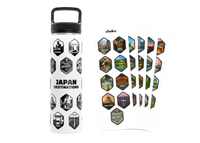
If you're building a Japan itinerary and need a starting list of destinations to put into the season, the Traveler Bottle covers 27 destinations across the country, useful for deciding where to spend your March days once the timing is clear.
What is Japan like in March?
March runs cold to warm. The Japan Meteorological Agency records Tokyo averages of 8–12°C in the first week, rising to 14–17°C by the last week. Overnight temperatures in early March drop to 5–7°C in Tokyo; bring a proper jacket for evenings throughout the month. Rain is moderate. Snow is possible in Tohoku and the Japanese Alps in early March but rare in central Honshu cities.
The month closes Japan's fiscal and academic year. March 31 is the last day of the Japanese fiscal year and school year simultaneously. Graduation ceremonies (卒業式) take place throughout the month, most concentrated in mid-March. Major shrines and parks see Japanese families with students in formal dress — a cultural layer to March that is entirely absent in other months. In Yanaka, Shibuya, and residential Tokyo neighborhoods, you'll encounter graduation processions that are distinctly Japanese without being designed for tourists at all.
Vernal Equinox Day (春分の日), a national public holiday, falls around March 20–21. It's a single-day holiday rather than a multi-day cluster, so it doesn't produce a large domestic travel surge — but it does mean some sites are slightly busier for one day.
How crowded is Japan in March?
The month divides clearly:
March 1–19: Among Japan's least crowded travel periods. JNTO statistics show early March as a low international visitor month — winter travel is over, cherry blossom season hasn't started in popular perception. Most international visitors planning spring trips arrive from late March. Hotels in Kyoto and Tokyo run rates close to winter pricing through mid-March. Queues at major temples and gardens are short by any standard.
March 20 onward: As cherry blossoms begin opening across western Honshu, visitor numbers climb sharply. The last week of March sees accommodation prices in Kyoto and Tokyo begin rising toward their April peak. In years when warm winters push the bloom earlier — Tokyo occasionally sees opening bloom (開花) as early as March 18–20 — the crowd surge starts earlier.
The early March logic: Many experienced travelers cite arriving in the first week of March as the most cost-efficient window for spring Japan — close enough to cherry blossom season to overlap with the end of it, but with near-February pricing and quiet sites for the first half of the trip.
What Japanese travelers actually do in March
Plum blossom (梅/ume) viewing is the March equivalent of April's cherry blossom hanami for Japanese domestic travelers. tenki.jp's bloom tracking covers ume as well as sakura. Tokyo's major ume spots — Yushima Tenmangu in Bunkyo, Koishikawa Korakuen Garden — peak in late February to mid-March. Atami Baien in Shizuoka, one of Japan's most cited ume viewing spots in Japanese travel writing, peaks earlier (typically January–February) but can still be in bloom in early March.
Japanese travel writers describe ume viewing as quieter, more local, and more aesthetic than cherry blossom season. The crowds are a fraction of sakura season. The fragrance is stronger. The experience is primarily Japanese domestic — few international visitors prioritize ume, which means the sites feel like Japan rather than like a tourist event.
On Jalan.net, Japanese domestic travelers in March skew toward: - Day trips from Tokyo for ume viewing (Atami, Koishikawa) - Early spring onsen trips in Nikko and Hakone - Kyoto pre-cherry blossom visits for lower accommodation rates - Tohoku (late March, when the Tohoku cherry blossoms run later than Tokyo)
Free for you: our Tokyo Google Maps list We keep a Google Maps list of the must-see spots around Tokyo - restaurants, cafes, shops, viewpoints, and streets worth the detour. Drop your email and we'll send it over.
March in Tokyo — the cherry blossom window
tenki.jp's annual sakura forecast is published in January and updated weekly as temperatures firm up. Typical Tokyo cherry blossom timing:
| Stage | Typical dates | Crowd level |
|---|---|---|
| Opening bloom (開花) | March 23–28 | Low — few visitors yet |
| 50% bloom (五分咲き) | March 28–April 1 | Building |
| Full bloom (満開) | April 1–6 | Peak annual crowds |
| Petal fall (散り始め) | April 7–12 | Declining sharply |
Japanese sources consistently note that the opening bloom to 50% bloom window — roughly March 25–31 in an average year — is the best time to see cherry blossoms: visually beautiful, less crowded than full bloom, and hotel rates not yet at their April peak.
Ueno Park, Shinjuku Gyoen, and the Meguro River are the most-cited Tokyo spots in Japanese travel content. Yanaka Cemetery — one of the neighborhood's most distinctive spaces — runs a long avenue of cherry trees through the cemetery grounds and is less crowded than Ueno even at peak bloom.
March in Kyoto
Early to mid-March Kyoto is the version of the city that Japanese frequent visitors prefer: major temples accessible without significant queuing, accommodation at non-peak rates, and a city running at its normal pace rather than as a tourist event.
Cherry blossoms in Kyoto typically begin 3–5 days later than Tokyo — opening bloom around March 27–April 1, full bloom April 3–10. This means arriving in the first two weeks of March gets you Kyoto without crowds, and arriving in the last week of March puts you at early bloom timing with the city just beginning to fill up.
The plum blossom recommendation from Japanese sources for Kyoto: Kitano Tenmangu Shrine, which hosts a ume garden that's among the most visited in Japan among domestic travelers. Bloom peaks late February to mid-March. The shrine's market (天神市/Tenjin-ichi) runs on the 25th of every month; the March market falls within ume season and draws large Japanese crowds.
Practical notes for March
Dress for two seasons in one trip: Early March requires a warm jacket (Tokyo 8°C mornings). Late March is genuinely spring (17°C days) and lighter layers work. For a full-month trip, pack both.
Book late March accommodation early: If your dates fall after March 20, treat accommodation booking like April — early Kyoto and Tokyo sakura-zone hotels fill. The best places go 4–6 weeks out; during early bloom years, even faster.
Weekday advantage at cherry blossom sites: The biggest crowd peaks in late March happen on weekends. Arriving Monday–Thursday to see cherry blossoms at Shinjuku Gyoen or Maruyama Park in Kyoto makes a meaningful difference in the experience. Japanese travel forums consistently note this — weekday hanami vs. weekend hanami are categorically different.
Budget travel angle: March 1–19 is one of the most cost-effective windows for Japan travel in the entire year. Flights from most markets are lower than April. Accommodation is at near-winter rates. The country is operating normally but not performing for tourists.
March is worth understanding rather than just booking into. For the full seasonal picture and which months Japanese sources rank highest, see The Best Time to Visit Japan. For a shortlist of destinations that span Tokyo, Kyoto, and beyond, the Traveler Bottle covers 27 Japan destinations across the country.
FAQ
When do cherry blossoms bloom in Japan in March? In Tokyo, cherry blossom opening bloom (開花) typically falls between March 23–28 in an average year, with full bloom in the first week of April. Warm winters push this earlier; cold winters push it later. tenki.jp publishes an annual forecast from January.
Is early March or late March better for Japan? Depends on the goal. Early March (1–19) means quiet sites, lower accommodation prices, plum blossoms, and a calm Japan. Late March (20+) means cherry blossoms building — more crowded, more expensive, but with the sakura season starting. Both are legitimate choices with different trade-offs.
Are there national holidays in March in Japan? One: Vernal Equinox Day (春分の日), around March 20–21. It creates a single-day holiday rather than a multi-day surge, so the effect on crowds is mild compared to Golden Week or Obon.
How cold is Japan in March? Tokyo averages 8–12°C in early March, rising to 14–17°C by late March. Morning and evening temperatures throughout the month require a jacket. Snow in central Tokyo is rare but possible in early March; Hokkaido and Tohoku are still in winter conditions through most of the month.
Sources
- Cherry Blossom and Plum Blossom Forecast — tenki.jp, Japan's major weather service, annual bloom tracker
- Seasonal Temperature Data — Japan Meteorological Agency, official spring climate data
- Japan Tourism Statistics — JNTO, monthly inbound visitor volume for March
- National Holiday Calendar — Cabinet Office Japan, Vernal Equinox Day dates
- Jalan March Travel Guides — Japan's largest domestic travel platform, hanami planning content
Activities and tours in Tokyo
cheku is a GetYourGuide partner. We link to tours that handle the parts of travel that eat your time, getting there, booking ahead, language, context you'd otherwise miss. If you book through our link, we earn a small commission at no extra cost to you.


