
Best Souvenirs to Buy in Shibuya (Curated by Tokyo Locals)
Shibuya has some of the best souvenir shopping in Tokyo — if you skip the obvious shops and know where to look. The most compelling finds are either "only in Shibuya" by design (a chocolate brand that never expanded, a Hachiko gift shop stocked with products made in Akita), or the best-in-city version of a Japanese gift category. This guide covers both, with the practical details you need to not waste a morning.
Shibuya's shopping geography is different from every other Tokyo neighborhood. You have vertical department stores (Scramble Square, Hikarie, Parco) stacked directly on the station, and then — about 15 minutes on foot northwest — a quieter world of independent craft shops and specialty makers in Tomigaya and Kamiyamacho that most visitors never reach. Both are worth your time. The station complex if you're efficient; the backstreets if you want what isn't sold anywhere else.
If you want a broader look at the neighborhood itself, our things to do in Shibuya guide covers the full picture.
What makes Shibuya different for souvenir shopping?
Shibuya's strength is range in a small area. Within a 20-minute radius of the station, you can find award-winning craft chocolate, a 300-year-old wagashi brand, Japan's most respected secondhand luxury chain, a shop stocked with products that don't exist anywhere else in the world, and five floors of independent Japanese designer goods. Almost no other Tokyo neighborhood has this density.
Compared to Harajuku: Shibuya skews less fashion-forward, more democratic, and — crucially for souvenir hunting — it has real craft depth that Harajuku's current incarnation lacks.
Compared to Ginza: Less formal, more creative. Ginza is where you go if brand prestige matters. Shibuya is where you go if curation matters.
Compared to Shimokitazawa: Shimokitazawa is for the hunt — secondhand, uncharted, rough-edged. Shibuya is the curated version: you know what you're getting, the quality is high, the packaging travels well.
The three gifts you can only get in Shibuya
These aren't "only in Shibuya" as marketing language. These are shops or brands with a genuine one-location reality.
Minimal — Bean-to-Bar Chocolate (Tomigaya)
Minimal launched in 2014 with a specific premise: minimum ingredients (cacao + sugar only), maximum terroir. Since then they've won over 60 international craft chocolate awards. Bars are single-origin, fully vegan, and packaged in packaging that would look at home in a design museum. The flagship is in Tomigaya, 15 minutes northwest of Shibuya Station by foot. In-store, staff offer free tastings by origin region and explain flavor profiles as specifically as a wine shop. You can also get cacao pulp juice here, which exists almost nowhere else in Tokyo.
The bars travel well and price from ¥1,690. Gift sets from ¥3,000. If you're shopping for anyone with serious taste in chocolate — or anyone who will appreciate bringing back proof that Japanese craft competes with European makers — this is the stop.
Hachifuru SHIBUYA meets AKITA (Scramble Square, 14F)
Hachiko's statue is one of the most photographed spots in Tokyo. Most visitors don't know that Hachiko was an Akita dog, born in Akita Prefecture. Hachifuru is a concept shop built around that story: over 50 exclusive products connecting Hachiko's Shibuya home and his Akita origins. The Kinman confectionery collaboration (only sold here, not in Akita or online), instant kiritanpo soup, plush Hachiko with limited-edition hydrangea-patterned bandana, handmade accessories. These items aren't sold anywhere else — online or off.
If you want to bring back something that has a specific Shibuya story behind it, this is the most defensible answer.
Madore Madeleine Fruits (Tokyu Food Show, Shibuya Mark City)
Madore opened in Shibuya and has not opened a second location. Their signature is a madeleine filled with house-made fruit confit — gift boxes last about 10 days, which makes them genuinely travel-friendly. Price around ¥350–500 per piece. The brand is not available online. This is a find-it-in-Shibuya situation, which is increasingly rare.
Free for you: every shop in this guide, mapped We've put every store and address in this post into a Google Maps list with floor numbers and our notes on what to buy. Drop your email and we'll send it.
Japanese craft worth carrying home: Nakagawa Masashichi Shoten
Nakagawa Masashichi Shoten was founded in Nara in 1716. Three centuries of regional craft curation. Their Shibuya Scramble Square store (11F) is the brand's largest location in Japan — 4,000 items in stock spanning hand-carved chopsticks, ceramics, regional soy sauce, kaya fukin (the signature tea towel made from mosquito net fabric that is one of Japan's most packable and genuinely useful gifts), and rotating Studio Ghibli craft collaborations.
The kaya fukin is worth understanding: it's made from the same fine mesh fabric as traditional mosquito nets, which makes it extraordinarily absorbent and quick-drying. It folds flat to the size of a letter. It costs ¥500–¥800. That combination — quality, function, cultural specificity, and packability — is what makes it the canonical "what do I bring everyone" souvenir for Japan regulars.
The photographer's eye: Scramble Square 11F is glass-fronted. Stand at the edge and you're level with the Shibuya crossing below — a clean vertical composition that captures the noise of the crossing and the quiet of the craft shop at the same frame. Best at dusk when the crossing starts to glow.
For the kitchen: what's worth buying in Hands and Loft
| Hands Shibuya | Loft Shibuya | |
|---|---|---|
| Best buy | TAKUMINOWAZA nail clippers | Chopstick rests |
| Also strong | Kitchen knives, Gallery Market | Matcha tools (3F), stationery (B1F) |
| Floor count | 8 floors | B1F–6F |
| Walk from station | 7 min (Hachiko exit) | 4 min |
| Best for | Craft tools, independent design | Stationery lovers, kitchen gifts |
The TAKUMINOWAZA nail clippers at Hands are made by craftsmen in Gifu Prefecture using forging techniques borrowed from Japanese blade-making. They are the nail clipper that people buy once and keep for 20 years. Priced ¥2,000–¥4,000. That's the gift that sounds absurd until you actually use it.
The Loft chopstick rests are the opposite kind of gift: affordable (¥300–¥1,500), maximally Japanese, and something that nobody at home will have seen before. They come in every form — miniature foods, abstract shapes, animals. Buy a set of mismatched ones, wrap them together.
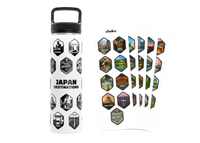
❤️ The Traveler bucket-list bottle features the 27 Japan destinations first-time visitors actually plan around — useful for sequencing a trip where every stop earns its place in the suitcase. Launching soon on Kickstarter.
For the sweet tooth: Toraya, ÉCHIRÉ, and the Tokyu Food Show
Toraya has been making wagashi (traditional Japanese confections) since the early 16th century. Their yokan — a dense rectangle of azuki bean paste, set like a sweet terrine — is Japan's most gift-appropriate traditional sweet. It's elegant, shelf-stable, and comes in Toraya's famously beautiful packaging. The Shibuya Hikarie ShinQs location (B2F) carries some location-exclusive designs. Price ¥2,300–¥5,800.
ÉCHIRÉ is a French fermented butter brand that has taken on cult status specifically in Japan. Their Shibuya outpost produces sablé cookies stamped with the brand's cow logo, sold in blue tins. The Japanese execution of a French product — precise, fussy, better than the original — is its own kind of gift logic. The tin is immediately recognisable to anyone who knows Japanese food culture. Lines form before the shop opens.
Both of these, plus Madore and a rotating cast of Tokyo-limited sweets, are findable in the Tokyu Food Show basement (Shibuya Mark City, accessible from the station).
For design nerds: SPBS and Daikanyama Tsutaya Books
SPBS (Shibuya Publishing & Booksellers) in Kamiyamacho is run by an editor. That means the book selection is curated like a magazine issue — themed, opinionated, not alphabetised. The English-language design and art section carries books you won't find even in good bookstores at home. Their original goods include Hachiko-themed stickers and collaboration leather goods. Open daily 11am–8pm. Address: 17-3 Kamiyamacho, Shibuya-ku.
Daikanyama Tsutaya Books (15 minutes from Shibuya by Tokyu Toyoko Line, or a pleasant walk) was called one of the world's most brilliant bookshops by the Financial Times. Three buildings styled like a library in the woods. The art and architecture section carries a depth of English-language titles that specialist shops in London and New York don't match. Tax-free on purchases over ¥5,401.
A design book or architecture monograph is a souvenir that doesn't scream "souvenir." It's specific, heavy enough to matter, and has a story attached to the shop where you bought it.
Practical notes for Shibuya souvenir shopping
Tax-free shopping: Most department stores (Scramble Square, Hikarie, Parco, Hands, Loft) offer tax-free purchases for non-residents on spending over ¥5,000 in a single transaction. Bring your passport. The refund is processed at a dedicated counter per building — don't expect individual shops to handle it.
Timing: Shibuya on a Saturday afternoon is genuinely difficult. If you're going to Scramble Square specifically, weekday mornings before noon are manageable. If you're going to Tomigaya (Minimal, SPBS, Fuglen), any time is fine — the area is calm even on weekends.
What to prioritize: If you're doing one pass through Shibuya, the Scramble Square 11F–14F run (Nakagawa → Hachifuru, with ÉCHIRÉ on the way back down) is the most efficient 45 minutes of souvenir shopping in the building. Then Tokyu Food Show underneath Shibuya Station for the sweet category. Hands and Loft are better if you have specific categories in mind.
If Shibuya is just one destination on your Japan trip, our guide to Japan souvenirs worth buying goes broader across the country.
❤️ For the full Tokyo route that pairs with this kind of neighborhood walk, the cheku 9 Days in Tokyo guide has 106 pages of local knowledge and our photography — built around what to do, day by day. Launching soon on Kickstarter.
FAQ
What are the best souvenirs to buy in Shibuya?
The most defensible picks are the Shibuya-only ones: Minimal bean-to-bar chocolate (Tomigaya, from ¥1,690), Hachifuru goods at Scramble Square 14F, and Madore Madeleine Fruits at Tokyu Food Show. For something more universally giftable, Nakagawa Masashichi Shoten (Scramble Square 11F) has 4,000 items of Japanese regional craft at every price point.
Where is the best souvenir shopping in Shibuya?
Scramble Square for concentration and convenience — Nakagawa (11F), Hachifuru (14F), ÉCHIRÉ. Tokyu Food Show (underground, Mark City) for sweets. Tomigaya for Minimal and SPBS if you're willing to walk 15 minutes. Parco 6F for Nintendo Tokyo if you need gaming or character goods.
Is Tokyu Hands or Loft better for souvenirs in Shibuya?
Hands for craft tools, kitchen knives, and the Gallery Market on the upper floors. Loft for stationery (B1F) and the matcha section (3F). Both are worth a pass if you have time. If choosing one, Hands has a wider souvenir range.
What is Minimal chocolate in Shibuya?
Minimal is a bean-to-bar chocolate maker in Tomigaya that has won over 60 international craft awards since 2014. Two ingredients: cacao and sugar. Single-origin bars from ¥1,690. The store is a 15-minute walk northwest of Shibuya Station — worth the walk, especially if you combine it with Camelback for the egg sandwich.
Are there any souvenirs unique to Shibuya?
Three: Minimal chocolate (Tomigaya flagship, never expanded), Hachifuru SHIBUYA meets AKITA (Scramble Square 14F, items made in Akita specifically for this location), and Madore Madeleine Fruits (Tokyu Food Show, Shibuya-only since opening).


Activities and tours in Tokyo
cheku is a GetYourGuide partner. We link to tours that handle the parts of travel that eat your time, getting there, booking ahead, language, context you'd otherwise miss. If you book through our link, we earn a small commission at no extra cost to you.


