
At ¥100 (about $0.70 USD), Japan offers individual Kit Kat bars in regional flavors from convenience stores, the base tier of gachapon capsule toys, washi tape and stationery basics from Daiso, and kitchen tools that outlast the price point they come from. Japan's 100-yen shops are one of the genuine shopping surprises for first-time visitors.
¥100 is both a price point and a shopping category in Japan. The 100-yen shop (百均 / hyakukin) is a retail format Japan has refined since the 1980s, and the quality of what you get for ¥100 at a Japanese Daiso differs from what you get for the equivalent at a dollar store elsewhere. Japanese lifestyle writing on note.com covers Daiso finds as a distinct editorial category — regular posts cataloguing what's worth buying in a given season, what's changed, and what the underrated picks are.
This guide covers what you can literally buy in Japan at or near ¥100 — not a general value shopping guide, but specifically: what exists at that price point, and which categories are actually worth buying there.
For the full range of Japan souvenirs across all price points, the Japan souvenirs guide covers 25 categories with pricing and sourcing. For Tokyo-specific souvenir shopping, the Tokyo souvenirs guide covers the in-city version.
What is a 100-yen shop in Japan, and what can you actually expect?
Japan's 100-yen shops sell thousands of items at ¥100 plus tax. Daiso is the largest chain, with over 3,000 branches in Japan. Seria and Can Do are the other main chains, each with a slightly different product mix and aesthetic. Japanese domestic travel writing on jalan.net and note.com covers these as a distinct shopping category with genuine editorial attention.
What makes the Japanese 100-yen shop different from its overseas equivalents: Daiso has its own in-house design team. The stationery section in particular reflects Japanese graphic design sensibility — functional, often minimal, sometimes seasonal. Kitchen tools are designed around Japanese cooking formats (smaller portions, specific cuts, steamer baskets for rice). The quality control is significantly better than you'd expect from the price.
The honest limitation: not everything at ¥100 is worth buying. Some categories — basic plastic goods, generic storage containers — are what you'd expect at any ¥100 price point. The categories that genuinely outperform the price: stationery, kitchen tools, fabric goods, cleaning products, and seasonal/decorative items.
What stationery can you buy in Japan for 100 yen?
Daiso and Seria's stationery sections are the strongest categories in the 100-yen shop. Tabimaniajapan's stationery guide identifies them as solid entry points for Japanese stationery, with quality that significantly exceeds the price.
At Daiso for ¥100: notepads in A6, B6, and A5 formats, basic pens and mechanical pencils (functional, not premium), correction tape, mini scissors, sticker sheets, and small envelope sets. The designs rotate with the season — spring cherry blossom editions, autumn leaf versions — and are restocked frequently.
Washi tape at 100-yen shops runs ¥150–400 per roll depending on the shop and design. This is at the lower end of the washi tape market (MT brand's premium range runs higher), but the 100-yen shop versions are genuine washi tape — the paper quality and print are real, not just printed plastic film. For quantity buying across multiple recipients, this is the most practical price point.
What food can you buy in Japan for 100 yen?
Convenience stores are Japan's ¥100-and-under food option. 7-Eleven, Lawson, and FamilyMart across Japan carry items at or near ¥100 that function as practical snacks and entry-level souvenirs.
Kit Kat regional flavors. Tokyo Cheapo's Kit Kat guide documents individual bars at ¥100–200 in convenience stores. These are the same regional exclusives covered in dedicated souvenir guides — matcha, melon, strawberry — at the most accessible price. A handful of bars from different regions, bought at ¥100–200 each, is the most cost-effective Japan snack souvenir.
Basic convenience store snacks. Onigiri (rice balls) at 7-Eleven run approximately ¥100–150 for standard fillings. Convenience store pastries, small bags of chips, and seasonal snack items hit the ¥100–150 range consistently. These aren't souvenirs in the traditional sense, but for someone building a picture of what Japan actually eats day-to-day, convenience store food at ¥100 is part of that picture.
Vending machine drinks. Japan's ubiquitous vending machines sell hot and cold drinks at ¥100–160. Green tea, black coffee (Boss Coffee is the classic vending machine brand), and seasonal drinks. At ¥100–130, the hot tea options from vending machines are a distinctly Japanese experience.
What are the best gachapon for 100 yen?
The ¥100 tier of gachapon (capsule toys) represents the entry point of a Japanese entertainment format that goes up to ¥500 per capsule. ATT Japan's gachapon guide covers the format and the Akihabara Gachapon Hall (open 11:00–20:00) as the most concentrated source in Tokyo.
At ¥100 per capsule, the selection is smaller than the ¥300–500 machines. The ¥100 tier tends to cover simpler charms, basic miniature figures, and novelty items. The ¥200–500 tier is where detailed figurines, licensed character series, and collector-grade capsules appear. For anyone specifically targeting the ¥100 price point, the Akihabara Gachapon Hall and station arcade machines throughout Japan have ¥100 options.
The advantage of ¥100 gachapon as souvenirs: each one is a story. You can tell the recipient exactly which machine, what series, and what you got versus what you were hoping for. It travels in a pocket, weighs almost nothing, and is a format invented in Japan.
Free for you: our Tokyo Google Maps list We keep a Google Maps list of the must-see spots around Tokyo — restaurants, cafes, shops, viewpoints, and streets worth the detour. Drop your email and we'll send it over.
What kitchen and home goods can you buy in Japan for 100 yen?
The kitchen tool section at Daiso is the category that consistently surprises visitors who expect nothing at ¥100. Japanese food culture has very specific kitchen tools — silicone onigiri molds, dashi straining bags, natto mixing sticks, specific chopstick rests — and Daiso makes functional versions of all of them at ¥100.
Japanese lifestyle writing on note.com covers Daiso kitchen finds regularly: silicone vegetable peelers that work, steamer inserts that fit standard pots, drop lids (otoshi-buta) that make Japanese simmered dishes easier to make at home. These are tools with genuine Japanese food application at a price point that makes them practical to bring home and actually use rather than display.
Chopstick sets at Daiso: ¥100 for basic lacquered pairs. These are not the craft objects of Kappabashi Street (¥3,000–15,000 for quality), but they're functional daily-use chopsticks that work. If you want quantity — several pairs for a household — ¥100 Daiso chopsticks are the practical answer.
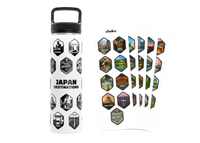
❤️ The Traveler bucket-list bottle features the 27 Japan destinations first-time visitors actually plan around — useful for sequencing a trip where every stop earns its place in the suitcase. Launching soon on Kickstarter.
What fabric and cleaning products from Japan are worth buying for 100 yen?
Japanese cleaning culture has produced a category of functional cleaning goods that Daiso makes accessible at ¥100. The kệ rubber-tip broom heads, microfibre cleaning cloths, and sticky roller refills that Japanese lifestyle writing on note.com treats as mundane household items are genuinely well-designed compared to international equivalents at the same price.
Fabric goods worth noting: small tenugui (thin cotton hand towels) appear in Daiso in basic designs at ¥100–200. These are the functional version of the craft tenugui sold in specialist shops for ¥800–2,500. As a practical item for travel — packs flat, dries fast, works as a face towel or kitchen cloth — the ¥100 Daiso version is fine. For a gift with a design story behind it, spend more at a specialist shop.
What are the best 100-yen souvenirs to bring back from Japan?
| Item | Price | Where | Best for |
|---|---|---|---|
| Regional Kit Kat bar | ¥100–200 | Convenience stores | Quantity souvenir for multiple recipients |
| Washi tape roll | ¥150–400 | Daiso, Seria | Lightweight, stackable, genuinely Japanese |
| Gachapon capsule (¥100 tier) | ¥100 | Akihabara, station arcades | Novelty; good story to tell |
| Daiso notepad | ¥100 | Daiso | Practical; seasonal designs |
| Daiso chopstick set | ¥100 | Daiso | Functional; daily use |
| Convenience store snacks | ¥100–150 | 7-Eleven, Lawson, FamilyMart | Eat-on-trip; perishable |
| Best for | Light packing | Buying for many people | Daiso stationery + Kit Kats |
❤️ If you're planning a longer Japan trip, Two Weeks in Japan is our 200+ page travel guide with day-by-day neighborhood plans and our photography — built around how we actually explore Japan living here. Launching soon on Kickstarter.
FAQ
Is Daiso in Japan the same as Daiso outside Japan? No. Daiso Japan operates over 3,000 branches with a much larger product range than Daiso stores in other countries. The stationery, seasonal items, and kitchen goods sold in Japan are significantly more varied and include Japan-specific items (natto tools, onigiri molds, specific cleaning tools) that don't appear in overseas branches. Japanese lifestyle writing on note.com treats Daiso Japan as its own distinct shopping destination.
What is the best Daiso location in Tokyo? The Harajuku Daiso (near Takeshita Street exit of Harajuku Station) is one of the largest in central Tokyo, with multiple floors covering most categories. Shibuya and Shinjuku branches are also large and central. Most shopping districts in Tokyo have a Daiso within a short walk.
Are 100-yen shop items good quality? In specific categories, yes — better than the price suggests. Japanese domestic travel writing consistently recommends: stationery, kitchen tools, fabric goods, and cleaning products as the categories where quality genuinely surprises. Generic plastic storage goods and some beauty products are more variable. The stationery section is the most reliably good pick.
What Japanese things can you buy for ¥500 or less? Under ¥500: washi tape from MT brand or 100-yen shops, individual Kit Kat bars in multiple regional flavors, gachapon from the ¥100–500 range, small Daiso kitchen tools, Kose Clear Turn sheet mask 7-packs (¥300), Cup Noodle ramen shop collaborations (¥278–400), and small tabi socks at the entry end of the range.
Sources
- Tokyo Cheapo — Kit Kat flavor guide — convenience store pricing, ¥100–200 per bar
- ATT Japan — Gachapon guide — ¥100 tier gachapon, Akihabara Gachapon Hall
- Tabimaniajapan — Stationery guide — washi tape at 100-yen shops, Daiso stationery context
- jalan.net — Japanese domestic shopping guides covering 100-yen shop categories, Daiso recommendations
- note.com — Japanese lifestyle writing on Daiso finds — seasonal stationery, kitchen tools, cleaning goods reviewed by Tokyo residents


Activities and tours in Tokyo
cheku is a GetYourGuide partner. We link to tours that handle the parts of travel that eat your time, getting there, booking ahead, language, context you'd otherwise miss. If you book through our link, we earn a small commission at no extra cost to you.


