
A Japanese convenience store is not what the words suggest. Konbini (コンビニ) are 24-hour stores on every corner serving food that would embarrass most restaurants back home. Within your first day in Tokyo you'll walk past three of them; by day two, you'll plan routes around them. This guide covers what to actually buy across the three major chains, how the in-store services work, and what locals know that tourists usually miss.
If we had to recommend a single Japanese institution that consistently surprises first-time visitors, it would be the konbini. The combination of food quality, accessibility, and 24-hour reliability is the genuine cultural difference. Anthony Bourdain memorably called the Japanese convenience-store egg sandwich "unnatural, inexplicable and delicious." That framing applies to the whole category.
Japan has over 56,000 convenience stores. More than any other country per capita. The three major chains (7-Eleven, FamilyMart, Lawson) are everywhere, each with a distinct character. Japanese food coverage on Tabelog and note.com treats konbini products as a legitimate food category, not as fallback eating.
This guide covers what to actually buy, how to use the in-store services, and the things that take most visitors a few days to figure out on their own.
For the broader practical Japan toolkit, the transport guide covers IC cards and rail; Tokyo on a Budget covers spending. For the souvenir side of konbini (Kit Kats, regional snacks), the Japan souvenirs guide covers it in depth.
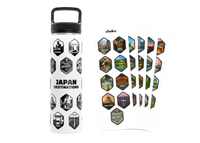
The Traveler Bottle maps 27 Japan destinations including the cities where konbini culture is most concentrated.
What's the difference between 7-Eleven, FamilyMart, and Lawson?
All three major chains are excellent. Each has a specific character that's worth knowing. Japanese food writing on note.com and konbini-specific coverage consistently maps the same chain personalities.
7-Eleven (セブン-イレブン). The safe-bet default and Japan's largest chain. The Seven Premium private-label line is reliably excellent across every category: onigiri, sandwiches, bento, sweets, snacks, ready meals. If you don't know which version of a product to pick, the Seven Premium one is consistently good. Their ATMs also accept most foreign-issued Visa, Mastercard, and Amex cards, which is crucial when you need cash before an early Shinkansen. The lighting and store layout is the standard Japanese konbini experience.
FamilyMart (ファミリーマート, "Famima"). The youth-skewing chain with the cult-followed Famichiki fried chicken at the hot counter, ¥230. Their sweet and bread selection is the strongest of the three; their seasonal soufflé pudding has its own internet following. The brand voice is brighter and more design-forward than 7-Eleven. Often partnered with Studio Ghibli, K-pop tours, and other cultural collaborations.
Lawson (ローソン). The bread, pastry, and karaage chain. The Lawson Karaage-kun fried chicken (¥240) and Mochi Shokkan Roll cake (chewy texture, milky cream) are the signature itemsgnature items. Lawson is also where you buy Studio Ghibli Museum tickets in Japan: they're sold exclusively through Lawson kiosks (Loppi terminals).
Natural Lawson and Lawson 100 are sub-brands worth knowing: Natural Lawson focuses on organic/healthy options; Lawson 100 is a ¥100 (plus tax) variant with bulk pricing.
The honest take: all three are worth trying. Most travelers develop a chain preference by day three. The food differences are real but small; the convenience of "whichever one is closest" usually beats walking 5 extra minutes to reach a specific chain.
What should you buy first at a Japanese convenience store?
Three items every visitor should try in their first 24 hours. These cover the standout konbini food categories without overwhelming first-time visitors.
Onigiri (おにぎり, ¥130–180). Triangular rice balls wrapped in nori. Salmon (sake) and tuna mayo (tuna mayonnaise) are accessible starting flavors; umeboshi (pickled plum) is the Japanese-favorite traditional pick; konbu (kelp) is the safest if you don't like fish.
The packaging detail nobody tells you about. Onigiri wrappers are engineered to keep the nori seaweed crisp until you open it. Numbered tabs are printed on the wrapper: pull tab 1, then 2, then 3 in order, and the nori wraps itself around the rice as you unwrap. Following the numbered order matters; opening it wrong leaves you with broken nori. Japanese food writing on Tabelog calls this design "konbini engineering at its best."
Tamago Sando (玉子サンド, ¥280–350). The crustless egg-salad sandwich on pillowy white bread. The bread quality is the thing. Softer and richer than any Western sandwich bread. The egg salad inside is creamy with subtle dashi seasoning. Famously called by Anthony Bourdain "unnatural, inexplicable and delicious." Available at all three chains; the FamilyMart version is slightly sweeter, 7-Eleven's is the canonical.
Famichiki or Lawson Karaage (hot counter fried chicken, ¥230–280). The two competing konbini fried chickens. Famichiki (FamilyMart) is the sweeter, more breaded version; Lawson Karaage-kun is the saltier, garlickier version. Japanese food bloggers debate them endlessly. The honest answer: try both, pick a favorite by the end of week one.
Combined: under ¥800 for a complete introduction to konbini food.
What hot foods are at the konbini register?
Every konbini has a heated case next to the cashier with rotating prepared items. The selection varies by chain and season; the standard picks are consistent.
Nikuman (steamed meat buns), ¥150–200. Steamed white-flour buns filled with seasoned pork. Essential cold-weather konbini food. Two nikuman plus a coffee is a substantial winter snack. The pizza-flavored version exists; the curry version exists; the traditional pork version is what to start with.
Karaage (Japanese fried chicken). Both Famichiki and Lawson Karaage are sold here. The wars over which is better are real among Japanese commentators; both are excellent.
Oden (おでん), seasonally October to March, ¥80–250 per piece. A traditional winter stew with daikon, eggs, fish cakes, beef tendon, and konnyaku in a soy-dashi broth. Customers select pieces one-by-one from a heated display. The simmered eggs and daikon are the standout entry-level picks.
Amerikan Doggu (アメリカンドッグ, corn dog), ¥130–180. Yes, a corn dog. The Japanese konbini version is a legitimate snack. Mustard packets are at the front.
Croquettes (コロッケ), ¥150–250. Potato or beef croquettes deep-fried in panko. The standout cold-weather snack.
Hot drinks rack. Self-serve coffee (covered below) plus pre-packaged hot cans of cocoa, milk tea, and corn potage soup (a Japanese vending-machine staple) live here.
How do bento boxes work at the konbini?
Bento (弁当, ¥500–900) are complete prepared meals with rice, protein, and side dishes. The standard konbini bento options span every Japanese food category.
Typical bento options: - Salmon bento with grilled salmon, rice, pickled vegetables, and a sweet egg roll - Karaage bento with fried chicken, rice, slaw, and a small side - Tonkatsu bento with breaded pork cutlet, cabbage, rice - Yakiniku bento with grilled beef strips, rice - Mixed plate bento with multiple small portions - Curry rice bento with Japanese curry over rice - Pasta bento (yes, pasta bento): Japanese-style spaghetti
The heating workflow. Hand the bento to the cashier and nod when they ask "atatameru?" (warm it up?). Or say "hai" for yes. They microwave it for 2–4 minutes while you continue at the register. You walk out with a hot meal.
Eating location. Most konbini have a small counter area along the front window with stools, or a dedicated eat-in space at the back. This is what it's there for. Foreign visitors often hesitate; locals routinely eat their lunch this way.
The yellow-sticker discount window. Bento are produced fresh daily and discounted 20–40% in the final 1–2 hours before they expire (typically late evening). A ¥780 bento becomes ¥520–620. The same food. Tabelog and Japanese budget travel coverage consistently flag this as one of Tokyo's best food values.
What are the best konbini sweets and desserts?
Konbini sweets are a genuine category, taken seriously by Japanese food media. Each chain has signature items that have developed cult followings.
Lawson's Mochi Shokkan Roll (¥280). A chewy roll cake with milky cream filling. The "mochi shokkan" (mochi-like texture) name is the marketing handle: the cake somehow has both cake-softness and mochi-chewiness. Lawson's signature pastry.
FamilyMart's Famima Soufflé Pudding (¥320). Fluffy soufflé on top of creamy custard pudding. The two textures together are the appeal. Internet-famous since the early 2020s.
7-Eleven's seasonal collaborations. 7-Eleven runs frequent limited-edition collaborations with major patisseries and characters. Look for the seasonal corner of the chilled dessert case. Items rotate every 2–4 weeks.
Daifuku (大福). Mochi rice cakes filled with sweet red bean paste, fresh fruit, or whipped cream. ¥150–300. Available at all three chains; the strawberry daifuku in winter and spring is the seasonal standout.
Dorayaki (どら焼き). Pancake-style sweet with red bean paste between two soft cake rounds. The classic Doraemon snack. ¥130–200.
Pudding and ice cream. Häagen-Dazs and Japanese brands (Glico, Lotte, Morinaga) at the freezer cases. Häagen-Dazs Japan has flavors that don't exist outside Japan: Japanese yuzu, hojicha, sakura.
What snacks are worth bringing home as souvenirs?
Five categories worth the suitcase space. Tokyo Cheapo's Kit Kat coverage and Japanese souvenir writing on note.com consistently route konbini souvenirs through these.
Regional and seasonal Kit Kats (¥150–250 per bar). The most internationally famous konbini souvenir. Flavors unavailable outside Japan: matcha (multiple intensities), yuzu, sakura, wasabi, hojicha (roasted green tea), milk tea, sake. Convenience-store availability rotates; the Kit Kat Chocolatory at Seibu Ikebukuro and Daimaru Tokyo carries the premium versions. The cheapest souvenir-tier purchase per gift recipient: a handful of regional Kit Kats from any convenience store.
Jagabee by Calbee (¥150–250). Potato stick snacks. The soy sauce butter (shoyu butter) flavor is the standout. Salted and consommé versions are widely available. Compact packaging, easy to gift, addictively good.
Black Thunder (¥40 per bar). Chocolate bar with cocoa cookie pieces and rice puff. Iconic Japanese student snack. Sells in bulk at all konbini. The "Bigger Black Thunder" version is twice the size for ¥80.
Pocky seasonal varieties (¥150–250). Beyond the standard chocolate and strawberry, Japan-only flavors rotate: cherry blossom (spring), butter caramel (winter), almond crush, hojicha, melon. The seasonal versions are the gift-worthy ones.
Sembei (rice crackers, ¥150–300). Hand-grilled in some shops; standard packaged versions at konbini. The black sesame, soy sauce, and shoyu wasabi flavors travel well. Compact and shelf-stable.
For the broader Japan souvenir picture, the Japan souvenirs guide covers 30 categories with sourcing notes. For konbini gifts specifically, the Japan food souvenirs and snacks guide goes deeper on what travels well.
Free for you: our Tokyo Google Maps list We keep a Google Maps list of the must-see spots around Tokyo: restaurants, cafes, shopping districts, viewpoints, and the things actually worth the detour. Drop your email and we'll send it over.
What about konbini coffee?
Don't sleep on konbini coffee. Every major chain has a self-serve bean-to-cup machine that grinds fresh per cup. ¥110–180 for a coffee that rivals most cafés. Japanese morning routines run through konbini coffee; foreign visitors usually adopt the habit within their first few days.
How to use it. Buy a coffee at the register (you receive an empty cup). Walk to the machine. Press the button matching your order (small/medium/large; hot/iced). The machine grinds beans and brews on demand. Total time: 30–45 seconds.
Iced coffee variant. During warmer months, the system uses pre-packaged ice-filled cups. You pay for the cup at the register, take it to the machine, and the machine adds hot coffee over ice (or cold-brew coffee in some chains).
Notable signature blends: - 7-Eleven coffee: the most consistently rated by Japanese coffee writers. Standard pick. - Lawson Machi Café: slightly stronger than 7-Eleven; has bean origin variations. - FamilyMart Famima Café: middle-ground; recent rebranding improved quality noticeably.
How do konbini services work beyond food?
Konbini are full-service neighborhood hubs. The food is the most-discussed function but several others are worth knowing.
ATMs. 7-Eleven ATMs (the dedicated Seven Bank ATMs inside every 7-Eleven) reliably accept foreign-issued Visa, Mastercard, Maestro, JCB, and Amex cards. They have English interfaces. Withdrawal fees vary by card (typically ¥110–220 plus your home bank's fees). Most other Japanese ATMs reject foreign cards; 7-Eleven is the dependable option.
Ticket purchasing (Loppi at Lawson, Famiport at FamilyMart, 7-Spot at 7-Eleven). These multi-function terminals sell tickets for concerts, museums (including the Ghibli Museum at Lawson), domestic train tickets, and other services. Some have English interfaces; the Ghibli ticket process is widely documented online.
Bill payment. Japanese utility bills, rent (sometimes), and government fees can be paid at the konbini register. Locals do this routinely. Visitors rarely need it.
Takkyubin (luggage forwarding). Yamato Transport and Sagawa Express both have konbini drop-off and pickup. Send bags from hotel A to hotel B, or from konbini to konbini. ¥1,500–2,500 per bag. The transport guide covers this; it's one of the most useful Japan-travel hacks.
Wi-Fi and bathrooms. Most konbini have free Wi-Fi and public bathrooms. The Wi-Fi requires registration at first use; the bathroom is the standard place to find one in Japan, where public bathrooms are otherwise rare.
Trash bins. Konbini are one of the few reliable places to dispose of food packaging in Japan (outdoor public trash bins are rare). The standard workflow: buy and eat the food, dispose of the wrappers at the in-store bins, then continue.
Bag charges. Since 2020, plastic bags cost ¥3–10 extra. Say "fukuro wa daijobu desu" (bag isn't needed) or just shake your head when asked, or bring your own bag.
How do the three major chains compare?
| Category | 7-Eleven | FamilyMart | Lawson |
|---|---|---|---|
| Brand handle | Safe default, Seven Premium | Youth-skewing, design-forward | Bread, pastry, karaage |
| Standout food | Onigiri, premium prepared meals | Famichiki, soufflé pudding | Karaage-kun, Mochi Shokkan Roll |
| Coffee | Most-consistently rated | Middle-ground | Slightly stronger, origin variations |
| ATM for foreign cards | Reliable (Seven Bank) | Often works | Sometimes works |
| Notable extras | Largest store count | Famima Café partnerships | Ghibli Museum tickets (Loppi) |
| Sub-brand worth knowing | – | – | Natural Lawson, Lawson 100 |
| Best for first visit | Yes — start here | Try second for Famichiki | Try third for karaage and sweets |
| Best for | The most reliable single chain | Best for fried chicken and sweets | Best for bread and pastries |
Photographer's note: konbini at night (especially 2am–4am) are quietly photogenic. Empty stores, fluorescent lighting on the prepared-food displays, the lone late-night customer. Tokyo's small streets late at night, framed through the konbini's glass front, are a specific kind of visual that Japanese cinema returns to repeatedly. Bring a camera and frame the storefronts from across the street.
What do konbini staff say at the register, and what do you say back?
The cashier runs through a few set questions — do you want a bag, should they heat it up, do you want chopsticks. You can clear any konbini checkout with a nod, "onegai shimasu" (yes please), and "daijoubu desu" (I'm fine, no thanks).
Konbini checkouts run on a small, fixed script, and knowing it removes the one moment of friction in an otherwise effortless transaction. The staff aren't making conversation — they're working through set prompts. The ones you'll hear, and how to answer:
- "袋はご利用ですか?" (fukuro wa go-riyou desu ka?) — Do you want a bag? Bags cost a few yen since Japan's 2020 plastic-bag charge. Say "onegai shimasu" for yes, "daijoubu desu" for no.
- "温めますか?" (atatamemasu ka?) — Shall I heat this up? Asked for bento, rice bowls, and anything from the chilled-meals case. "Onegai shimasu" for yes, and they microwave it at the counter in under a minute. This is the one phrase worth knowing — it's the difference between confidently getting a hot meal and accidentally declining one.
- "お箸・スプーンはお付けしますか?" (o-hashi / spoon wa o-tsuke shimasu ka?) — Chopsticks or a spoon? They're free; a nod works.
- "ポイントカードはお持ちですか?" (point card wa o-mochi desu ka?) — Do you have a point card? Just "daijoubu desu" — you don't.
You never strictly need the words. Pointing, nodding, and a smile carry the whole thing, and konbini staff serve foreign customers all day. But recognizing these four questions turns the register from a small unknown into the smoothest part of your day.
What do you need to know that nobody tells you?
Six things that save first-time visitors. None are obvious from outside.
1. You can heat cup noodles in-store. Buy the cup noodles, pull off the lid to the indicated line, walk to the hot-water dispenser (always near the counter), press the button, eat at the eat-in counter. Total cost: ¥150–300. Total time: 5 minutes.
2. Late-evening discounts on bento. Yellow stickers indicate 20–40% off on items expiring soon. Best time to look: 20:00–22:30 on weekdays. Substantial savings on the same food.
3. The bento heating is free. Always say yes to "atatameru?" They microwave the bento at no charge. Eating a cold bento that should be hot is a real first-timer mistake.
4. Konbini are reliable trash bins. Eat there, throw the wrapper away there. Don't carry it. Japan has very few outdoor trash bins by design.
5. Limited-edition (期間限定 kikan gentei) items rotate constantly. If you see something interesting with the 期間限定 sticker, buy it. It may not be there next week.
6. Mobile Suica payment works at all major chains. Tap your phone at the IC card terminal at the register. Same workflow as the trains. Faster than cash for ¥500 transactions.
FAQ
Are Japanese convenience stores safe and clean? Yes. Japanese konbini have some of the highest cleanliness standards of any retail environment globally. Food handling, refrigeration, and freshness controls are strict. Staff are uniformed; stores are spotless. Buying and eating konbini food carries no health concerns.
Can you pay with credit card at a konbini? Yes. All major chains accept Visa, Mastercard, JCB, Amex, and Apple Pay / Google Pay via Suica or Pasmo. Some smaller individual stores still prefer cash; the major-chain locations in Tokyo are universally card-accepting.
Are konbini cheaper than supermarkets? Slightly more expensive than supermarkets but available 24 hours. The price premium is 5–15% on standard items. For a tourist on a moving itinerary, the convenience usually outweighs the price difference. Locals doing weekly shopping use supermarkets; konbini are for quick meals and convenience purchases.
Do konbini employees speak English? Often basic English in central Tokyo; less so in residential neighborhoods and rural areas. Most transactions don't require speaking. Point at items, tap your IC card, accept the heating offer. Pre-packaged items have English labels in tourist-dense areas.
Can I bring konbini food into a Shinkansen? Yes, this is the standard Japanese travel practice. Pick up onigiri, bento, and drinks at a station konbini, eat at your Shinkansen seat. The Shinkansen specifically allows and expects eating during the journey. The Tokyo Station Ekibenya Matsuri also carries regional bento (ekiben) at higher quality and price than konbini, but konbini works fine for shorter routes.
What do konbini staff ask you at the register? Usually three set questions: whether you want a bag ("fukuro wa go-riyou desu ka?"), whether to heat your food ("atatamemasu ka?"), and whether you want chopsticks or a spoon. Answer "onegai shimasu" for yes and "daijoubu desu" for no. Bags cost a few yen since Japan's 2020 plastic-bag charge. You can clear the whole checkout with nods and a smile — konbini staff serve foreign customers all day.
For the broader Japan trip picture, the Traveler Bottle covers 27 destinations including konbini culture in each city. For Tokyo-specific spending and food strategy, Tokyo on a Budget covers how konbini fit into a smart food approach.
Sources
- 7-Eleven Japan — 7-Eleven Japan official, Seven Premium product lineup
- FamilyMart — FamilyMart official, Famichiki and prepared food range
- Lawson — Lawson official, bakery, karaage, Ghibli Museum tickets
- Tabelog — Japan's largest food review platform, konbini product reviews
- Tokyo Cheapo — Kit Kat guide — regional Kit Kat coverage, convenience store pricing
- jalan.net — Japan domestic travel platform, konbini comparison
- note.com — Japanese longform writing on konbini food culture, chain comparisons
Activities and tours in Tokyo
cheku is a GetYourGuide partner. We link to tours that handle the parts of travel that eat your time, getting there, booking ahead, language, context you'd otherwise miss. If you book through our link, we earn a small commission at no extra cost to you.


