
Wondering what do people wear in Tokyo in summer? Not what most visitors pack. Tokyo handles 33-degree heat with loose cover rather than bare skin: breathable wide-leg trousers, technical fabrics, sun umbrellas, and a hand towel in every bag. Dress for evaporation and shade, not exposure, and the city makes sense.
Asking what do people wear in tokyo is really asking how a city of fourteen million survives one of the world's most humid summers while still looking put together. We have lived here through seven of those summers, and the short answer surprises most visitors: Tokyo covers up. The tank-top-and-short-shorts approach you would pack for Mediterranean heat is what marks someone as newly landed.
This is not about rules. It is physics plus habit, and it is easy to copy once you see the logic. Here is what the street actually wears from June to September, and what to change in your suitcase because of it.
For the trip those outfits are walking through, our cheku 9 Days in Tokyo guide handles the broader Tokyo planning — 106 pages of routing, local restaurant picks, and our photography, designed for a full trip not just an afternoon. Live on Kickstarter until July 26. Reserve yours now at the best prices we'll offer.
How hot does Tokyo summer actually get?
Hot enough that the government issues heat alerts. August averages 32 to 35 degrees with humidity above 80 percent, and the felt temperature in the afternoon regularly passes 38.
The numbers explain everything that follows. tenki.jp records Tokyo August averages of 32 to 35°C with humidity above 80 percent, and the Japan Meteorological Agency issues heat-stroke alerts on the majority of August days in the capital. Full seasonal detail is in our Japan in August guide.
Humidity is the part that rewrites the dressing logic. At 80 percent humidity, sweat stops evaporating efficiently, so bare skin does not cool you the way it would in dry heat. What cools you is airflow across skin, shade you carry with you, and fabric that moves moisture. Which is precisely what you see on the street.
Even Japan's weather service treats clothing as a daily data question: tenki.jp publishes a clothing index, 服装指数, proposing outfits from each day's forecast and advising layers you can adjust between cool mornings and hot afternoons. Dressing here is planned, not improvised.
What do Tokyo residents actually wear in the heat?
Loose, light, and covered. Wide-leg trousers and long skirts over shorts, breathable and technical fabrics over cotton, and shade carried by hand: the sun umbrella is standard equipment, not an eccentricity.
Stand at any crossing in July and the pattern is unmistakable. Silhouettes are loose: wide-leg trousers, boxy shirts, long light skirts and dresses that let air move. Fabrics are linen, seersucker-textured cotton blends and the technical quick-dry basics every Japanese clothing chain sells in summer. Solid cotton, the default of most visitor wardrobes, is the fabric you see least, because it soaks and stays soaked.
Then the accessories, which do more work than the clothes. The higasa, the sun umbrella, is everywhere by midsummer, carried by commuters of every age and gender. Wide-brim hats and UV arm covers appear on anyone spending the day outside. And every bag in the city contains a small towel or handkerchief, used all day and doubly necessary because many restrooms have no paper towels.
The deeper observation: nobody dresses down for the heat. Offices stay in collars, shops stay neat, and the street stays considered. Tokyo manages summer through material and shade while keeping its standards, and visitors who copy that read as at home. Our what not to wear in Japan guide covers the etiquette side in full.
How does the summer wardrobe change month to month?
June dresses for rain, July for the handover, August for survival. Same silhouettes all season; the fabric and the accessories shift.
| June | July | August | |
|---|---|---|---|
| The weather | Rainy season, humid | Rain lifts mid-month, heat arrives | Peak heat, 32–35°C |
| What changes | Quick-dry everything, light rain layer | Sun kit comes out | Full heat management |
| On the street | Umbrellas, waterproof sneakers | Higasa appear, arm covers | Towels, neck fans, shade-hopping |
| Best for | Flexible packers | Balanced trips | Heat-tolerant travelers |
June's challenge is water from above; the answer is quick-dry fabric that shrugs off both rain and humidity. July hands over from rain to sun mid-month, and the sun equipment appears on cue. August is the full system: earliest starts, longest midday breaks, and clothing chosen purely for recovery speed, because everyone is sweating and the winners are simply dry again fastest.
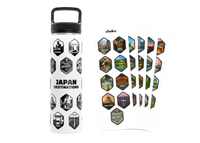
❤️ Even if your trip stays in Tokyo, the Traveler bucket-list bottle has plenty to mark off — its 27 destinations include Tokyo neighborhoods, day trips like Kamakura and Hakone, and the wider Japan route for whenever you go further. Live on Kickstarter until July 26. Reserve yours now at the best prices we'll offer.
What do visitors get wrong about Tokyo summer clothes?
Three things: they pack for exposure instead of evaporation, they bring cotton, and they leave the shade at home.
The classic visitor summer kit, tank tops, short shorts, cotton tees, works in dry heat and fails here. Bare shoulders in 80 percent humidity just mean more surface sweating with nowhere to go, plus a sunburn, plus a cover-up problem at every temple. Cotton holds sweat like a sponge and stays heavy until laundry.
The other miss is shade. Visitors squint through August bare-headed while the entire city walks under umbrellas. Shade you carry is worth several degrees of comfort, and nobody here finds it strange. The complete packing translation of all this lives in our Japan summer packing list.
Go with: loose fits, quick-dry or linen fabric, one longer layer for temples and dinners, real walking shoes. Leave behind: the cotton stack, anything tight, and the assumption that less fabric means less heat.
Free for you: our Tokyo Google Maps list We keep a Google Maps list of the must-see spots around Tokyo - restaurants, cafes, shops, viewpoints, and streets worth the detour. Drop your email and we'll send it over.
What should you buy in Tokyo instead of packing?
The cooling kit. Konbini and drugstores sell the whole summer survival system cheaply: cooling body wipes, sweat-wicking innerwear, portable fans, UV umbrellas. Locals restock constantly, and so should you.
Half the Tokyo summer wardrobe is consumable, and it is better bought here than packed. Every convenience store and drugstore carries cooling wipes that reset you mid-afternoon, sweat-absorbing innerwear, sunscreen in travel sizes, and drinks designed for electrolyte replacement. Discount stores and the big basics chains sell sun umbrellas, neck fans and quick-dry everything for less than you would pay to check an extra bag.
This is also the honest answer to packing anxiety: bring less. Four or five quick-dry tops, laundry mid-trip, and buy the accessories where the experts buy them. Your suitcase arrives light and goes home full of better things, and the practical layer of all this, cash, konbini, trains, is covered in our 30 Japan travel tips.
Does any of this matter for how you are treated?
Only gently. Nobody polices visitor outfits, but neatness is quietly read everywhere, and covered shoulders unlock temples, nicer restaurants and business settings without a second thought.
Tokyo will not comment on your clothes. But this is a city where presentation is a form of politeness, and dressing with a little intention gets returned in small ways: smoother service, easier entry everywhere from shrine halls to cocktail bars, and the simple comfort of not being the most conspicuous person in the carriage.
The good news is that the resident summer uniform already solves it. Loose cover, decent fabric, clean shoes, a towel in the bag and shade in hand: you will be dressed for the heat, the etiquette and the photographs all at once. That is the whole trick, observed from seven summers of watching this city do it better than anywhere else.
❤️ The cheku 9 Days in Tokyo guide is our 106-page deep-dive for first-time Tokyo visitors who want a full itinerary they can hand to themselves — with our photography embedded throughout. Live on Kickstarter until July 26. Reserve yours now at the best prices we'll offer.
FAQ
Do people wear shorts in Tokyo?
Yes, increasingly, especially younger Tokyoites in the hottest weeks, but loose lightweight trousers and long skirts are still the majority summer choice. The city handles heat with airflow and shade rather than skin exposure. Visitors in shorts are fine everywhere casual; just bring one longer option for nicer restaurants.
What should I wear in Tokyo in August?
The lightest, loosest clothing you own, in quick-dry or breathable natural fabric. Tokyo averages 32 to 35 degrees with humidity above 80 percent in August, so cotton that soaks and stays wet is the mistake. Add a sun umbrella or brimmed hat, and carry a small towel like everyone around you.
Is there a dress code in Tokyo?
No formal code for visitors, but the street standard is neat and considered even in extreme heat. Clean sneakers, intact clothing and covered shoulders in temples and business settings keep you comfortable everywhere. Swimwear, gym-only outfits and visible dishevelment read as out of place beyond the beach or the gym.
Sources
- tenki.jp — Tokyo August temperature and humidity averages; the daily clothing index (服装指数) and its layering guidance
- Japan Meteorological Agency — the heat-stroke alert system active through Tokyo summers
Activities and tours in Tokyo
cheku is a GetYourGuide partner. We link to tours that handle the parts of travel that eat your time, getting there, booking ahead, language, context you'd otherwise miss. If you book through our link, we earn a small commission at no extra cost to you.


