
The five categories that consistently come up in Japanese sources: individually wrapped food gifts, Japanese drugstore beauty, craft objects with a clear production tradition, stationery, and fashion accessories. The best single piece of advice from Japanese travel writing: buy from depachika and specialist shops, not from tourist-zone souvenir stalls.
If you're in Japan right now, mid-trip and in front of a shop: the short answer is below. If you're planning ahead, the longer breakdown by category and location follows.
Quick answer: food omiyage from depachika or Tokyo Station (Tokyo Banana, Yoku Moku, wagashi, regional confections), beauty from Matsumoto Kiyoshi (sunscreen, sheet masks), one quality craft item from Kappabashi or a reputable depachika (ceramics, chopsticks), and stationery from Itoya in Ginza if you have time. Budget ¥5,000–15,000 for omiyage, ¥3,000–10,000 for beauty, more for craft.
jalan.net shopping guides and Japanese lifestyle writing on note.com frame these recommendations around a question that's different from "what's available in Japan": which things are specifically worth buying here because the quality, price, or availability is materially better than what you'd find elsewhere? That's the filter this guide uses.
If you're specifically interested in Tokyo purchases, our Tokyo souvenirs guide covers the Tokyo-specific angle with more detail on what's distinctly a Tokyo buy versus a Japan-wide category.
What should you actually buy in Japan?
The honest summary from Japanese sources: buy in categories where Japan genuinely leads in quality, specificity, or value — not because it's from Japan, but because the product is materially different or cheaper here than elsewhere. That eliminates generic merchandise and keeps the list focused.
| Category | What to buy | Best shop | Price range |
|---|---|---|---|
| Food omiyage | Regional confections, wagashi, matcha, sake | Depachika, Tokyo Station Gransta | ¥500–15,000 |
| Beauty/drugstore | Sunscreen, sheet masks, fermented skincare | Matsumoto Kiyoshi, Welcia, Don Quijote | ¥400–5,000 |
| Ceramics | Arita, Bizen, Kiyomizu-ware teacups or plates | Kappabashi Street, Cover Nippon | ¥3,000–15,000 |
| Kitchen knives | Gyuto, santoku, petty knife | Kappabashi Street | ¥3,000–50,000+ |
| Stationery | Midori notebooks, Kuru Toga pencils, washi tape | Itoya Ginza, Tokyu Hands | ¥150–9,000 |
| Fashion accessories | Tabi socks, tenugui, furoshiki | Tokyu Hands, artisan markets | ¥800–4,000 |
| Craft objects | Edo Kiriko glass, lacquerware, kokeshi | Craft galleries, Kappabashi | ¥2,000–20,000+ |
| Novelty | Gachapon capsule toys | Akihabara, supermarkets | ¥100–500 |
| Best for | General souvenir shopping | Tokyo Station Gransta (one-stop) | Variable |
What Japanese food and snacks should you buy?
The categories worth buying from Japanese food sources: regional omiyage confections (individually wrapped, with a geographic story), wagashi from depachika counters, quality matcha powder, sake, and convenience store items that don't travel internationally.
Regional omiyage confections: The format Japanese domestic travel writing recommends for gifting: individually wrapped pieces, shelf life of at least one week, a clear regional story. The brands that appear most often in jalan.net Tokyo and Japan shopping guides:
- Tokyo Banana — the canonical Tokyo omiyage. Banana-shaped sponge cakes, 5–7 day shelf life, available at all major Tokyo stations
- Shiroi Koibito — Hokkaido's signature confection. White chocolate sandwich cookies with a shelf life of 3–4 weeks. If visiting Hokkaido, this is the one to bring back for colleagues
- Hato Sablé — Kamakura's dove-shaped butter cookie, in production since the 1940s. A strong regional story with solid shelf life
Wagashi from depachika: Japanese sources treat this as the gift category with the widest quality gap between tourist-zone and depachika purchases. The same ¥2,000–4,000 budget buys something meaningfully better at an Isetan or Mitsukoshi wagashi counter — seasonal, handcrafted, beautifully packaged with complimentary gift wrapping. Toraya is the reference name for premium wagashi in Tokyo depachika.
Matcha powder: The quality gap between ceremonial-grade Japanese matcha (from Uji, Kyoto) and matcha available internationally is significant and real. A sealed tin of quality ceremonial-grade matcha (¥2,000–8,000) is one of the most consistently recommended Japan purchases across Japanese lifestyle writing on note.com. It's specifically worth buying here because what's available abroad is almost invariably either lower grade or significantly more expensive.
Sake (junmai daiginjo): The most requested Japanese spirit internationally, and one of the clearest cases where Japan offers both better selection and better value than imports. Dassai, Dewazakura, and Hakkaisan are names that appear most frequently in Japanese sources aimed at international visitors. Buy from department store basement food halls or specialist sake shops rather than airport duty-free — selection and price are both better in-city.
Japanese convenience store food: Japanese convenience store (konbini) items — particularly regional ramen collaborations, seasonal Kit Kat flavours, premium onigiri types, and Japanese energy drinks — are genuinely Japan-specific and cheap enough to buy in bulk. Not prestige gifts, but specific to Japan in a way that mass-produced souvenirs aren't.
What Japanese beauty products should you buy?
The category where Japan's quality advantage is most consistent and most documented in Japanese consumer writing: sunscreen, sheet masks, and fermented skincare. All three are materially better in Japan for different reasons.
Japanese sunscreen: Biore UV Aqua Rich is the most referenced in Japanese skincare writing for international visitors: SPF50+PA++++, texture significantly lighter than European or North American equivalents at the same SPF, available at any Matsumoto Kiyoshi for around ¥800–1,200. Anessa (by Shiseido) is the prestige pick at ¥2,000–3,000. The texture difference is real: Japanese sunscreen chemistry uses a different UV filter approach that results in formulations with no white cast and near-invisible finish. This is why Japanese sunscreen has an international following.
Sheet face masks: LuLuLun sheet masks — the 32-pack for around ¥1,650 — are significantly cheaper than imported versions of the same product sold in international markets. Japanese beauty writing treats them as the reliable everyday choice rather than a prestige purchase. For gifting: a 32-pack makes a practical, recognisable gift for anyone who uses sheet masks regularly. Kose Clear Turn Babyish masks at ¥300 for a 7-pack work as low-budget stocking-stuffers.
Sake kasu (fermented lees) skincare: A specifically Japanese beauty tradition with genuine functional basis. Products using sake fermentation byproducts for skin brightening and hydration. Available throughout Japan, rarely available at reasonable prices internationally. Japanese beauty writing covers it seriously, not as a novelty — the fermentation approach has a documented history in Japanese skincare dating to sake brewery workers' famously smooth hands. Multiple brands use it; look for 酒粕 (sake kasu) on the ingredient list.
Buying beauty in Japan: Matsumoto Kiyoshi and Welcia are the most-referenced pharmacy chains in Japanese shopping guides. Both support tax-free purchasing with a passport on transactions over the threshold. Don Quijote is the alternative for longer hours and a broader range of beauty items.
Photographer's note: Japanese drugstores at night are worth a photograph in themselves. The fluorescent lighting, orderly rows of nearly identical packaging in different product categories, and the sheer density of product — LuLuLun in 15 variants, sunscreen in 20 SKUs — is a specific visual language of Japanese consumer culture. The Matsumoto Kiyoshi in Shibuya or Shinjuku after dark, product shelves fully stocked, has a particular aesthetic that doesn't translate to description.
What Japanese craft and homeware is worth buying?
The best Japanese craft purchases share one quality: they're functional objects built to a standard that makes them improve the everyday context they go into. Not decorative souvenirs. Objects that work.
Japanese ceramics: Japan has three main ceramic traditions that produce functional pieces worth carrying home: Arita (white porcelain, refined), Bizen (unglazed stoneware, earthy), and Kiyomizu (Kyoto painted overglaze). A single well-chosen teacup or sake cup from any of these traditions is the souvenir that improves a tea ceremony or dinner table for years. Kappabashi Street in Tokyo (Ueno area) has 160+ specialist shops; Cover Nippon in Tokyo Midtown carries curated selections.
Kitchen knives: The most significant version of Japan craft souvenirs, and one of the clearest cases of genuine quality advantage. Japanese kitchen knife geometry, steel quality, and edge retention are distinct from European or North American equivalents at comparable price points. Entry level (¥3,000–8,000 for a santoku or petty knife) is genuinely quality kit. The ¥10,000–30,000 range is for people who cook seriously and will maintain the blade appropriately. Buy from Kappabashi: Kama-asa (established 1908) is the most referenced in Japanese sources.
Lacquerware chopsticks: Wakasa lacquerware from Obama City (Fukui Prefecture) — the main production centre for traditional Japanese chopsticks — involves embedding abalone and eggshell in polished lacquer and finishing to a heirloom standard. A quality pair with a lacquer case (¥3,000–8,000) is the souvenir that rewards a recipient who uses chopsticks daily and knows the difference between a tool and a craft object. Available at Kappabashi and department store gift sections.
Free for you: our Tokyo Google Maps list We keep a Google Maps list of the must-see spots around Tokyo — restaurants, cafes, shops, viewpoints, and streets worth the detour. Drop your email and we'll send it over.
What Japanese stationery should you buy?
Japan's stationery reputation is earned across three categories: notebook paper quality, writing instrument engineering, and design-forward accessories. The case for buying stationery in Japan is straightforward: quality is materially higher at the same price point, and certain products (Midori notebooks, specific Pilot and Uni pen lines) are either unavailable abroad or significantly more expensive when imported.
Midori (MD notebooks and Traveler's Notebook): Over 70 years of Japanese stationery design. The MD notebook uses paper that works with fountain pens without bleed-through — a benchmark that comparable international notebooks at the same price point don't reliably meet. The Traveler's Notebook leather cover system (multiple refill configurations, brass accessories) has its own international collector following. Starting set: around ¥5,000–9,000 at Itoya Ginza or the Traveler's Factory in Nakameguro.
Uni Kuru Toga mechanical pencil: A mechanical pencil with a self-rotating lead mechanism that keeps the tip consistently sharp during use. No other manufacturer has replicated this at the price point (¥400–1,500). Architects, illustrators, and anyone who uses pencils for precise work notices the difference immediately. A 3-pack at around ¥1,200 is one of the most practical Japan purchases at any price.
MT washi tape: MT brand produces design-forward washi tape in limited seasonal and regional editions. Individual rolls at ¥150–400, multi-packs at ¥1,500–3,500. A Japan-specific gift that's genuinely harder to find abroad and has an active collector community internationally.
Where to buy: Itoya in Ginza (12 floors of stationery, the Tokyo reference) and Tokyu Hands cover the full range. Traveler's Factory in Nakameguro is the specialist destination for Midori products specifically.
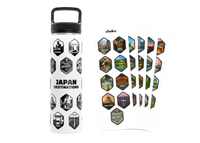
❤️ The Traveler bucket-list bottle features the 27 Japan destinations first-time visitors actually plan around — useful for sequencing a trip where every stop earns its place in the suitcase. Launching soon on Kickstarter.
What Japanese fashion accessories should you buy?
The items that hold up as genuine Japan purchases: tabi socks, tenugui, furoshiki, and sensu (folding fans). These are worth buying because they're functional, produced in a Japanese craft tradition, and not easily replicated at equivalent quality abroad.
Tabi socks: Split-toe socks rooted in traditional Japanese footwear, now produced in contemporary patterns by designers working in the format. Available from ¥1,000–3,500 per pair at Tokyu Hands, Harajuku retailers, and specialist shops. The split-toe design is Japan-specific; the contemporary print versions are the current version of an ongoing Japanese textile tradition.
Tenugui: Thin cotton hand towels (35×90cm) with seasonal or contemporary prints, priced at ¥800–2,500. Usable as a hand towel, scarf, wall hanging, or kitchen cloth. The format is specifically Japanese; the better prints are made by designers working within a traditional printing technique. Japanese lifestyle writers on note.com regularly recommend buying from specialty textile shops rather than mass-market sources for the design quality difference.
Furoshiki: Square wrapping cloths (70–120cm) that replace gift bags, wrapping paper, and tote bags simultaneously. Genuinely functional and specifically Japanese. ¥1,000–3,500 for standard quality, more for artisan versions. Available at Tokyu Hands and artisan textile shops.
Where should you buy things in Japan?
The consistent recommendation from Japanese sources: buy from specialists, not from tourist-zone convenience. Every category has a better destination than the shops nearest major tourist attractions.
| What you're buying | Go to | Why |
|---|---|---|
| Food omiyage | Depachika (Isetan, Mitsukoshi, Shibuya Scramble Square) | Superior quality, complimentary gift wrapping |
| Quick Tokyo omiyage | Tokyo Station Gransta | All major brands in one underground floor |
| Beauty/drugstore | Matsumoto Kiyoshi, Welcia, Don Quijote | Tax-free, widest range, competitive pricing |
| Ceramics and knives | Kappabashi Street (Ueno area) | 160+ specialist shops, specialist knowledge |
| Stationery | Itoya Ginza (12 floors) | Every major Japanese stationery brand |
| Practical design | Tokyu Hands | 7-9 floors of craft, tools, lifestyle products |
| Craft objects | Japanese Traditional Crafts Aoyama Square | Government-certified traditional craft pieces |
| Gachapon / novelty | Akihabara, Don Quijote | Widest selection, best machines |
| Avoid | Souvenir shops next to major temples | Tourist pricing, lower quality, generic merchandise |
On tax-free purchasing: Major retailers in Japan offer tax-free purchasing (exempt from 10% consumption tax) on purchases over ¥5,000 at participating stores, when paying with a non-Japanese passport and intending to take goods out of Japan. Matsumoto Kiyoshi, Don Quijote, Tokyu Hands, and most department stores participate. The savings are real on larger purchases.
How much should you budget for shopping in Japan?
JNTO visitor spending statistics show shopping as one of the top three spending categories for international visitors to Japan. The practical question is how to allocate the budget across categories.
Japanese sources suggest thinking about it in tiers:
Omiyage budget (office and family gifts): ¥5,000–15,000 covers a meaningful amount of individually wrapped confections for multiple recipients. At ¥300–500 per piece, ¥10,000 buys 20–30 pieces — enough for a small to medium office.
Personal purchases: One or two quality items from the categories above. A ¥6,000 kitchen knife, a ¥3,000 ceramic cup, and a ¥1,500 Midori notebook is a focused purchase list that covers craft, ceramics, and stationery without overbuying.
Beauty/drugstore: ¥3,000–8,000 covers sunscreen, sheet masks, and a fermented skincare product without overspending in a category where individual prices are low.
The one spend to prioritise: If only one category, Japanese sources consistently recommend food omiyage from depachika. The quality difference from tourist-zone alternatives is largest in this category, and the gift wrapping turns a food purchase into a considered gift.
For the complete breakdown of which specific products across each category are the most consistently recommended — with brand names, price ranges, and where to find them — our Japan souvenirs guide covers 25 specific picks across all categories.
❤️ If you're planning a longer Japan trip, Two Weeks in Japan is our 200+ page travel guide with the most efficient route and our photography — built around how Japanese travel writers actually sequence multi-region trips. Launching soon on Kickstarter.
FAQ
What is the most worth buying in Japan? Japanese sources converge on two categories with the clearest quality advantage over what's available internationally: beauty/skincare (particularly sunscreen and sheet masks, where Japanese formulations are materially different and prices are significantly lower) and craft objects (ceramics, lacquerware, kitchen knives — where the production tradition and quality level have no direct equivalent at equivalent pricing abroad).
What Japanese items are cheap in Japan but expensive elsewhere? Japanese sunscreen (Biore UV Aqua Rich retails at around ¥800–1,200 in Japan; imported versions cost 3–4x internationally), LuLuLun sheet masks (¥1,650 for 32 in Japan; significantly more outside Japan), and Japanese stationery (Kuru Toga mechanical pencils at ¥400–1,500 in Japan vs. imported pricing). Sake also prices significantly lower in Japan than in markets where it's imported.
Is it worth buying electronics in Japan? Less than it once was. The yen's depreciation has made Japan competitive for electronics, but compatibility issues (100V power, Japanese-language interfaces) complicate appliances. Cameras (particularly Japanese brands: Fujifilm, Canon, Sony) can be price-competitive with tax-free purchasing for major retailers in Akihabara or Yodobashi Camera — worth checking prices, but not a guaranteed saving.
What Japanese snacks are worth buying at a convenience store? Regional Kit Kat flavours unavailable internationally, Japanese-format instant noodles (premium cup ramen collaborating with major ramen restaurants), seasonal onigiri fillings (not for travel, but worth experiencing in-country), and Japanese energy drinks (Real Gold, Dekavita C) that don't travel well but are specifically Japan. The convenience store as a shopping experience is worth the time regardless of what you buy.
Sources
- jalan.net — Japan shopping guides, what domestic visitors recommend buying, category and location breakdowns
- note.com — Japanese lifestyle writing on what residents recommend in each shopping category
- JNTO Visitor Statistics — International visitor spending data by category
- Yoku Moku Official Site — Brand history, product information


Activities and tours in Tokyo
cheku is a GetYourGuide partner. We link to tours that handle the parts of travel that eat your time, getting there, booking ahead, language, context you'd otherwise miss. If you book through our link, we earn a small commission at no extra cost to you.


