
The cheap vs premium Japan souvenir question splits cleanly category by category. Worth the upgrade: green tea from named Uji or Shizuoka makers, named-region ceramics, Japanese knives, premium wagashi from Toraya, and named-brewery sake. Genuinely fine at the cheap tier: konbini snacks, ¥100-shop ceramics and stationery, supermarket pantry goods, Pilot pens, MT washi tape, and individually wrapped pieces of regional meibutsu sweets. This guide sets the categories side by side using Japanese consumer sources.
A Japan souvenir cheap enough to buy in bulk and a premium Japan souvenir worth a gift for someone who'll notice are often in the same category, separated by price tier rather than by type. The trick is knowing where the upgrade actually buys a different product and where it buys the same product in fancier packaging. Japanese consumer writing treats this as a useful split rather than a snobbery point.
Japanese shopping coverage on jalan.net, note.com, and icotto consistently runs cheap-versus-premium roundups across categories — tea, sake, ceramics, sweets, stationery, pantry goods. The framing is direct: in some categories the gap is real and worth paying for; in others the cheap tier is the right answer for almost everyone. Generic "premium" labelling on a budget product is the failure mode in both directions.
For the broader practical daily-use souvenir category at any price tier, the useful souvenirs from Japan guide covers it. For the genuinely-budget tier specifically (everything at ¥100-shop pricing), the what to buy in Japan for ¥100 guide goes into the ¥110–550 range in depth.
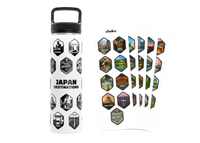
❤️ If you're planning a first Japan trip, the cheku Japan Destinations I Traveler bucket-list bottle illustrates the 27 destinations that hold up after the research — part travel guide, part souvenir, and a daily essential for the trip itself. Launching soon on Kickstarter.
How should you think about cheap vs premium Japanese souvenirs?
The useful framing isn't "is this cheap or expensive" — it's "does the price difference between the cheap version and the premium version buy a meaningfully different product, or just better packaging." Japanese shopping writing on note.com and TABIZINE consistently runs cheap-vs-premium head-to-heads with this question as the test.
Categories where the upgrade buys a different product:
- Green tea. Entry-grade sencha (¥600–1,500/100g) versus premium Uji sencha (¥2,000–8,000/100g) is a different leaf grade and harvesting tier.
- Sake. Honjozo (¥1,500/720ml) versus junmai daiginjo (¥4,000+/720ml) is a different rice-polishing ratio and brewing method.
- Ceramics. Mass-produced "Japanese style" plates versus named-kiln Mino-yaki or Bizen-yaki ceramics are different production processes with different aesthetic traditions.
- Knives. Stamped budget knives versus forged Sakai-uchihamono knives are different metallurgy.
- Wagashi. Cheap mochi at a tourist shop versus Toraya yokan are different ingredient grades and production traditions.
Categories where the upgrade mostly buys packaging:
- Konbini-tier snacks. A ¥1,500 "premium" KitKat gift box and a ¥600 multi-pack often contain the same KitKat pieces in different boxes.
- Most everyday stationery. A Pilot Juice or Pilot Frixion at ¥250 is the same engineering as the same pen in a "premium" gift set.
- Supermarket pantry goods. Vermont Curry or Java Curry roux at ¥400 and the same roux in a tourist "Japanese curry gift set" use the same formulation.
- Many individually wrapped regional meibutsu sweets. Tokyo Banana sold by the piece at Tokyo Station and Tokyo Banana in an airport gift box at airport markup are the same product.
The honest answer in each direction is what makes this category useful. Buying the cheap version of a category that genuinely has a quality jump means you'll notice the difference in the cup, on the plate, or under the knife. Buying the premium version of a category where the upgrade is mostly packaging means paying tourist markup on a domestically commodity-tier product.
What cheap Japan souvenirs are genuinely worth buying?
The cheap Japan souvenirs that earn their suitcase space cluster around stationery, snacks, ¥100-shop daily-use items, and supermarket pantry goods. Each is distinctive to Japan even at the budget tier. Tripnote and icotto cover this as a substantive shopping category rather than a fallback.
Cheap stationery (¥150–800):
- Pilot Juice and Pilot Hi-Tec-C gel pens (¥150–250). Ultra-fine tip, multiple colours, the everyday Japanese pen.
- Pilot Frixion erasable pens (¥250–400). Ink disappears with friction heat.
- MT washi tape rolls from Kamoi Kakoshi (¥250–600 per roll). Hundreds of designs, the standard premium washi tape brand.
- Uni Kuru Toga mechanical pencils (¥400–800 at the budget tier; up to ¥1,500 for premium models). Lead rotates while writing for an even point.
- Kokuyo Campus notebooks (¥150–600). The everyday Japanese student notebook.
Cheap snacks and food (¥150–800):
- KitKat Japan-exclusive flavours (¥600–1,000 per multi-bag). Sakura, Hojicha, Sweet Potato, regional fruit varieties.
- Pocky and Pretz regional flavours (¥150–500 per box). Glico's Japan-exclusive editions.
- Kameda Kaki no Tane (¥200–500). Crescent rice crackers with peanuts, the Japanese drinking snack standard.
- Calbee Jagariko and Jagabee (¥200–500). Distinctive Japanese potato snacks.
- Hi-Chew regional flavours (¥200–500). Soft chews in Japan-exclusive flavours.
- Konbini bento or onigiri — fine for the day-of, doesn't travel as a souvenir.
Cheap pantry items from supermarkets (¥200–1,500):
- Japanese curry roux blocks (Vermont, Java, Golden Curry — ¥300–600 per box).
- Instant miso soup packs (¥300–700 per pack).
- Furikake rice toppings (Marumiya Noritama, Tanaka — ¥200–800 per pack).
- Japanese tea bags (Ito-en, Yamamotoyama — ¥400–1,500 per pack).
- Cup Noodle Japan-exclusive flavours (¥278–500 per cup).
- Bottled Japanese sauces (Bulldog tonkatsu, Otafuku okonomiyaki, Kewpie mayo).
Cheap daily-use items from ¥100 shops (¥110–550):
- Daiso, Can Do, and Seria ceramics and kitchen tools. Onigiri molds, drop lids, chopstick rests, small ceramic dishes — all distinctively Japanese designs at the ¥100-shop tier.
- Japanese drugstore skincare and beauty. Hada Labo lotions, Senka cleansers, drugstore sheet masks — significantly cheaper at Don Quijote and drugstores than abroad.
Cheap regional meibutsu sweets (¥600–1,500):
- Individually wrapped pieces of Tokyo Banana, Yatsuhashi, Shiroi Koibito, Momiji Manju sold at regional maker counters in small packs. Not generic "Japan" boxes; named meibutsu at small box pricing.
All of the above are distinctive Japanese products at budget pricing, sit inside the meibutsu / named-maker system, and don't have a premium version that buys a meaningfully different product.
When is the premium tier worth it?
The premium tier earns the upgrade in categories where production method, regional sourcing, or named-maker craftsmanship produces a meaningfully different product — green tea, sake, named-region ceramics, knives, and premium wagashi. Discover Japan, Ippodo Tea, and Kogei Japan cover these categories in depth.
Premium green tea (¥2,000–8,000 per 100g):
- Ippodo sencha from Uji (¥2,000–5,000 per 100g for premium grades). Single-region named-cultivar leaves.
- Marukyu Koyamaen matcha (¥1,800–8,000 per 30g for ceremony grades). Premium stone-ground matcha from Uji.
- Tsujiri matcha and sencha (¥1,800–6,000 per 100g for premium grades). Uji tea from a named maker.
- Gyokuro from named regions (¥3,000–10,000 per 100g for top grades). Shade-grown premium green tea.
The upgrade buys a noticeably different cup — the umami is heavier, the leaves are larger and more uniform, and the brewing requires lower temperature and longer steep. For someone who'll actually brew and drink it, the premium tier shows the difference. For someone who'll use it occasionally with tap water at full kettle temperature, the upgrade is wasted.
Premium sake from named breweries (¥2,500–8,000 per 720ml):
- Junmai daiginjo from Dassai, Kiku-Masamune, Hakushika, Niigata breweries, Akita breweries at ¥3,500–8,000 per 720ml.
- GI sake with one of Japan's 11 geographical indication designations (GI Hakusan, GI Yamagata, etc.) at ¥2,500–6,500.
The premium tier buys a higher rice-polishing ratio (50% or below for daiginjo, versus 70%+ for everyday sake), longer fermentation, and a meaningfully different flavour profile. The difference between honjozo and junmai daiginjo is clear in the glass for almost anyone.
Premium ceramics from named kilns (¥1,500–8,000 for everyday pieces, higher for serious works):
- Mino-yaki (Gifu), Bizen-yaki (Okayama), Karatsu-yaki (Saga), Hagi-yaki (Yamaguchi), Mashiko-yaki (Tochigi), Arita-yaki and Imari-yaki (Saga), Kiyomizu-yaki (Kyoto). Each kiln tradition has its own aesthetic.
The upgrade isn't about durability — it's about being inside a 400+ year craft tradition with regional and stylistic identity. Generic mass-produced ceramics are functionally fine plates and bowls; named-kiln pieces are objects with provenance.
Premium Japanese knives (¥3,000–30,000 for everyday quality; higher for serious pieces):
- Sakai-uchihamono (Osaka), Seki (Gifu), Aritsugu (Kyoto), Kappabashi shops (Tokyo). Forged carbon-steel or laminated VG-10 blades with the maker's name engraved.
The upgrade buys real metallurgy and edge retention — a Sakai-forged gyuto holds an edge in a way that a stamped budget blade doesn't.
Premium wagashi (¥1,500–4,500 per piece or per box):
- Toraya yokan (¥1,500–4,000 per piece). The premium yokan standard.
- Kameya Yoshinaga, Tsuruya Yoshinobu (Kyoto, ¥1,500–4,500 for wrapped wagashi).
- Shogoin Yatsuhashi premium versions (¥1,500–3,500 per box).
The upgrade buys ingredient grade (azuki bean variety, sugar refinement, agar tier) and named-maker accountability.
How do cheap and premium Japan souvenirs compare side by side?
| Category | Cheap version | Cheap price | Premium upgrade | Premium price | Worth the upgrade? |
|---|---|---|---|---|---|
| Green tea | Itoen / Yamamotoyama tea bags or sencha | ¥400–1,500 | Ippodo, Marukyu Koyamaen, Tsujiri (named-region) | ¥2,000–8,000/100g | Yes if recipient brews tea |
| Sake | Everyday honjozo from major brands | ¥1,500–3,500 | Named-brewery junmai daiginjo, GI sake | ¥2,500–8,000 | Yes — clear difference |
| Ceramics | Daiso or generic "Japanese style" plates | ¥110–800 | Mino-yaki, Bizen-yaki, Mashiko-yaki | ¥1,500–4,500+ | Yes for gifts; daily use either works |
| Knives | Stamped budget chef knives | ¥800–3,000 | Sakai, Seki, Aritsugu, Kappabashi | ¥3,000–30,000 | Yes if the recipient cooks |
| Wagashi | Mass-market mochi at supermarkets | ¥300–800 | Toraya, Kameya Yoshinaga, Tsuruya Yoshinobu | ¥1,500–4,500 | Yes for gifts; budget tier fine to eat |
| Regional meibutsu sweets | Tokyo Banana, Yatsuhashi at maker counters | ¥150–1,800 | Same product, premium gift packaging | ¥2,000–4,500 | No — same product, more box |
| Konbini snacks | KitKat Japan flavours, Pocky, Kaki no Tane | ¥150–600 | "Premium" KitKat gift boxes | ¥1,200–2,500 | No — usually the same product |
| Stationery (pens) | Pilot Juice, Pilot Frixion | ¥150–400 | Premium fountain pens (Pilot Custom, Sailor, Platinum) | ¥3,000–30,000+ | Yes if recipient writes by hand |
| Stationery (notebooks) | Kokuyo Campus | ¥150–600 | Midori MD, Hobonichi Techo | ¥800–4,500 | Yes if recipient uses notebooks daily |
| Pantry (curry, miso, sauces) | Supermarket Vermont, Java, Marumiya | ¥200–800 | Premium dashi (Kayanoya, Ninben), regional miso | ¥800–3,500 | Yes for cooking enthusiasts |
| Drugstore beauty | Hada Labo, Senka, drugstore masks | ¥300–1,500 | Department store J-Beauty (SK-II, Albion) | ¥4,500–25,000+ | Yes if recipient uses skincare seriously |
| Lacquerware | Generic lacquer plates | ¥500–2,000 | Wajima-nuri, Aizu-nuri, Wakasa-nuri | ¥2,500–8,000 | Yes — different craft category |
| Best for | Office-share omiyage and self-use | Cheap tier covers most of the gift list | Single named gift for someone who'll notice | Premium tier earns it for tea, sake, knives, ceramics, lacquerware | Mix-and-match: cheap for volume, premium for one named gift |
Where do Japanese people themselves shop for cheap souvenirs?
Japanese consumers use a clear three-channel pattern for cheap-tier souvenirs: konbini for snacks and drinks, ¥100 shops (Daiso, Can Do, Seria) for ceramics and daily-use items, and supermarkets for pantry goods. Japanese consumer writing on note.com and TABIZINE covers this channel split as a useful frame for tourists too.
Konbini (7-Eleven, Lawson, FamilyMart): - Best for. Japan-exclusive snacks, drinks, and small items at the ¥150–600 tier. KitKat regional flavours, Pocky and Pretz, Kaki no Tane, premium milk teas, Japan-exclusive Coca-Cola flavours. - What to skip. Higher-ticket "premium gift" sections at konbini are usually overpriced versus the same items at Don Quijote or supermarkets.
¥100 shops (Daiso, Can Do, Seria): - Best for. Ceramics (chopstick rests, small dishes, onigiri molds, drop lids), kitchen tools, stationery, paper goods, fabric items. Items run ¥110–550 each. - Why locals use them. The product design at Daiso is genuinely Japanese, and many items are unavailable abroad at the same quality and price.
Don Quijote: - Best for. Konbini-tier snacks at slight discount, supermarket pantry, mid-tier sake, drugstore beauty, miscellaneous Japan products. Tax-free shopping at major locations. - What to skip. The dedicated "tourist gift" sections at Don Quijote branches in major tourist districts (Shibuya, Shinjuku, Asakusa) are sometimes priced above standard Don Quijote pricing.
Supermarkets (Aeon, Ito Yokado, Maruetsu, OK): - Best for. Curry roux, miso, furikake, instant ramen, sauces, Japanese tea bags, Cup Noodle, Japanese candy at supermarket pricing rather than tourist markup.
Drugstores (Matsumoto Kiyoshi, Sundrug, Welcia, Tomod's): - Best for. Japanese drugstore skincare and beauty (Hada Labo, Senka, drugstore sheet masks), specific Japanese personal care products.
Free for you: our Tokyo Google Maps list We keep a Google Maps list of the must-see spots around Tokyo — major konbini hotspots, the best Don Quijote branches for tax-free shopping, depachika food halls, Ippodo Tea, and the named knife and ceramic shops worth the detour. Drop your email and we'll send it over.
Where do Japanese people shop for premium souvenirs?
The premium-tier channels Japanese consumers themselves use are depachika food halls, dedicated named shops, and specialist craft sections. Discover Japan and Ippodo Tea cover these as the canonical premium buying paths.
Depachika (department store basements): - Where. Isetan Shinjuku, Mitsukoshi Nihonbashi, Daimaru Tokyo, Takashimaya Nihonbashi (Tokyo). Daimaru Kyoto, Takashimaya Kyoto, Isetan Kyoto. Major regional department stores in Osaka, Nagoya, Sendai, Hiroshima, Fukuoka, Sapporo. - What's there. Premium wagashi from Toraya, Kameya Yoshinaga, Tsuruya Yoshinobu; named-region tea from Ippodo, Tsujiri, named Uji and Shizuoka makers; named-brewery sake; premium soy sauces (Yamaroku from Shodoshima, named regional makers); premium miso (Hatcho from Aichi, white miso from Kyoto, Sendai red miso); premium chocolate (Royce' branches); premium green tea pots and tea ware.
Named maker shops: - Ippodo Tea (Kyoto Ichijo-dori; Tokyo branches). Premium sencha, matcha, gyokuro. - Toraya (Akasaka, Roppongi, multiple branches). Premium yokan and wrapped wagashi. - Marukyu Koyamaen (Uji). Premium matcha at the source. - Sakai knife shops (Osaka). Sakai-uchihamono from named makers. - Aritsugu (Kyoto Nishiki Market). Premium Japanese knives since 1560.
Kappabashi (Tokyo): - The kitchen-supply district. Multiple named knife shops, premium kitchen tools, professional kitchenware.
Specialist craft sections: - Depachika upper floors and dedicated craft shops in Aoyama, Yanaka, and Kyoto. Mino-yaki, Bizen-yaki, Mashiko-yaki, Hagi-yaki, Karatsu-yaki, Arita-yaki, Kiyomizu-yaki ceramics; Wajima-nuri, Aizu-nuri, Wakasa-nuri lacquerware; tenugui from Eirakuya and Kamawanu; washi from Mino, Echizen, and Tosa.
Photographer's note: the visual contrast between a Daiso aisle and a depachika premium tea counter at Isetan Shinjuku is one of the more interesting documentary subjects in Tokyo retail. Both are genuinely Japanese, both are organised with the same care, and both reward attention with a camera — but the lighting, packaging design, and pacing are completely different. Time the depachika for mid-afternoon when the displays are fully stocked; time the ¥100-shop visits for any time except weekend evenings.
❤️ The cheku 10-Day Tokyo Travel Guide is 80+ pages of local knowledge with our own photography of every district — built for first-time visitors who want a guide that doubles as a visual reference. Launching soon on Kickstarter.
FAQ
What is the best cheap souvenir to buy in Japan? The best cheap Japan souvenirs (under ¥1,000 each) cluster around stationery, snacks, and small daily-use items: MT washi tape rolls (¥250–600), Pilot Juice and Pilot Frixion pens (¥150–400), Kameda Kaki no Tane rice crackers (¥200–500), KitKat Japan-exclusive flavours (¥600–1,000 per multi-bag), Daiso ¥100-shop ceramics and kitchen tools (¥110–550 each), instant miso soup packs (¥300–700), Japanese curry roux blocks (¥300–600), and individually wrapped Tokyo Banana or Yatsuhashi pieces (around ¥150 per piece when bought from regional maker counters). All distinctive to Japan and budget-friendly.
Are expensive Japanese souvenirs worth the money? Some categories show a clear quality jump at the premium tier; others don't. Worth the upgrade: premium green tea (Ippodo sencha at ¥2,000–8,000 per 100g is a different product from supermarket tea), named-region ceramics (Mino-yaki or Mashiko-yaki at ¥1,500–4,500 versus generic ceramics), Japanese knives from Sakai or Seki (¥3,000–30,000), premium wagashi (Toraya yokan), and named-brewery sake (junmai daiginjo at ¥2,500–8,000). Not worth a major upgrade for most travellers: konbini snacks (the ¥150 KitKat and the ¥1,500 'premium' version overlap heavily), most stationery (the ¥250 Pilot Juice pen is genuinely Japanese engineering), and packaged supermarket pantry goods (the ¥400 curry block and the ¥1,500 boutique version use similar formulations).
Where can you buy cheap souvenirs in Japan? Reliable cheap Japan souvenir channels: konbini (7-Eleven, Lawson, FamilyMart) for snacks, drinks, and Japan-exclusive flavours at ¥150–600 each; Daiso, Can Do, and Seria ¥100 shops for ceramics, stationery, kitchen tools, and miscellaneous Japan-distinctive items at ¥110–550; Don Quijote for konbini-tier snacks plus supermarket pantry goods and tax-free shopping; Loft and Tokyu Hands for premium stationery and craft items at the ¥150–2,500 tier; supermarkets (Aeon, Ito Yokado, Maruetsu) for curry roux, miso, furikake, instant ramen, and Japanese pantry goods at supermarket pricing rather than tourist markup.
What's the difference between cheap and premium Japanese tea? The cheap-to-premium spread in Japanese tea is one of the widest of any souvenir category. Entry-grade tea bags (Itoen, Yamamotoyama at ¥400–1,500 per pack) and standard supermarket sencha (¥600–1,500 per 100g) are perfectly drinkable everyday tea but use machine-harvested leaves blended for consistency. Premium sencha from Ippodo, Maruyama, Tsujiri (¥2,000–8,000 per 100g) uses single-region named-cultivar leaves from Uji, Yame, or Shizuoka, with hand-finished or selective harvesting. The brewing instructions also differ (premium sencha is brewed lower-temperature, longer-steep). For everyday drinking, the cheap tier is fine; for a gift to someone who knows tea, the premium tier shows a clear difference in cup.
What Japanese souvenirs are overpriced? Categories where the premium markup outpaces the quality difference for most travellers: generic "Japan"-branded confectionery boxes at airports (the same Tokyo Banana or Shiroi Koibito sold at the maker counter is the same product); novelty "premium" versions of standard konbini snacks (the ¥1,500 "gift box" KitKat usually contains the same product as the ¥600 multi-pack); generic "Japanese style" ceramics at tourist shops priced as if they were named-kiln pieces; and so-called "samurai sake" or "ninja sake" gift sets which are usually low-grade sake with generic packaging at a brewery-grade price.
For the practical daily-use Japan souvenir category across all price tiers, the useful souvenirs guide is the deep-dive companion. For ¥100-shop souvenirs specifically, the ¥100 yen souvenir guide covers the budget tier in depth.
Sources
- jalan.net — Japan domestic travel platform, regional and named-maker souvenir features
- note.com — Japanese longform writing on consumer choice and cheap-versus-premium comparisons
- icotto — Japanese women's lifestyle media, gift roundups across price tiers
- TABIZINE — online Japanese travel magazine, budget vs premium product features
- Tripnote — Japanese travel guide platform, souvenir shopping guides by budget
- Discover Japan — premium craft and food journalism
- Ippodo Tea — premium Japanese green tea retailer
- Kogei Japan — registered traditional Japanese crafts directory
- Daiso — Japanese ¥100-shop chain
Activities and tours in Tokyo
cheku is a GetYourGuide partner. We link to tours that handle the parts of travel that eat your time, getting there, booking ahead, language, context you'd otherwise miss. If you book through our link, we earn a small commission at no extra cost to you.


