
Shibuya is not one neighbourhood. The tourist version — the Scramble Crossing, Center-gai, 109, Starbucks with the crossing view — covers about 500 metres around the station. What Japanese residents actually use is a completely different crescent of sub-districts to the northwest, plus a handful of spots that are technically in the same ward but feel nothing like the Shibuya most visitors experience. Here's what Japanese sources say.
We read Japanese media, and in Shibuya that specifically means the Shibuya Culture Project (shibuyabunka.com, a civic media run by the ward itself), note.com posts from Oku-Shibu residents, and the kind of food and walking blogs that Japanese people actually use for their home neighbourhoods. The gap between what tourists see in Shibuya and what locals recommend is larger here than in almost any other Tokyo neighbourhood. This post covers the gap.
For the full overview of Shibuya — the crossing, the sights, the practical logistics — our Shibuya neighbourhood guide covers it. And if you want to know where Japanese food sources say to eat, our guide to where locals eat in Shibuya has the Tabelog rankings and backstreet picks.
What is Oku-Shibuya, and why do locals keep talking about it?
Oku-Shibuya (奥渋谷, or just 奥渋 in shorthand) is the collective nickname for the streets behind Bunkamura stretching northwest to Yoyogi-Hachiman Station. It covers Kamiyamacho and Tomigaya — low-rise, independent, quiet in a way that the main station area never is. Japanese local living media started using the term around 2016, with some mix of pride and resignation at the gentrification it brought.
The living magazine REISM describes the area as 「洗練されたもので溢れる — overflowing with refined things — yet retaining the warmth of a shotengai.」 DEEP TOKYO, one of the better Tokyo neighbourhood media in Japanese, covers it as a creative district: a place where designers, editors, and craftspeople base themselves because the streets are calm and the rent, while rising, is still cheaper than Daikanyama.
The neighbourhood has a physical constraint that protects its character: Kamiyamacho is zoned for low-rise residential buildings only, with a height cap of 10 metres. No towers. No chain restaurants. The economics of high-rise retail can't happen here. That's why it feels different from every other urban "cool neighbourhood" in Tokyo.
Getting there: Walk 10 minutes northwest from Shibuya Hachiko Exit past Bunkamura, or take the Odakyu Line one stop to Yoyogi-Hachiman. Alternatively, the Chiyoda Line to Yoyogi-Koen station puts you at the Tomigaya end.
Fuglen Tokyo and Camelback: the Tomigaya morning circuit
The locally-recommended Shibuya morning is: Fuglen for coffee, Camelback for the egg sandwich, Yoyogi Park to eat it. This circuit exists because the logistics are perfect — the three are within 10 minutes of each other, and Yoyogi Park is five minutes from both.
Fuglen Tokyo opened in 2012 as the first overseas outpost of a 1960s Oslo café. Norwegian vintage furniture (1940s–70s pieces, all original), a Nordic light roast by day, cocktails with Scandinavian spirits at night. Time Out Tokyo credits it with putting Tomigaya on the map for Tokyo coffee culture, which is factually accurate — the neighbourhood's current reputation grew from this café outward. Yokogao Magazine's Tomigaya guide calls it "a true hotspot in Tomigaya" and warns that a queue is normal.
Coffee from around ¥600. Opens 8am; closes 1am weekdays, 2am weekends. Address: 1-16-11 Tomigaya, Shibuya-ku.
Camelback is a hole-in-the-wall coffee stand run by a former sushi chef. The tamago sando — a thick, dashi-seasoned omelette sandwich — has a Tabelog score consistently above 3.8, which for this neighbourhood category is genuinely high. Time Out Tokyo calls it "a staple of the Oku-Shibu café circuit." Opens 8:30am; items sell out by early afternoon on weekends. Address: 42-2 Kamiyamacho, Shibuya-ku.
The sandwich-to-park move is a real local pattern, not travel writing. Yoyogi Park is five minutes northwest, flat, and free. On Saturday mornings before noon, the park around the Harajuku gate entrance has rockabilly dancers in 1950s American dress — a Tokyo subculture institution that has been running for decades. That's not a tourist spectacle. It's just what happens on Saturday mornings in Yoyogi Park.
SPBS: the bookshop that runs like an editorial operation
SHIBUYA PUBLISHING & BOOKSELLERS opened in 2008 and has since operated as both a publisher and a bookshop — the editorial team works behind glass, visible from the shop floor. Books are curated thematically, not by genre. There are almost no English-language titles, which tells you the intended reader. This is a shop for Tokyo designers and writers, not for visitors.
DEEP TOKYO calls it "the cultural anchor of Oku-Shibu" and notes it opened before the neighbourhood had a name. Time Out Tokyo's profile focuses on the editorial curation rather than any souvenir logic. A note.com article by an Oku-Shibuya resident lists it as one of the spots that makes daily life in the neighbourhood feel 「まるでクリエイティブなスタジオに住んでいるよう — like living in a creative studio.」
The souvenir case for SPBS: their original goods include Hachiko-themed stickers and collaboration leather goods with the brand REEL. The d design travel series — one volume per Japanese prefecture, combining design and travel writing — is available here and travels well.
Open daily 11am–8pm. Address: 17-3 Kamiyamacho, Shibuya-ku.
Free for you: every spot in this guide on one Google Maps list We've pinned all the spots above — and the ones below — into a shareable map with our notes on timing and what to do at each. Drop your email and we'll send it.
Nonbei Yokocho: the right way to use Drunkard's Alley
Nonbei Yokocho — two parallel alleys of around 40 bars and izakayas, architecture unchanged since the 1950s — is best at 6–7pm. The tourist mistake is arriving at 10pm after dinner. By then it's crowded, table service at some spots, and the counter-conversation experience is gone. At 7pm on a weekday, you can sit at a counter with 5 other people and order whatever the mama-san points at.
The Shibuya Culture Project (shibuyabunka.com, a civic media run by the Shibuya ward) describes Nonbei Yokocho as "a place where foreign tourists and Japanese people end up at the same counter and somehow communicate anyway" — an unusual characterisation that's more honest than typical neighbourhood PR.
A President.jp long read on the alley's history quotes a longtime proprietress: 「好きな酒と商売を全うしたい — I just want to see through my love of sake and my livelihood.」 The alley started in the early post-war period as a black market area, became associated with writers and actors in the 1960s, declined when Shibuya's commercial redevelopment shifted the bar centre of gravity in the 1980s, and was rediscovered from the 2000s. It has been through three cycles of death and reinvention. The architecture is the evidence.
Location: 5-minute walk from Shibuya Hachiko Exit, along the JR tracks heading toward Harajuku on the right side. Cash only at most places. Drinks from ¥600.
Nabeshima Shoto Park: the park nobody is at
Nabeshima Shoto Park is a former daimyo estate garden, opened in 1876, fed by a natural spring — the pond has real spring water, not decorative city water. Turtles sunbathe on rocks. A small water wheel. Two walking circuits through woodland. Twelve minutes from Shibuya Station in the Shoto neighbourhood, and consistently, reliably empty.
Sanpo no Tatsujin (the walkers' magazine) reviews it with the line: 「ここが渋谷であることを忘れてしまいそうだ — you almost forget you are in Shibuya.」 The nearby workers who use it for lunch breaks, according to Shibuya's real-estate publication Shibuyasenmon, describe it as 「都会のオアシス — an urban oasis.」 No cafes inside, no shops, no obvious infrastructure for visitors. Which is why it's quiet.
The photographer's eye: shoot from the wooden footbridge looking north across the spring-fed pond. The stone lantern on the far bank reflects in the water on calm mornings. This is one of the few places in central Tokyo where you can get a clean garden reflection without another person in the frame.
Free entry, open 24 hours. Address: 2-10-7 Shoto, Shibuya-ku. 4 minutes from Shinsen Station (Keio Inokashira Line).
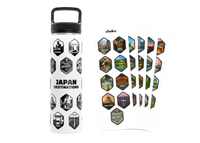
❤️ This is one of the 27 destinations on the Japan Destinations I Traveler bucket-list bottle — built for first-time Japan visitors planning a trip that covers the essentials. Launching soon on Kickstarter.
The Shibuya River walkway: where a railway used to be
Between Shibuya Stream and Daikanyama, a 600-metre riverside promenade runs along the former Tokyu Toyoko Line elevated tracks. The line went underground in 2013; the infrastructure — including bench-width planks cut from the demolished railway pillars — was preserved as public art. Office workers use it at lunch. In the evening: dog walkers, couples, people who want a riverside walk without Nakameguro's photo-crowd pressure.
Sanpo no Tatsujin's detailed walking guide covers the full route from Shibuya Stream to Nishi-Daikanyama. The Shibuya Culture Project ran an open call to name the walkway, describing the goal as a space that functions as "both a pedestrian corridor toward Daikanyama and a rest plaza in its own right."
Access: from Shibuya Stream (east exit of Shibuya Station), follow the Shibuya River north. The promenade continues for 600 metres toward Daikanyama. Most visitors enter Shibuya Stream from the station side and turn around before they discover the walkway continues.
The Farmers Market at UNU: a weekly local errand, not a tourist event
The Farmers Market at United Nations University runs every Saturday and Sunday, 10am–4pm, in the UNU plaza in Jingumae (5-53-70, a 5-minute walk from Omotesando Station). Run by Food Hub Japan (a nonprofit), it stocks certified organic produce sold directly by the farmers who grew it. Local Shibuya and Aoyama residents treat it as a weekly grocery run. The same square hosts a year-round flea market on alternate weekends.
This is not a curated artisanal market. It is a practical food market for the neighbourhood. The distinction matters because the experience is calibrated for residents, which means the prices are fair and the crowd is not oriented toward tourism.
Go if: you're in the area on a weekend morning and want to understand how a Tokyo neighbourhood actually runs its food supply. Skip if: you need a souvenir market or entertainment experience — this is a working farmers market with limited English signage.
If you only do three things in the Oku-Shibuya direction: 1. Camelback tamago sando at 9am Saturday, eaten in Yoyogi Park while the rockabilly dancers warm up. 2. Spend 20 minutes at SPBS even if you don't buy anything — just to see what a bookshop curated by an editor looks like. 3. Nonbei Yokocho at 7pm on a weekday — arrive early, sit at the counter that has one seat left, and order whatever is pointed at.
We live in Tokyo and use Japanese sources — note.com, local ward media, and restaurant databases — to find what actually gets recommended by people who spend their daily lives in these neighbourhoods.
❤️ For the full Tokyo route that pairs with this kind of neighborhood walk, the cheku 10-Day Tokyo Travel Guide has 80+ pages of local knowledge and our photography — built around what to do, day by day. Launching soon on Kickstarter.
FAQ
What do Japanese locals actually do in Shibuya?
Japanese Shibuya residents spend most of their time in Oku-Shibuya — the belt of sub-districts stretching northwest from the station toward Yoyogi Park. Key habits: morning coffee at Fuglen Tokyo (Tomigaya), tamago sando from Camelback and eating it in Yoyogi Park, browsing SPBS bookshop, evening drinks at Nonbei Yokocho starting around 7pm. Nabeshima Shoto Park and the Shibuya River Street are both used daily by locals who live near the station.
What is Oku-Shibuya?
Oku-Shibuya — literally "deep Shibuya" — is the collective nickname for the quiet sub-districts behind Bunkamura stretching northwest to Yoyogi-Hachiman station. It covers Kamiyamacho and Tomigaya: low-rise streets (legally capped at 10m building height), independent cafes, wine bars, and craft shops. The term became common in local media around 2016.
Is Nonbei Yokocho worth visiting in Shibuya?
Yes, but timing matters. Nonbei Yokocho — two alleys of around 40 bars and izakayas, architecture unchanged since the 1950s — is best at 6–7pm before tourist groups arrive. Individual bars have 5–8 seats each. Arrive early, sit at a counter, order whatever the mama-san points at. Cash only at most places, drinks from ¥600.
Where should I go in Shibuya to avoid tourists?
Walk northwest from Shibuya Hachiko Exit past Bunkamura. Ten minutes on foot takes you into Kamiyamacho. Continue to Tomigaya for Fuglen, Camelback, and SPBS. For parks, Nabeshima Shoto Park (12 minutes from the station in the Shoto neighbourhood) is genuinely quiet.
What is the Farmers Market at UNU in Shibuya?
The Farmers Market at UNU runs every Saturday and Sunday, 10am–4pm, in the plaza in front of the United Nations University in Jingumae. Run by Food Hub Japan, it stocks certified organic produce from across Japan — farmers sell directly. Local Shibuya residents treat it as a weekly errand, not a tourist event.
Sources
- Oku-Shibuya overview — Fun Japan
- REISM local living magazine on Oku-Shibuya
- DEEP TOKYO — Oku-Shibu creator culture
- Fuglen Tokyo official
- Time Out Tokyo — Fuglen Tokyo
- Yokogao Magazine — Tomigaya guide
- Tabelog — Camelback Sandwich & Espresso
- Time Out Tokyo — Camelback
- DEEP TOKYO — SPBS
- Time Out Tokyo — SPBS
- Shibuya Culture Project — Nonbei Yokocho
- President.jp — Nonbei Yokocho long read
- Sanpo no Tatsujin — Nabeshima Shoto Park
- Shibuya Ward — Nabeshima Shoto Park official
- Sanpo no Tatsujin — Shibuya River walkway
- Shibuya Culture Project — River walkway naming


Activities and tours in Tokyo
cheku is a GetYourGuide partner. We link to tours that handle the parts of travel that eat your time, getting there, booking ahead, language, context you'd otherwise miss. If you book through our link, we earn a small commission at no extra cost to you.


