
This hokkaido travel guide starts with the fact that reframes everything: the island is nearly forty times the size of Tokyo. Treat it as its own country: pick one region per trip, base in Sapporo or the lavender country or the wild east, match the season to the mission, and never bolt it onto a Golden Route week.
We fly north from Tokyo most years, sometimes twice, and every hokkaido travel guide we hand to friends starts with scale. Rakuten Travel's Hokkaido guide puts it plainly: the island is roughly 39.7 times the area of Tokyo and about 22 percent of Japan's entire landmass. It is not a region you add to a trip. It is the trip.
That single fact explains every piece of advice below: why you choose one area, why the seasons matter more than anywhere else in Japan, and why Japanese travelers treat the island as a destination in itself rather than a stop.
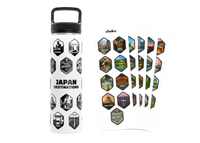
If you've already done Tokyo and Kyoto and want to go deeper, the Explorer bucket-list bottle covers 46 Japan destinations across 31 prefectures — with stickers to check off as you visit, from Hokkaido to Okinawa. Live on Kickstarter until July 26. Reserve yours now at the best prices we'll offer.
How should you divide Hokkaido into a trip?
One region per trip. Rakuten Travel organises the island by area, and the areas are trips in themselves: Sapporo with Otaru, the Furano lavender country, Hakodate in the south, the wild Shiretoko east, and the onsen towns between them.
The planning table we sketch for every visiting friend:
| Region | The draw | Pace | Best for |
|---|---|---|---|
| Sapporo + Otaru | City food, beer heritage, canal town | Easy, train-based | First Hokkaido trip |
| Furano + Biei | Lavender fields, patchwork hills | Slow, car helps | Summer visits, photographers |
| Hakodate | Port city, southern gateway | Easy | Combining with Tohoku |
| Shiretoko + the east | World Natural Heritage coast | Remote, car needed | Repeat visits, nature-first |
| Onsen towns | Noboribetsu, Yunokawa | Restorative | Pairing with any of the above |
Rakuten's list also flags Tomamu, famous for its sea-of-clouds mornings, as the resort wildcard between Sapporo and the east. The mistake we watch first-timers make is stringing three of these regions into five days. Distances here are honest, and the island rewards depth the way the rest of Japan rewards density.
For the countryside deep-dive, our Rural Hokkaido guide covers the cinematic middle of the island properly.
What is actually worth your time in Sapporo?
The compact center: Odori Park under the TV Tower, the 1888 Red Brick government building, the 1878 Clock Tower, and Japan's only beer museum, all walkable, all cheap or free.
Sapporo is Japan's most underrated big city precisely because its center is so manageable. The anchors, with details per Rakuten Travel:
Odori Park runs through the middle, nationally famous as the Snow Festival stage and busy all year with lilac, YOSAKOI and autumn food festivals. The Sapporo TV Tower at its east end charges ¥1,200 for adults for the observation deck view straight down the park's spine. One block toward the station, the JR Tower T38 observatory rises 160 meters directly above Sapporo Station, open 10:00 to 22:00, our pick for the night view with a drink in hand.
The history pair does mornings well: the Former Hokkaido Government Building, the 1888 "Red Brick" in American neo-baroque, reopened in July 2025 with new Ainu culture and history exhibits plus a free-entry shop and cafe floor, and the 1878 Clock Tower, the old agricultural-college drill hall, still keeping time. Finish at the Sapporo Beer Museum, which Rakuten notes is the only beer museum in Japan, in the old red-brick brewery.
That is one unhurried day, two with the food stops Sapporo deserves, and it leaves the rest of your trip for the reason you flew north.
❤️ This is the kind of destination the Japan Destinations II Explorer Bottle is built for — places that don't make first-trip itineraries. Live on Kickstarter until July 26. Reserve yours now at the best prices we'll offer.
When should you go to Hokkaido?
Choose by mission. Summer is the escape: 25 to 27 degrees and dry while Tokyo cooks, with Furano's lavender peaking in July. Winter is the spectacle: ski season from December and the February Snow Festival. Both are peaks; book accordingly.
Hokkaido is the one part of Japan where the season is not a nuance but the whole plan.
Summer first, because it is the open secret of Japanese domestic travel. While Tokyo runs 32 to 35 degrees with punishing humidity, tenki.jp data puts Hokkaido around 25 to 27 with low humidity, roughly ten degrees kinder, which is exactly why Japanese travelers head north in August. Furano's lavender is the poster image, and our Japan in August guide covers how the island fits that month's logic.
Winter is the other Hokkaido entirely: heavy snow arrives through December, the ski resorts open their core season, and Sapporo's Snow Festival turns Odori Park into the February event Japanese media covers wall to wall. Between the peaks, the shoulder seasons are the value play, quieter and cheaper, with autumn colors arriving earlier than anywhere else in Japan.
The full month-by-month treatment lives in our companion piece, Hokkaido by season, which pairs with this guide.
Free for you: our Tokyo Google Maps list We keep a Google Maps list of the must-see spots around Tokyo - restaurants, cafes, shops, viewpoints, and streets worth the detour. Drop your email and we'll send it over.
What does the wild side of Hokkaido offer?
The reason the island exists in Japanese imagination: Shiretoko's World Natural Heritage coast, Furano and Biei's farm country, and Tomamu's sea of clouds. This is car-and-early-alarm territory, and it is the best of the north.
Rakuten's spot list tilts heavily rural, and rightly. Shiretoko, the peninsula jutting into the Sea of Okhotsk, carries World Natural Heritage status and delivers the Japan of bears, capes and drift ice documentaries. Furano and Biei are the gentler counterpart: lavender rows in July, patchwork fields rolling to the horizon, the countryside that Japanese advertising uses when it wants to say "escape." Tomamu's claim is the unkai, the sea of clouds viewed from above at dawn.
We wrote the full case for this side of the island, and how to route it, in Rural Hokkaido: Japan's most cinematic countryside. The short version for planning: these places sit between train stations, not at them. Build car days, start early, and give any of them more time than the map suggests.
Go if: landscape is the point of your travel and you are happy driving. Choose the cities if: you want Hokkaido's food and culture without logistics; Sapporo plus Otaru by rail is a complete trip.
Why do onsen towns anchor a Hokkaido trip?
Because the island does hot springs at volume. Noboribetsu, which Rakuten calls a department store of onsen for its variety of waters, and Yunokawa near Hakodate are the famous names, with day-trip options across the island.
Every region above pairs naturally with an onsen night, and Hokkaido's roster is deep. Rakuten Travel singles out Noboribetsu, so rich in different spring types it earns the nickname "department store of onsen," and Yunokawa, the historic spring district on Hakodate's edge famous for its monkey-visited baths. Beyond the headliners, rurubu's day-trip onsen roundup runs twelve options for travelers who want the soak without the overnight.
Our pattern, for what it is worth: end every Hokkaido trip with one onsen night rather than starting with it. After the driving and the hiking, the bath means more. The wider Japanese hot-spring canon, and where Hokkaido's entries rank in it, is in our onsen towns guide.
How does Hokkaido fit into a Japan trip?
As its own chapter. Fly north, give it five days to a week, and resist welding it onto a first-trip Golden Route. If this is your first Japan visit, do the classic corridor now and let Hokkaido be the reason you return.
The logistics are simple to state: Hokkaido is a flight, not a detour, and once there, the island's size makes every plan a regional plan. Five days does one region well. A week does two. What never works is the four-day sweep that tries to collect Sapporo, Furano and Shiretoko like stamps; the distances eat the trip.
Which leads to the honest first-timer advice we give at every dinner table: if you have one Japan trip planned, spend it on the two-week classic route and fall in love with the country first. Hokkaido is the island for the second ticket, the one Japanese travelers themselves save for when they want space instead of density. It will still be here, forty Tokyos wide, when you come back for it.
❤️ The Explorer bucket-list bottle is built for locals, residents, and repeat travelers who already know the obvious places — 46 destinations across 31 prefectures, the parts of Japan that don't make first-trip guides. Live on Kickstarter until July 26. Reserve yours now at the best prices we'll offer.
FAQ
How many days do you need in Hokkaido?
Five days minimum for one region done properly, a week or more to combine two. Hokkaido is nearly forty times the area of Tokyo, so treat it like a country: Sapporo plus Otaru is one trip, Furano and Biei another, Shiretoko a third. Trying to sweep them all in four days means seeing Hokkaido through a windshield.
Is Hokkaido worth visiting for first-time Japan travelers?
As its own dedicated trip, absolutely. Bolted onto a first Tokyo-Kyoto itinerary, rarely. The island's rewards are scale, nature and food, which need time, and Japanese travelers treat it as a standalone destination. If this is your first trip and you have two weeks, do the classic route now and give Hokkaido its own ticket later.
What is Hokkaido famous for?
Space, seasons and food. It holds about a fifth of Japan's land: the Shiretoko World Natural Heritage coast, Furano's lavender fields, ski country, and onsen towns like Noboribetsu. Sapporo anchors it with the Snow Festival in Odori Park, Japan's only beer museum, and a food culture Japanese travelers cross the country for.
When is the best time to visit Hokkaido?
It has two honest peaks. Summer, when 25 to 27 degree days and low humidity make it the escape Japanese travelers choose while Tokyo swelters, with Furano's lavender in July. And deep winter, when the snow arrives in December for the ski season and Sapporo's February Snow Festival. Shoulder seasons are quiet and cheap.
Do you need a car in Hokkaido?
For the countryside, it is the honest answer. Sapporo, Otaru and Hakodate work fine by train, but the island's best scenery sits between stations, and rural buses are sparse. Our pattern is city days by rail, then a rental car for the Furano-Biei or eastern stretches. Book cars early for summer and ski season.
Sources
- Rakuten Travel — 北海道の観光名所72選 — the island's scale figures, area structure, and Sapporo anchor details with prices and hours (2026 edition)
- rurubu.jp — 北海道の日帰り温泉・スパ12選 — day-trip onsen options across the island
- tenki.jp — Hokkaido summer temperatures versus Tokyo, as also cited in our Japan-in-August guide
Activities and tours in Tokyo
cheku is a GetYourGuide partner. We link to tours that handle the parts of travel that eat your time, getting there, booking ahead, language, context you'd otherwise miss. If you book through our link, we earn a small commission at no extra cost to you.


