
Onsen towns in Japan are ranked constantly by Japanese travel media, and the data is unambiguous: Kusatsu and Ginzan lead the list of places Japanese travelers most want to soak. This guide translates those rankings, a 1,021-person 2026 survey plus booking data, into the 12 towns actually worth building a trip around.
An onsen town is a different proposition from a hotel with a nice bath. The whole town runs on hot water: public baths on street corners, steam in the gutters, guests walking between soaks in yukata and geta. Pick the right one and it's the best two days of a Japan trip.
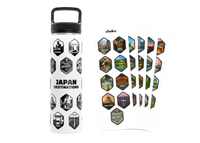
The picking is where English guides get vague and Japanese data gets specific. Rurubu surveyed 1,021 travelers in January 2026 on the onsen towns they most wanted to visit or revisit, and jalan.net's onsen sommelier feature walks the best onsen streets in street-level detail. This guide is built on both. Onsen country is also, by nature, beyond the Golden Route, which is exactly what the Explorer Bottle II covers: 46 destinations across 31 prefectures for the trips after the first one.
Which onsen towns do Japanese travelers rank highest?
Kusatsu is first and it isn't close: it topped rurubu's 2026 survey, has Japan's largest natural hot-spring output, and centers on the steaming yubatake that is the single most famous image in Japanese bathing. Ginzan, Hakone, Yufuin, and the Beppu–Noboribetsu pair complete the top five slots.
The rurubu ranking runs: 1. Kusatsu, 2. Ginzan, 3. Hakone, 4. Yufuin, 5. a tie between Beppu and Noboribetsu, then Nyuto Onsenkyo, Dogo, Ibusuki, and Arima. The editors' read on what wins votes: water quality first, then a sense of somewhere else, then access and things to do. That's a useful filter for the whole genre, and it explains why the list mixes famous resorts with a hamlet of seven mountain inns.
This guide follows the data but reorders for travelers: the twelve below are grouped by the kind of trip they reward, not raw rank. Hakone, the access champion at #3, gets a mention rather than an entry, since it's less a walkable onsen town than a resort region, and this post is about towns.
Which onsen towns have the best streets to walk?
Kusatsu, Ginzan, Nozawa, and Shibu. These four deliver the postcard: a compact, steaming townscape where the walk between baths is the experience.
1. Kusatsu (Gunma). The yubatake, a terraced wooden channel steaming in the town square, cools some of the 100-plus sources that make Kusatsu Japan's biggest natural flow. Per jalan, nearly every inn runs free-flowing spring water, and the Netsunoyu hall beside the yubatake performs yumomi, the board-paddling ritual that cools the scalding water without diluting it, to song. Rurubu counts about 180 lodgings and notes the three-bath pass (Otakinoyu, Gozanoyu, Sainokawara open-air bath) at ¥2,100 adults.
2. Ginzan (Yamagata). Rurubu's #2 and the most photographed onsen street in Japan: three- and four-story wooden inns facing each other across the Ginzan river, gas lamps lit at dusk, a silver-mine history running back to 1456. Jalan's detail worth having: the public bath Shiroganeyu was designed by architect Kengo Kuma, the water runs milky with fine yubana, and a short riverside walk reaches the Shirogane Falls. Access is the filter that keeps crowds survivable: a 40-minute bus from Oishida station.
3. Nozawa Onsen (Nagano). The village with 13 free public baths, maintained since the Edo period by the yunakama system, neighbors collectively guarding the water. Entry is free with a donation box; jalan recommends the stamp-book pilgrimage across all 13, with a prize for finishing. Winter adds the ski resort; the baths are the constant.
4. Shibu (Nagano). A 1,300-year-old stone-paved street where staying guests get a key that opens nine communal baths, free, and pilgrims stamp a tenugui towel at each before a final prayer at the Kogakushi shrine. Day visitors get only bath nine, O-yu, at ¥800, which is jalan's polite way of saying: stay the night. The Kanaguya inn, a registered cultural property since 2003, towers over the street, and the snow-monkey park is 15 minutes away.
Which onsen towns are worth the far detour?
Nyuto Onsenkyo for the deepest secluded-bath experience in easy reach, Ginzan's Tohoku sibling; Gero for classical pedigree; and Shima for the town that time forgot, with a famous inn attached.
5. Nyuto Onsenkyo (Akita). Not a town at all: seven lone inns scattered in beech forest northeast of Lake Tazawa, each with its own spring and character, from thatched Tsurunoyu to a former schoolhouse. Rurubu's detail: a yumeguri pass, sold only to staying guests, opens all seven. This is the "secret onsen" of Japanese daydreams, ranked seventh nationally, which tells you the secret is out but the forest is still quiet.
6. Gero (Gifu). The classical pick. Per Yukoyuko, Gero has been named alongside Arima and Kusatsu among Japan's three famous springs since the Muromachi monk Banri Shuku and the Edo scholar Hayashi Razan wrote it so. The alkaline water is nicknamed bijin-no-yu, beauty water, for the slip it leaves on skin, and the town has centrally managed its supply since 1974, no dilution, no reheating. A practical stop on the way to Takayama.
7. Shima (Gunma). Forty-two sources, thirty-nine of them naturally surfacing, and water so gentle it's one of Japan's rare drinkable springs, jalan reports. The town is a quiet strip of retro storefronts ending at Sekizenkan, the Taisho-era inn said to be the model for a certain animated bathhouse. We take that claim at the careful length Japanese sources give it in our Ghibli landscapes guide. Five minutes away, Okushima Lake glows its improbable "Shima blue."
8. Ikaho (Gunma). A 400-year-old staircase town: 365 stone steps climbing between souvenir shops and steam vents to the Ikaho shrine, with two distinct waters, the iron-brown "golden" and the clear "silver." Best done as the walkable half of a Gunma onsen pairing with Kusatsu or Shima.
❤️ If you've already done Tokyo and Kyoto and want to go deeper, the Explorer bucket-list bottle covers 46 Japan destinations across 31 prefectures — with stickers to check off as you visit, from Hokkaido to Okinawa. Live on Kickstarter until July 26. Reserve yours now at the best prices we'll offer.
Which onsen destinations deliver the most bathing per day?
Beppu, by the numbers, and it isn't close: Yukoyuko's data counts roughly 2,850 sources producing about 95,728 liters a day, with around 170 communal baths. Dogo brings the history, Yufuin the taste, Noboribetsu the drama.
9. Beppu (Oita). Eight onsen districts under one name, the Beppu Hatto, holding 10 of Japan's 11 recognized spring-quality types, per Yukoyuko's figures. Jalan's picks for the strange stuff: herb-steam baths at Kannawa, sand burial at Takegawara, mud baths at Myoban, plus the jigoku meguri circuit of seven technicolor "hells," where the cobalt Umi-jigoku and blood-red Chinoike-jigoku are viewing springs, not bathing ones, and the steam-cooked jigoku-mushi eggs are the correct snack.
10. Dogo (Ehime). One of Japan's oldest baths, folded into myth and into Soseki's novel Botchan, whose clockwork characters emerge hourly from the karakuri clock by the station. The main hall's Kami-no-yu course starts at ¥700 for adults per jalan's listing, and the Sora no Sanpomichi foot bath on the hill above gives you the bathhouse roofline over the town. Dogo's other film association is covered, with the honesty it deserves, in our Ghibli guide.
11. Yufuin (Oita). Beppu's refined sibling under Mt Yufu: rurubu counts 100-plus lodgings, most with open-air baths facing the mountain, in a town that doubles as an art-and-cafe destination. So much water flows here that ordinary houses run onsen taps; Oita province leads Japan in output.
12. Noboribetsu (Hokkaido). Nine spring types surfacing in one place, "the department store of onsen" per rurubu, fed by the steaming Jigokudani valley at the town's edge. The pairing with a wider northern route is natural, and our Hokkaido guide makes the case for the region around it.
| Kusatsu | Ginzan | Nyuto | Beppu | |
|---|---|---|---|---|
| The image | Steaming yubatake square | Gaslit wooden inns on a river | Seven lone inns in forest | A city exhaling steam |
| Getting there | Bus from Naganohara-Kusatsuguchi | Shinkansen + 40-min bus | Shinkansen + bus, Akita | Direct trains, Kyushu |
| Day-trippable? | Yes, ¥2,100 three-bath pass | Yes, but stay for the lamps | Realistically no (guest-only pass) | Yes, endlessly |
| Best for | First onsen town, maximum onsen-ness | The photograph, the evening | Deep quiet, bath purists | Variety, strangeness, food |
Free for you: our Tokyo Google Maps list We keep a Google Maps list of the must-see spots around Tokyo - restaurants, cafes, shops, viewpoints, and streets worth the detour. Drop your email and we'll send it over.
How do you actually do an onsen town right?
Stay one night minimum, bathe three times, and treat the street as part of the bath. The rhythm is check in, soak, walk in yukata, eat the ryokan dinner, soak again at night, and once more before breakfast.
The overnight is the unlock. Day visitors get the water; guests get the town at 9 pm, lantern-lit and quiet, and the morning bath before the buses arrive. Most ryokan lend yukata and geta precisely so you'll walk out in them; in an onsen town this is normal dress, not costume.
Bathing etiquette is the same everywhere: wash and rinse fully at the seated stations before entering, towel stays out of the water, no swimwear. The tattoo question is real but town-dependent, and the workarounds, cover stickers, private kashikiri baths, asking ahead, are covered with the rest of the bathing rules in our Japan culture guide.
One seasonal note: high summer is the one season onsen towns go quiet, and if you're traveling in August, a mountain town like Nozawa or Nyuto doubles as heat escape. The classic seasons are autumn foliage and steam-in-the-snow winter.
Photographer's note. Onsen towns are dusk subjects. The steam that reads as haze at noon becomes structure at blue hour, backlit by gas lamps in Ginzan or vending machines in Shibu, and wet stone paving doubles every light source. Shoot the yubatake at Kusatsu just after the lamps come on, from the upper end looking down the terraces. In Ginzan, the classic frame is from the lower bridges, inns stacked on both sides, and it's worth waiting for a yukata-clad couple to cross. Respect the no-camera line at every bath door; the street gives you everything anyway.
Which onsen towns just missed the list?
Five worth knowing even though they didn't make the twelve: Naruko for water variety in Tohoku, Kaga for crafts, Jozankei for Sapporo access, Shirahama for the beach-and-bath combination, and Kinugawa for sheer booking volume.
The booking data tells its own story. Yukoyuko's reservation-based ranking, updated this month, is topped by towns that trade postcard streets for capacity and access, and they're honest picks for specific trips.
Naruko Onsenkyo (Miyagi) is the water connoisseur's near-miss: five hot-spring districts holding seven spring types, per jalan, including the slippery "unagi-yu" at Nakayamadaira that feels like bathing in lotion. Pair it with the Naruko Gorge in foliage season, and know the gorge walk closes from late November to late April.
Kaga Onsenkyo (Ishikawa) bundles three personalities an easy bus from Kanazawa: lakeside Katayamazu, historic Yamashiro with its retro So-yu and Ko-soyu public baths tiled in Kutani porcelain, and gorge-side Yamanaka, where the craft shopping (lacquerware, Kutani ware) is as much the point as the water.
Jozankei (Hokkaido) is Sapporo's back parlor, 26 kilometers from the city inside a national park, per Yukoyuko, opened in 1866 by the monk the town is named for. It's the practical northern soak when Noboribetsu doesn't fit the route.
Shirahama (Wakayama) pairs a white-sand beach with springs over 1,300 years old, including Saki-no-yu, the seaside rock bath Yukoyuko calls one of Japan's oldest. Summer's answer to the genre.
Kinugawa (Tochigi) tops the raw booking chart on Nikko-adjacent convenience and river-gorge hotels. It's a resort rather than a strolling town, which is why it sits here rather than above, but as the onsen night attached to a Nikko day it does its job.
How do you fit an onsen town into a Japan route?
Pair one onsen town with each leg of the trip rather than chaining them. Gunma-Nagano towns bolt onto Tokyo, Gero onto Takayama, Dogo onto a Shikoku swing, Beppu and Yufuin onto Kyushu, Noboribetsu onto Hokkaido.
First Japan trip, Golden Route: one night in Hakone or Kusatsu. Easy access, full onsen-town experience, no route surgery. Second trip: Ginzan plus Nyuto as a Tohoku shinkansen arc, or the Gunma-Nagano belt (Kusatsu, Shima, Shibu) as a slow loop. This is where the bathing gets serious. Building a Kyushu or Hokkaido leg: Beppu and Yufuin pair perfectly; Noboribetsu anchors the north.
The onsen map is also the best argument for seeing Japan beyond its three famous cities: of the twelve towns above, not one sits on the standard first-trip route, and together they touch ten prefectures. That's the shape of the country our guide to Japan's 47 prefectures is built around.
FAQ
What is the best onsen town in Japan? Kusatsu, per rurubu's 2026 survey of 1,021 travelers: Japan's largest natural output, the yubatake at its center, about 180 inns.
Can you visit an onsen town without staying overnight? Yes. Dogo's main bath from ¥700, Nozawa's 13 baths free with donation, Kusatsu's three-bath pass ¥2,100. But the overnight, ryokan dinner and evening streets included, is half the point.
Which onsen towns can you do from Tokyo? Kusatsu, Shima, Ikaho, and Shibu in the Gunma-Nagano belt; Hakone for speed; Ginzan and Nyuto work as one-night shinkansen trips.
Do onsen towns allow tattoos? Varies by bath. Cover stickers, private baths, and checking ahead are the reliable moves; our Japan culture guide covers the details.
If the towns above are the Japan you're collecting toward, the Explorer Bottle II features the destinations we go back to — places that take longer to reach but reward the trip. Live on Kickstarter now.
Sources
- rurubu&more — 【2026年最新】日本全国の温泉地ランキングTOP10
- jalan.net — 全国のおすすめ温泉街14選
- ゆこゆこ — 人気温泉地ランキング
- ゆこゆこ — 温泉街の散策が楽しい温泉地ランキング
Activities and tours in Tokyo
cheku is a GetYourGuide partner. We link to tours that handle the parts of travel that eat your time, getting there, booking ahead, language, context you'd otherwise miss. If you book through our link, we earn a small commission at no extra cost to you.


