
Where Japanese Locals Actually Eat in Tsukiji Outer Market
Tsukiji's reputation is built on the inner market that no longer exists here. In 2018, the wholesale fish market moved to Toyosu. What stayed was the outer market — the retail stalls, the tamagoyaki specialists, and the eating spots that have operated on these streets for decades. We read the Japanese sources to find which ones are worth your morning.
Tsukiji Outer Market has a split personality that most travel guides paper over. In October 2018, the inner wholesale market — where the tuna auctions happened, where fishmongers started their days at 3am — relocated to a new facility at Toyosu. What stayed was the outer market: seafood stalls, specialty food shops, and a cluster of restaurants that grew up feeding the people who worked those predawn shifts.
The outer market is now primarily visited by tourists. It knows this and has adapted. But the restaurants are still there, still run by the same families in many cases, still doing one thing well after thirty or forty or eighty years.
What changed when the inner market moved to Toyosu?
The professionals left. The outer market's original customer base was the workers from the inner market — they needed hot food at 4am, strong coffee, somewhere to sit before the next shift. Those workers are now at Toyosu, a 15-minute drive away.
What didn't move is the restaurants. A note.com piece on morning Tsukiji describes the rhythm that persists: shop shutters rolling up at 6am, the smell of tamagoyaki before crowds arrive, the narrow lanes between the stalls still operating as they have for decades. The atmosphere has shifted — less professional industry, more tourism infrastructure — but the actual food shops are intact.
The practical consequence for visitors: the tuna auction experience is now at Toyosu, requires a lottery ticket, and demands a 4am start. The outer market food experience is still in Tsukiji, requires no lottery, and is best visited between 8am and noon.
Which sushi restaurants do Japanese visitors actually recommend?
Two names dominate Japanese-language coverage of Tsukiji sushi: Sushi Dai (寿司大) and Daiwa Sushi (大和寿司). Both serve omakase courses at counter seats. Both use fish from the same wholesale supply chain that feeds Tokyo's best sushi restaurants. Both require patience.
The Tabelog Matome on Tsukiji breakfast spots includes both among the top picks but is honest about the queue. Peak wait times of 1.5 to 3 hours are common; a quiet weekday morning off-season runs closer to 45 minutes. Japanese regulars who have eaten at both tend to split roughly evenly on preference — the fish quality is similar, the difference is in the rice and the pacing of the meal.
| Sushi Dai Honkan | Daiwa Sushi | |
|---|---|---|
| Format | Counter omakase, 10–12 pieces + soup | Counter omakase, similar course |
| Queue | Typically longer, moves steadily | Slightly shorter wait, faster turnover |
| Best for | Making it a proper event, no time pressure | Comparable quality, marginally less waiting |
| Arrive by | 7am on weekdays; 5:30am on weekends if serious | 8am weekdays for under 1-hour wait |
If you won't queue, the right move is the standing sushi counters throughout the market. The Tsukiji-go vendor map lists several. Look for the ones where you can see the fish case and read a handwritten board in Japanese. If there's a laminated English photo menu in the window, keep walking — the price-to-quality ratio drops sharply in those shops.
Where do Japanese visitors eat breakfast that isn't sushi?
Kitsuneya (きつねや) is the answer that appears most consistently in Japanese-language sources. Its Tabelog listing scores 3.49 from hundreds of reviews — high for a standing-room rice bowl counter. It has been on the same street since 1947.
Two items: gyudon (beef simmered in dashi and soy, over rice) and horumon-don (pork offal braised until the fat collapses, over rice). The horumon-don is the reason regulars come. It is not elegant — it's the kind of eating you do standing up with your elbow on a ledge, bowl in one hand, while the cook watches the pot behind you. The guide compiled from 1,000+ visits to the market lists it as one of the non-negotiable Tsukiji experiences alongside sushi.
The shop closes when it sells out, which happens before noon most days. Three stools next to the heat, standing room along the roadside. Cash only. No English menu, no need for one.
Take the full Tsukiji food map with you Every spot in this guide is pinned in a shareable Google Maps list. Drop your email and we'll send it over.
What else is worth eating at Tsukiji?
Tamagoyaki, the sweet or savoury rolled egg omelette, has been a Tsukiji specialty since several of the original market sushi shops switched to making it during wartime rationing, when fish supplies were unreliable. The shops that specialise in it have been working the same copper pans for decades.
The 2025 Tsukiji lunch guide from etoko.jp names the tamagoyaki specialists as among the market's most consistently recommended non-sushi food. Buy it on a stick for the walk, or take a block home. The dashi-heavy, saltier version is what Japanese sources recommend; the sweeter version sold from some of the larger tourist-facing stalls is a different product.
Tsukiji Yabusoba (築地藪そば) is worth noting for a different register. Founded in Meiji 25 (1892), it uses Hokkaido stone-ground buckwheat flour and the sharp, slightly astringent tsuyu that Edo-style soba houses are known for. It is calm and seated, not the grab-and-go market experience, but a proper lunch. The Tabelog matome on budget Tsukiji lunch includes it among the spots that hold up on repeat visits.
The Uogashi Shokudo food court (魚河岸食堂) sits on the third floor of the Tsukiji Uogashi building, run by around 60 wholesale vendors from the industry. A ramen counter there is operated by a chicken specialist wholesaler; the broth is made from the same birds they supply to restaurants. Tsukiji market insiders name the food court among their own lunch picks, partly because tourists rarely climb to the third floor and the queue is short.
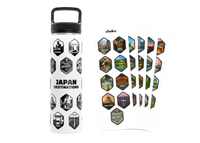
❤️ Even if your trip stays in Tokyo, the Traveler bucket-list bottle has plenty to mark off — its 27 destinations include Tokyo neighborhoods, day trips like Kamakura and Hakone, and the wider Japan route for whenever you go further. Launching soon on Kickstarter.
What does the photographer see at Tsukiji?
The outer market's light is best between 8 and 9am on weekdays, before tourist density peaks, after the wholesale activity has cleared the main lanes. The covered walkways between stalls create compressed perspectives that work well with a standard lens. Hard morning light comes through gaps in the roof structure in uneven shafts, alternating with deep shade.
The tamagoyaki shops have the strongest visual rhythm: copper pans, steam, the repetitive fold motion of the cook. Most are fine with cameras if you ask first and don't crowd the counter. The narrow market lanes are difficult to shoot cleanly after 10am; the density of bodies makes single-subject framing almost impossible. Weekday mornings are the working window.
When to visit and what to expect
The operational rhythm from the Tsukiji Outer Market official site: professional buyers from restaurants and hotels have priority in the lanes before 9am. The working wholesale activity shares the streets with visitors in the early hours. After 9am, visitor traffic takes over and most shops have settled into their service mode.
Most food shops open between 6 and 9am. (If you arrive too early, the konbini guide covers the 24-hour food option to bridge the gap.) Most close by noon to 2pm; the market has little evening food service. Plan for a morning, not an afternoon. Tsukiji works best combined with the wider Chuo area. For other neighbourhoods, our Shibuya and Akihabara eating guides follow the same Japanese-source approach. Tsukiji Honganji temple is a five-minute walk and worth seeing before the food crawl while the lanes are still quiet.
If you're building a Tokyo itinerary around the places that make the city what it is — not the monuments but the food culture (covered here), the neighbourhood rhythms — that's where the list lives.
❤️ Our 10-Day Tokyo Travel Guide goes further on where and when to eat in Tokyo — 80+ pages including a day-by-day route, local-knowledge restaurant picks, and our photography of each spot. Launching soon on Kickstarter.
FAQ
Where do locals eat breakfast at Tsukiji Outer Market? Kitsuneya (est. 1947) is the most consistently cited by Japanese sources — gyudon and horumon-don, standing tables, cash only. For sushi, Sushi Dai and Daiwa Sushi are worth it if you queue early. The standing sushi counters throughout the market serve the same grade of fish without the wait.
Is Tsukiji Outer Market still worth visiting after the inner market moved to Toyosu? Yes. The seafood shops, tamagoyaki specialists, and restaurants stayed. What left in 2018 was the tuna auction and professional buyer atmosphere — those are now at Toyosu, behind a lottery system. The outer market food experience is intact and doesn't require a lottery.
How long is the wait at Sushi Dai or Daiwa Sushi? 1.5 to 3 hours at peak times; closer to 45 minutes on a quiet weekday morning off-season. Both are worth the commitment if you plan for it. Standing sushi counters in the market serve fresh fish without queuing.
What time should I visit Tsukiji Outer Market? 9am to noon is the standard recommendation. Before 9am, professional wholesale buyers are still active in the lanes. Most shops open between 6 and 9am and close by noon to 2pm. Plan for a morning.
Is there good food at Tsukiji beyond sushi? Yes. Kitsuneya's horumon-don is the most-cited non-sushi morning meal in Japanese sources. Tamagoyaki from the specialist shops, Tsukiji Yabusoba (est. 1892) for soba, and the ramen at the Uogashi Shokudo food court are all worth seeking out.
Sources
- Kitsuneya — Tabelog
- Tsukiji Outer Market breakfast spots — Tabelog Matome
- Budget Tsukiji lunch picks — Tabelog Matome
- 1,000+ visits to Tsukiji Outer Market — Diamond FC
- Tsukiji Outer Market food map — Tsukiji-go
- Insider lunch picks — Tsukiji-go
- Morning walk through Tsukiji — note.com
- 2025 Tsukiji lunch guide — etoko.jp


Activities and tours in Tokyo
cheku is a GetYourGuide partner. We link to tours that handle the parts of travel that eat your time, getting there, booking ahead, language, context you'd otherwise miss. If you book through our link, we earn a small commission at no extra cost to you.


